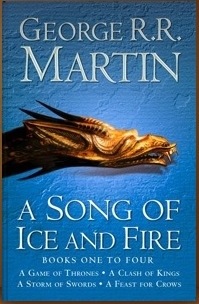
Even the dragon is getting tired of waiting for The Winds of Winter.
It doesn’t happen very often, where three of the biggest bestsellers in science fiction/fantasy, where three amazingly popular books (even series), have the same word in the title with the same grim meaning. Ender’s Game is about a video game (kind of) of death. The Hunger Games is about a reality show (kind of) of death. A Game of Thrones is about a race against death (Can the author finish the entire series before he dies?).
We readers get the idea. The “games” are dangerous, and characters get killed, and it’s not really a “game,” but c’mon! Can somebody grab a thesaurus? With so many “games,” and so many movies and TV series, I don’t have the time to read all the books and watch all the movies (Ender’s Game, The Hunger Games, Catching Fire) and keep up with all the seasons of the HBO series, especially during football season. But I can start.
THE HUNGER GAMES
The good news about The Hunger Games is that Suzanne Collins kept it to three books. Any series that goes over three books usually has an author that doesn’t know where the books are going. The bad news is that The Hunger Games is better read as a single novel because the second book is too similar to the first book, and the third book is all over the place (in my opinion).
It’s probably not fair to complain about the last two books without a concrete reason. I felt an emotional impact in The Hunger Games that I didn’t feel in the other books. For example, when Katniss volunteered to take her sister’s place in the “Games,” I actually had to stop reading for a minute (Whoa!). I felt the emotional impact several times in The Hunger Games, but the other two books didn’t affect me the same way. Maybe I wasn’t in the right frame of mind as a reader when I read them, but I think a lot of it had to do with the author not taking her time with the books.
Sometimes authors write too many books too quickly, and that may have happened here.
ENDER’S GAME
Of the three books/series, Ender’s Game was the first book but the last to be turned into a movie orTV series. Every time I think Orson Scott Card is done with the series, he comes out with another Ender book. Ender’s Game already has two sets of sequels. That’s right. Two SETS of sequels. One is about Ender’s travels (Speaker for the Dead, Xenocide, and Children of the Mind) and one about what happens to other characters right after Ender’s Game (Ender’s Shadow, Shadow of the Hegemon, Shadow Puppets, Shadow of the Giant, and there have been more (and I think I accidentally read another one a couple years ago) since.
I read these before I established my own rules for reading (no more than three books per author or series). If I remember correctly, none of the books are bad, but they decline a bit as they go. And still, I kept reading them, so they must have been entertaining.
A GAME OF THRONES
These are the easiest books for me to write about because I haven’t read them. I started A Game of Thrones (or the first book of A Song of Ice and Fire), but then stopped when I realized that the series isn’t finished yet, and (from what I’ve heard) it’s probably gone on too long already. And if I’m going to follow my own rules for reading books, I may never go back and finish. I don’t read books over 500 pages long, and I don’t read more than three books from an author anymore, and I don’t read a series until it’s done.
A Game of Thrones might be (and probably is) great. From what I hear, I believe it at least has moments of greatness. But it’s long. And it’s not done yet.
*****
What about you? Which of these books (or series) have you read? Which of these movies (or TV series) have you seen? How would you compare the books with the movies? Am I wrong about Catching Fire and Mockinjay? Am I wrong not to read A Game of Thrones? Am I wrong about the Ender books? What else am I wrong about? Am I right about anything?
*****
While you’re waiting for The Winds of Winter, read…
Now only 99 cents on Amazon!
Talking about relationship problems can be risky. Even if it’s important to “share” your feelings with somebody you trust who isn’t directly involved, it can also backfire. A friend can tell another friend who tells another friend, and soon a bunch of juicy gossip is out of control. What was going on between Danielle and me was only between Danielle and me. If I told Kirk about what was going on between Danielle and me, he might (or probably would) tell his girlfriend Linda, and I’ve never believed in providing free entertainment for my circle of friends and acquaintances.
The problem (if it really was one) with Danielle had to do with money. A few days after I had paid for Danielle’s car repair, she left her car insurance bill on the coffee table on top of a stack of unread comic books. That wasn’t an accident. Insurance for a sports car in city limits wasn’t cheap, and I realized how much of Danielle’s life I was paying for. I paid for the rent, all the food, all the restaurants, and now I was paying car bills. I was pretty sure she made more money than I did. What did she use it for? Under normal circumstances, I’d never ask a girlfriend how she spent her own money, but now I was tempted.
I had mixed feelings about paying Danielle’s bills. As a girlfriend, Danielle had gone all out. She was everything a girlfriend could be to a guy like me. We lived in sin, and the sin was great. She never criticized me. Her temper hardly ever was directed at me. And when certain parts of a relationship are going great, it’s tough to rock the boat.
On the other hand, Kirk had been griping about Linda all evening. I was hanging out at Kirk’s apartment watching a weeknight football game, but it was tough to concentrate on the game with all his whining, and Kirk wasn’t normally a whiner. His apartment was well furnished for a single guy, but not as nice as mine (of course, his girlfriend didn’t steal furniture). I didn’t really want to be there because I knew I was going to be really tired the next day, but it was going to be a Friday, and if there was a day to be really tired at work, it was Friday.
“Three months,” Kirk complained as he drank a beer. “I’ve never waited three months.”
“This is why you have to stick to rules,” I said, with a hint of sarcasm that he probably didn’t notice. Kirk had a three-date rule, and if a woman hadn’t gone to a certain level of intimacy (or sexual activity) with him by then, he lost interest. I never agreed with his three-date rule, but it usually kept him content (though the women he had been involved with in the past probably didn’t feel the same way).
“Three months is a long time,” Kirk said.
I nodded and thought about Danielle . Even with a football game on, I thought about Danielle.
“Are you two coming to Jerome’s Halloween party?” Kirk asked. Jerome was the guy in our social group with the big house and the swimming pool and the huge backyard/patio. Even a quiet guy like me went to his parties because the food was always good and there was always a football game on.
“I’ll ask Danielle,” I said with some hesitation. Danielle worked Saturday nights, but Kirk thought she was happily unemployed, so I had to go along.
“Linda said Danielle was going to ask you.”
Now I had a real reason to hesitate. “Danielle talks to Linda?”
“I guess,” Kirk said. “Linda’s going as Supergirl.”
I was surprised about that. Linda didn’t strike me as the type to wear a slutty costume to a Halloween party, but women could be unpredictable, and maybe the costume would be tasteful (but that was doubtful). I also thought that if Kirk couldn’t get any after Linda wore a Supergirl costume to a Halloween party, then his situation was lost, but I kept that to myself as well.
The next day I asked Danielle (while she was getting ready for work) if she wanted to go to a Halloween party that one of my friends was throwing. I didn’t mention that Kirk had told me she was talking to Linda. I just pretended this was all new information to her. I didn’t think she’d want to go. The party was on a Saturday night, and Saturday was Danielle’s most profitable day of the week. Money was important to her, and I couldn’t see her missing a Saturday night.
“I’ll go as Jane Austen,” Danielle said. “I’ve got an old dress that looks like it’s from that time period, and I’ll put my hair up, and I’ll carry these around.” She held up my copies of Pride and Prejudice and Emma.
Jane Austen, I thought. I was stunned (in a positive way) that she was going to the party, but I was also disappointed in her choice of costume. Here I finally had a girlfriend who was built to be a slutty nurse, or a slutty French maid, or a slutty vampire, and she was going to cover herself up in a Victorian garment. Pervert guys would be lucky to see an ankle or a collarbone. It was disappointing, but, I had to admit, it was also a decent idea.
“I’m pretty sure you’ll be the only Jane Austen there,” I said. I usually went to Halloween parties as Darth Vader, but I had a back up idea. “I’ll go as Frankenstein’s monster.” I explained how I’d take a paper bag, and then cover it in paper mache, paint the top black for the monster’s hair, and then cut a space for my face. With a little paint and make up, I could be the monster without wearing an uncomfortable, smelly mask.
“You know,” I said, thinking aloud. “Mary Shelley lived in the same time period, kind of. You could go as Mary Shelley, and I would be the monster that she created, and that would make more sense from a literary standpoint.”
“I’m going as Jane Austen,” Danielle said. “And I wanna see you get drunk.”
I paused. We had never had this discussion.
“I don’t get drunk,” I said. “I tried it once in college, and… I’m not doing that again.”
“What happened?” she asked.
“I’m not ready to talk about it.”
“I can make you tell me,” she said, getting close and putting her hands on my waist. She was pretty good at getting secrets out of me.
“No,” I said. “This one, you can’t.”
“That bad?” Then she hesitated. “Did… somebody die?”
“It’s nothing like that,” I said. “It was embarrassing. And nobody here knows about it.”
That wasn’t true. Kirk had seen what had happened and had made me promise to never get drunk again. He’d also been a true friend and had never (as far as I knew) told anybody about what I had done the one time in my life when I’d gotten drunk. That’s the way I liked things. I wouldn’t tell Danielle about what I did when I was drunk, and I wouldn’t tell Kirk about what was going on between Danielle and me. I didn’t know if that made me dishonest in any way, or impersonal. It’s just that the fewer people who knew stuff about me, the lesser the odds of people I didn’t want to know stuff about me finding out. Kirk and Danielle were my friends (in different ways), but neither one needed to know everything about me. I wanted to keep it that way.
Everything seemed set. Danielle and I were going to the Halloween party over the weekend, but the more I thought about it, the more I realized that something could go wrong. There would be a lot of people there with lots of loud music and lots of booze and lots of my friends there to witness it if Danielle got carried away and did anything weird, and a Jane Austen costume meant no mask, so if Danielle decided to do anything inappropriate (like watching guys pee) or illegal (like stealing furniture), everybody would know it was her.
I usually liked Halloween, but I was starting to get a bad feeling about this party.
*****
To be continued in… The Literary Girlfriend: Drunk at a Party.
And to read “The Literary Girlfriend” from the beginning, start here .

What does it mean if there’s a book award list, and you’ve never heard of any of the books? (Photo credit: Wikipedia)
I’m never surprised when I see awards lists with books I’ve never read. I read the kinds of books that don’t win awards. I read a lot of schlock, and schlock doesn’t usually win awards. If there were an award for best schlock, maybe I’d have read most of the books, but as far as I know, there is no award for schlock.
The list of 2013 National Book Award finalists was released recently, and I’m surprised because I’ve never even heard of any of the books on this awards list. I might not read/finish a lot of high brow literature, but I read ABOUT the high brow literature. I like to be able to at least pretend that I’ve read the high brow literature. I like to be able to understand what my intellectual friends are talking about when they discuss the high brow literature. I might not read it, but I usually know about it.
Here is a list of some of the fiction finalists I’d never heard of and don’t know anything about:
The Flamethrowers by Rachel Kushner
The Lowland by Jhumpa Lahiri
The Good Lord Bird by James McBride
Bleeding Edge by Thomas Pynchon
If I’m not familiar with the finalists in fiction, there’s no way I know anything about the poetry or young adult finalists. It’s okay. I’m sure nobody involved with any of these books has ever heard of Dysfunctional Literacy either.
Maybe it makes sense that I’ve never heard of any of the books on The National Book Award list. Before yesterday, I’d never heard of the National Book Awards either. A lot of book awards are named after a famous author. Maybe there was a famous author named National, and if that’s the case, I’ve never heard of him/her. Then it would really make sense that I’ve never heard of any of the books on a list named after an author I’ve never of.
Except now I just found out that the National Book Award is named after the National Book Foundation, which is something else I’ve never heard of. I was really hoping there was a famous author named National. That would be a cool last name. If I ever change my last name, maybe it would be to National. Jimmy National. I like that.
I really like reading about books. Sometimes reading about a book is better than actually reading the book. It saves me a lot of time, and it means that somebody else has already done the hard part (reading the book) for me. I like it when other people do my work for me. Now if I can find a job where somebody else has done my work for me, I’d be set. Unfortunately, I’m in a position where I do the hard work for other people (not physically hard work), so I don’t feel guilty about letting other people read books for me. It all evens out.
Now that I’ve read The National Book Award list, I have several new books that I’ll read about but probably not read. If I read enough about these books, I might even form an opinion about which book should win. Right now I’m pulling for the book written by Thomas Pynchon. At least I’ve heard of him.
Am I the only reader who has never heard of these books? If I am, which books have you heard of? Which of these books have you read? Would you honor them with any awards? Is there an award for schlock that I don’t know about? If you could change your last name, what would you change it to?
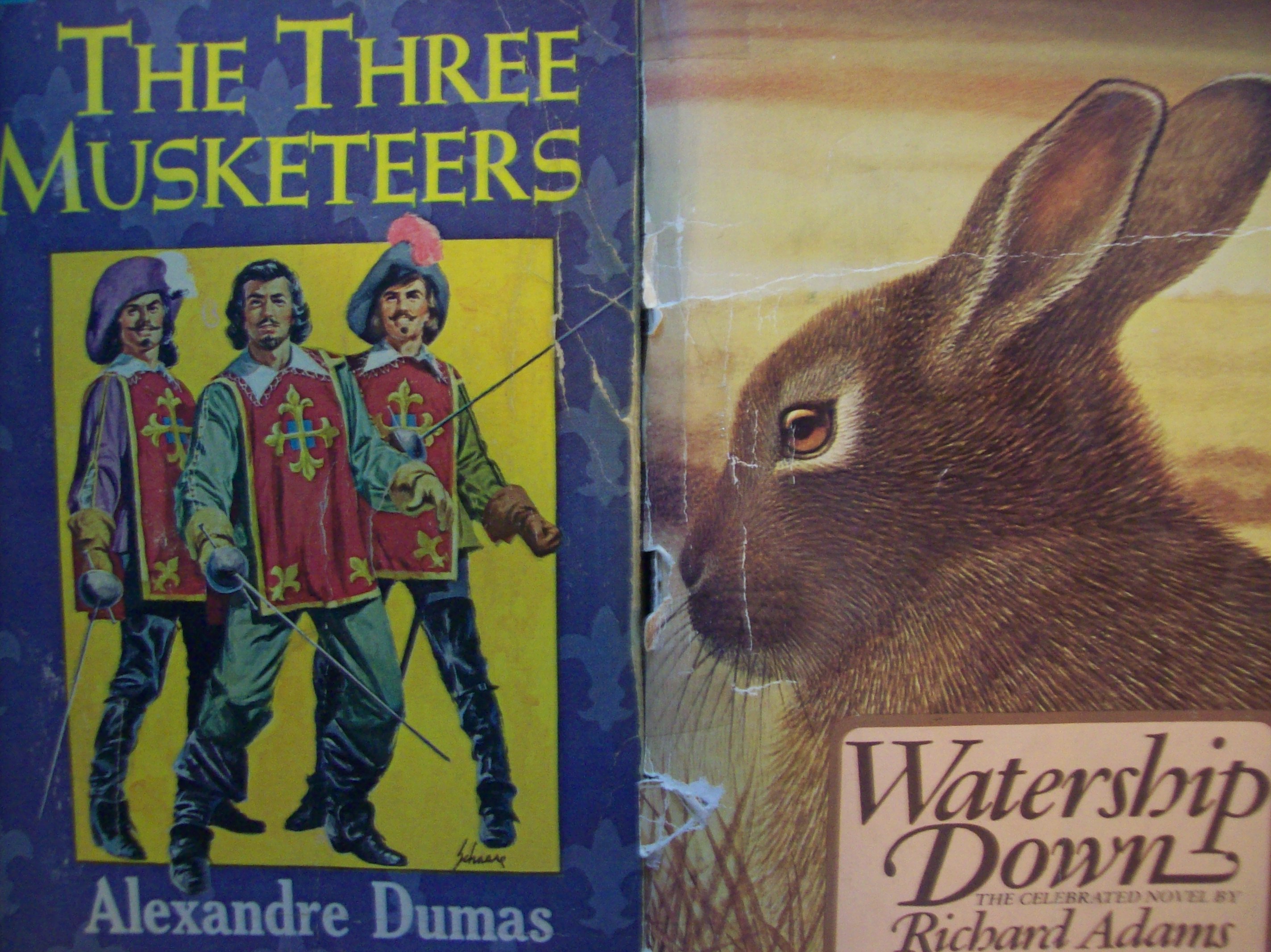
What do these two beat up copies have in common? I read them. I finished them. But did I enjoy them?
There are a lot of good reasons to NOT finish a long book. The most obvious reason is that long books are too long, but that might not be the best reason. Some long books have too much filler, unnecessary subplots, and may feel like they were written that way just for the sake of being long. Some long books are so wordy that the story could have been told in half the length without losing anything important. Other long books are so heavy in their hardcover form that they may be physically difficult to carry.
The problem with not finishing a long book is that I sometimes feel like I have to get defensive, as if there’s something wrong with me for not finishing it. I’m getting older and I don’t have time to read 500+ page books unless they’re truly awesome (when I say I don’t have time, I mean “spare time” not “time…” as in… you know…. mortality. I hope I have plenty of “time”).
The Guardian has a list of ten long books that are supposedly worth reading (The Ten Best Long Reads), but I’m unqualified to comment on the list because I haven’t read any of the books. The list was kind of British, and I’m kind of American. I have nothing against British books. I read British books, but I wasn’t familiar with some of these massive novels. Plus, most of the novels were fairly recent. When it comes to 500+ page books that are a chore to read, I think of the classics, not something that was published in my lifetime.
There are plenty of large books (or long reads) that I haven’t finished reading. I tried to read Colleen McCullough’s Rome series, but I didn’t finish any of them. I didn’t finish Sarum by Richard Rutherford (or Russka). I didn’t finish Atlas Shrugged. I didn’t finish War and Peace. I’ve never finished a James Michener novel (not even The Novel, and if I were ever going to finish a James Michener novel, it would have been The Novel). I didn’t read Roots or Gone with the Wind (but I watched them both on TV when I was a kid). I finished a couple Tom Clancy novels, but then I didn’t finish several others. Now I’ve gotten to the point that I don’t even try to read books that are 500+ pages anymore. That doesn’t mean I never will, but it won’t happen much.
A great long book doesn’t feel long. A great long book is one that the reader can enjoy without feeling like he/she is enduring it. It’s a book that the reader doesn’t want to end. It’s a rare feeling, to wish a 500+ page book would last longer (that’s another possible topic!). But it’s happened a few times:
WARNING! These are not the BEST LONG BOOKS EVER! These are just a few really (or maybe not really that) long books that I enjoyed.
The Stand by Stephen King: I read this decades ago and thought it was great. I haven’t reread it since, but I’m tempted to.
Watership Down by Richard Adams: Rabbits? Flippin’ rabbits? There’s no way this book should have been good, but it was!
The Three Musketeers by Alexandre Dumas: I think this is almost the perfect action/adventure story. Hollywood made a great (but hard to find) movie in the 1970s, but has messed it up ever since.
The Bible by God : I’ve never read it from beginning to end, but I’ve read a lot of it, and I… uh… I… agh…I’m going to… uh… Even if I haven’t read the whole thing, I’m pretty sure it’s worth finishing, because anything written by God has got to be worth finishing.
*****
I know that there are a lot of readers and book lovers out there who have read and finished and enjoyed way more long books than I have, so… What long books did you actually enjoy reading?

When it came to personality types, Danielle was my opposite. I was a quiet guy who didn’t like to be noticed. If I could get through a day without talking to any of my co-workers, I considered myself successful. Danielle lived to be noticed. She wore provocative clothes. She talked loudly and said inappropriate things in public. Even when she put on her thick glasses and dressed conservatively on our dates, she still carried around a copy of Pride and Prejudice just to be sure everybody around us knew that she was reading it (or pretending to). And she drove an expensive sports car that got stares, especially when she stepped out of it.
But last evening the expensive sports car had broken down, and now I was taking Danielle to Main Street Automotive after work to pick it up. If she had heard about me accidentally talking (very briefly) to the guys at Nero’s the previous night, she didn’t mention it. I, in turn, hadn’t mentioned that (I was pretty sure) she had said “Love ya!” to me the previous night. I wasn’t sure if it had been a slip or something casual or even my imagination, but it was something I was going to listen out for again.
Despite a slight October chill, Danielle was wearing her football t-shirt and tight jean cut-offs. I had been expecting the glasses and something less exhibitionist, and I must have shown that with my face because Danielle said:
“They know me there.”
Main Street Automotive was on Main Street, but Main Street was halfway across the city and wasn’t even a main street anymore. The building had several garages in the back with an auto parts store in the front. Danielle led me through the front to the counters that connected the store with the garage. A couple burly guys in worn blue shirts and greasy jeans stood behind the counter while getting bossed around by a cranky old lady. I’ve always known that to avoid getting bossed around by a cranky old lady, you had to move around and at least pretend you were busy. These guys were just asking to be bossed around.
“Hi,” Danielle said cheerfully, waving to the guys at the counter. That might have been why the guys weren’t doing anything. “My car ready?”
They didn’t even ask what her name was. One guy nodded to the other, and he scurried into a back cubicle, and the old lady shuffled paperwork and yelled at somebody on the phone.
“You fixed it quick this time,” Danielle said as she leaned over the counter.
The guy’s eyes shifted from Danielle’s shirt to her face as he explained what had been wrong and what had been done. She said “Okay” and “Yeah” a lot, but I wondered if she understood anymore than I did. She pretended to. I thought maybe she did. She asked a couple questions that I didn’t understand, and the guy answered them, so maybe she really did know what he was talking about. I was being ignored, but I didn’t care because I was thinking, I had a hot chick girlfriend who might understand cars.
“Did you have any questions?” the guy asked, and I realized he was talking to me.
“I’m the driver,” I said, which was stupid, but I had been caught by surprise.
“I’m going to the ladies room,” Danielle said, and before I could say anything, she got really close, slipped her arms around my neck, drew me down just a little, and slopped a short, moist kiss on my lips. When she pulled back, there was a smacking sound, just loud enough for the guys at the counter to recognize it. As she retreated slowly, she maintained an oddly intense gaze that almost made my knees buckle. Even after two weeks of living in sin together, she could still dazzle me with the little things.
“Be back in a few,” she said softly, and strolled across the store to the back. I watched her. The two guys watched her. The old lady barking orders wasn’t watching her, but the two guys she was barking orders to weren’t paying attention, so she barked her orders even more loudly.
After Danielle disappeared, I turned to the two guys at the counter. I expected them to make some complimentary comment about Danielle. I was expecting at least a knowing look. Instead, I got paperwork. It was the bill for Danielle’s car repair, and the number was really big (even in 1992 dollars).
“What the hell?” I said.
The guy explained again what the problem had been, what they had done, what the parts had cost, and how much labor there had been. It was all probably lies, but Danielle had sworn these guys didn’t rip her off, and all I knew were tires, oil change, and battery.
“Does she know how much this is?” I asked.
The guys behind the counter studied me. I knew what they were thinking. I was the average guy with the hot chick who had just given me a tip of her tongue in public, and if she showed off like that in public, they knew what we were doing in private. And if a guy like me was lucky enough to have a hot chick girlfriend like that, the guy like me had better do what guys like me do best.
I took out my credit card. “I guess I’m more than the driver.”
The guy went through all the stuff that went into using credit cards. He pulled out the carbon copies and as I wrote my signature at the bottom of one receipt, I looked at the restroom area for a sign of Danielle.
“I have a question,” I said in a low voice. “My girlfriend, does she bring her car in a lot?”
The guy also checked out the restroom area before he answered. “A few times a year,” he said cautiously. “Those cars, they need a lot of maintenance.”
“Does she ever pay the bill herself?” I asked slowly. I knew that I might be better off not asking, but I did it anyway.
The guy looked at the paperwork and shook his head.
I could feel my shoulders deflating, but I went ahead and asked my final question.
“Is it always somebody different?”
The guy nodded. Then he glanced at the restroom area and said,” I don’t know if this makes a difference, but she’s been really nice today.”
I didn’t have anything to say to that, so he continued.
“She’s usually bitchy,” he said, then he put his hands up in apology.
“It’s okay,” I said. I’d seen that side of her, but it had never been directed at me.
We continued the credit card process, and I signed my name in a few more places, and somewhere along the way Danielle stepped out of the ladies room and started wandering around the tire displays. I glanced at Danielle, who was pretending to inspect the tires and compare prices. She had the same vacant expression when she was pretending to read Jane Austen books.
Once the credit card was back in my hands, Danielle was back at my side, softly brushing up against me.
“Everything okay?” she said.
I was still processing. The nature of our relationship had just been made obvious to me and everyone around us. Maybe I should have figured it out earlier. It made sense. It was the only explanation that made sense. I should have known right away that this was what it was about. I was disappointed but not mad. This wasn’t a disaster. I liked being around her (even when sin wasn’t involved). She seemed to like being around me.
“Good!” I said, slamming my wallet shut. “You want to see if your car starts this time?”
“It’ll start,” the guy behind the counter said.
Danielle grabbed my hand and led me to the front of the store where her car had been parked.
“You wanna race home? Your car against mine?”
“It wouldn’t be fair,” I said, which was true. Even if we switched cars, she’d win. I slowed down for yellow lights, and she plowed through them. “I’d only win if you got pulled over.”
And then I added with authority, “And I don’t want to pay for your traffic ticket.”
She let go of my hand but lingered in that six-inch area where I could almost feel her against me. Her cheese-eating grin was wide.
“I promise I will obey all traffic laws, officer.” Then she got into her car and rolled down the window. I waited for her parting words. What would she say? Last night she had said “Love ya!” after I’d dropped her off at work. I was kind of hoping she’d say it again, even though I knew she wouldn’t have meant it.
As she pulled out, she waved and stuck her head out the window just a little bit.
“See ya!”
I waved back and thought a little bit while I walked back to my own car. Danielle had just shown off our relationship in front of a group of people whom she barely knew and were complete strangers to me. She liked to show off. She was comfortable with it. I wasn’t exactly comfortable with what I had just realized about our relationship, but at least now I had a grasp of where I stood.
At least, I thought I did.
*****
To be continued in… The Literary Girlfriend: The Halloween Costume .
And to read “The Literary Girlfriend” from the beginning, start here.

If I’m going to write every day, I’m definitely not going to use one of these! (Photo credit: Wikipedia)
In every writer’s class I’ve taken and every writer’s group I’ve been in, there was always somebody who said that the most important rule to writing was to “write every day.” I’m usually pretty good at following rules, but this one has always been stated with such pomposity that I’ve wanted to argue, except I’m a quiet person who doesn’t like to make scenes, so I’ve always kept my mouth shut.
Writing every day is a great rule if you’re a full-time writer, but I have a full-time job that has nothing to do with writing, and I have a family, so it’s not easy to simply “write every day.” Life is stressful, and trying to write every day (when I tried it) made it even worse. In order to write Dysfunctional Literacy without adding more unnecessary stress to my life, I’ve adapted. Now I have five simple rules that make writing every day easy without necessarily “writing every day.”
1. Make progress every day.
This is a bit different from “writing every day.” I have maybe two or three good days of writing every week. On my bad days, I work on revising and editing. Even if I merely add a comma to a chapter of “The Literary Girlfriend,” in my mind I’ve made progress. Thursday is usually my worst writing day. Saturday is usually my best (even during football season). I might compose 1500-2000 words on a Saturday (but a lot of that might turn out to be junk). On my bad writing day Thursday, I might delete a “very” or a “kind of.” That’s what I call progress.
2. Establish a reasonable goal.
The most frustrating time while writing Dysfunctional Literacy (except the time when nobody was reading it) was when I tried publishing something every day. I stayed up late at night, was grouchy in the morning, was dissatisfied with what I’d written, and maybe three people read what I wrote (and one of them was Mom).
What I was doing wasn’t working for me, so I decided to set a more reasonable goal. Most of the time, that goal is three posts a week. During busy times of the year, I can cut it down to one or two posts a week. Having a reasonable goal makes writing way less stressful but still makes me productive without getting lazy.
3. Write about a variety of topics.
When I read, my mind wanders after about 15 minutes, but I still want to read, so I switch genres. The same thing happens when I write; after about 15 minutes, my mind wanders, but I still want to write, so I change topics. It’s one of the reasons I write serials like “Long Story” and “The Literary Girlfriend” while also writing the nonfiction stuff like this post. When I get tired of writing nonfiction, I can switch to dialogue or a description for “The Literary Girlfriend.” If I switch back and forth from one genre to another, sometimes I can write for 45 minutes at a time instead of only 15.
4. Read when tired, write while rested.
Reading and writing are related skills, but I do them at different times of the day. When I’m tired, writing new material is futile. I stare blankly at the screen, and my mind wanders. I can edit and revise sentences and might be able to fill in tiny gaps in my writing, but that’s it.
My best writing time is in the morning. Unfortunately, I can’t write every morning, so I write a lot on the mornings when I can, and revise/edit on the evenings after I work. I’m not as productive as I want to be (who is?), but I’m fairly satisfied with the results. When I’m tired, I can just read. I’d rather enjoy my reading time when I’m tired than get frustrated by trying to write.
5. Remember that one single day doesn’t matter much.
It’s kind of like that saying:”It’s a marathon, not a sprint.” Or is it “It’s not a sprint; it’s a marathon”? Either way, my long-term success or failure as a writer won’t be determined by what I do on a single day (unless I publish something so extremely offensive that I get fired from my own blog). If I become successful, it’s because of what I do over the long run (I guess that’s kind of like a marathon).
Remembering that no single day is important to my writing makes life less stressful on those rough evenings when all I can do is edit/revise. I always have the desire to write new material, but my brain won’t always cooperate, so it helps to not get frustrated too much on the lean writing days.
But enough about me! I might have my own rules for writing, but I know these rules wont work for everybody. What rules (if any) do you have for your own writing? Do you write every day? Do you write only when you feel like it? Or do you think that rules for writing are for chumps?
*****
If you liked this blog post about how to write every day, you’ll probably enjoy these books on Amazon.

Now only 99 cents each on the Amazon Kindle!

Mary Shelley may not have created the horror genre, but her Frankenstein helped mainstream it. (Photo credit: Wikipedia)
This isn’t meant to be a tribute to a recently deceased author. Other writers are way better than I am at doing that kind of thing. In fact, when Tom Clancy passed last week, I wasn’t going to write anything about him. I don’t mean any disrespect, but I don’t usually mention stuff like that on Dysfunctional Literacy because (attempted) humor is my thing, and I don’t want to be seen as trying to find humor in the passing of famous people.
However, a couple tributes that I read mentioned something that I hadn’t thought of before, that Tom Clancy mainstreamed a new subgenre, the techno-military thriller. He might not have invented the subgenre, but he was the first to get a bunch of them on bestsellers lists.
Tom Clancy may have had some flaws in his writing. Some of his novels were way too long. His dialogue was often brutal. It was tough (for me) to follow so many characters from book-to-book. But he created his own subgenre, and I respect that. Not only did he create it, he wrote the heck out of it too.
Now there are a bunch of authors who write techno-military thrillers, like Vince Flynn (who also has recently passed, and W.E.B. Griffin). And without Tom Clancy, these authors might not have ever gotten their books on bestsellers lists (or maybe not even have gotten published), but that’s speculation.
Now that I think about it, I’d like to create my own genre (or even a subgenre), but it’s probably not that easy. You’d think it would be easy. All you have to do is think of a genre nobody has tried before and write about it. See? That’s all you need to do!
Creating a new genre might not be enough though. I would have to mainstream it too. If I created a new genre but nobody bought my books in that new genre, then creating the new genre wouldn’t have done me any good. Even worse, if I created a new genre and somebody else mainstreamed it and then made tons of money off my new genre, I’d kind of be ticked off. That would be worse than being one of the publishers who rejected JK Rowling.
Creating a new genre (or subgenre) doesn’t happen often, but you could make the case that it’s happened several times recently (depending on how you define “recently”).
Anne Rice mainstreamed the romantic vampire genre with Interview with the Vampire. That eventually led to the Twilight series and a bunch of other vampire knockoffs that I really don’t want to mention.
Suzanne Collins mainstreamed the teen dystopian subgenre with The Hunger Games. Now we have series like Divergent and a bunch of other teen dystopian books.
JK Rowling mainstreamed the teen fantasy novel with Harry Potter and the Sorcerer’s Stone. Now we have Percy Jackson and a bunch of other teen fantasy heroes (and heroines).
Maybe EL James has mainstreamed the poorly-written erotic genre, but we’ll have to see if a bunch of other authors can write similar bestsellers.
If I were to create a subgenre, right now it would be called literacy fiction (NOT literary fiction). My ebook The Writing Prompt is about a story that I wrote in high school that ALMOST made me popular (so I guess it’s literacy nonfiction). My current serial “The Literary Girlfriend” (which will eventually be an ebook as well) is about a hot chick who pretends to read literary fiction to make herself look smarter. The next serial that I have planned will also be reading/writing related. So maybe, just maybe, I can write a bunch of stories related to reading/writing and call it “literacy fiction.”
Yeah, that might be a really bad idea, but sometimes bad ideas are all I have.
What other subgenres have been created recently? What kind of subgenre would you like to create? And if you could be any kind of tree, what kind…? Uh… never mind; that was for a different blog.
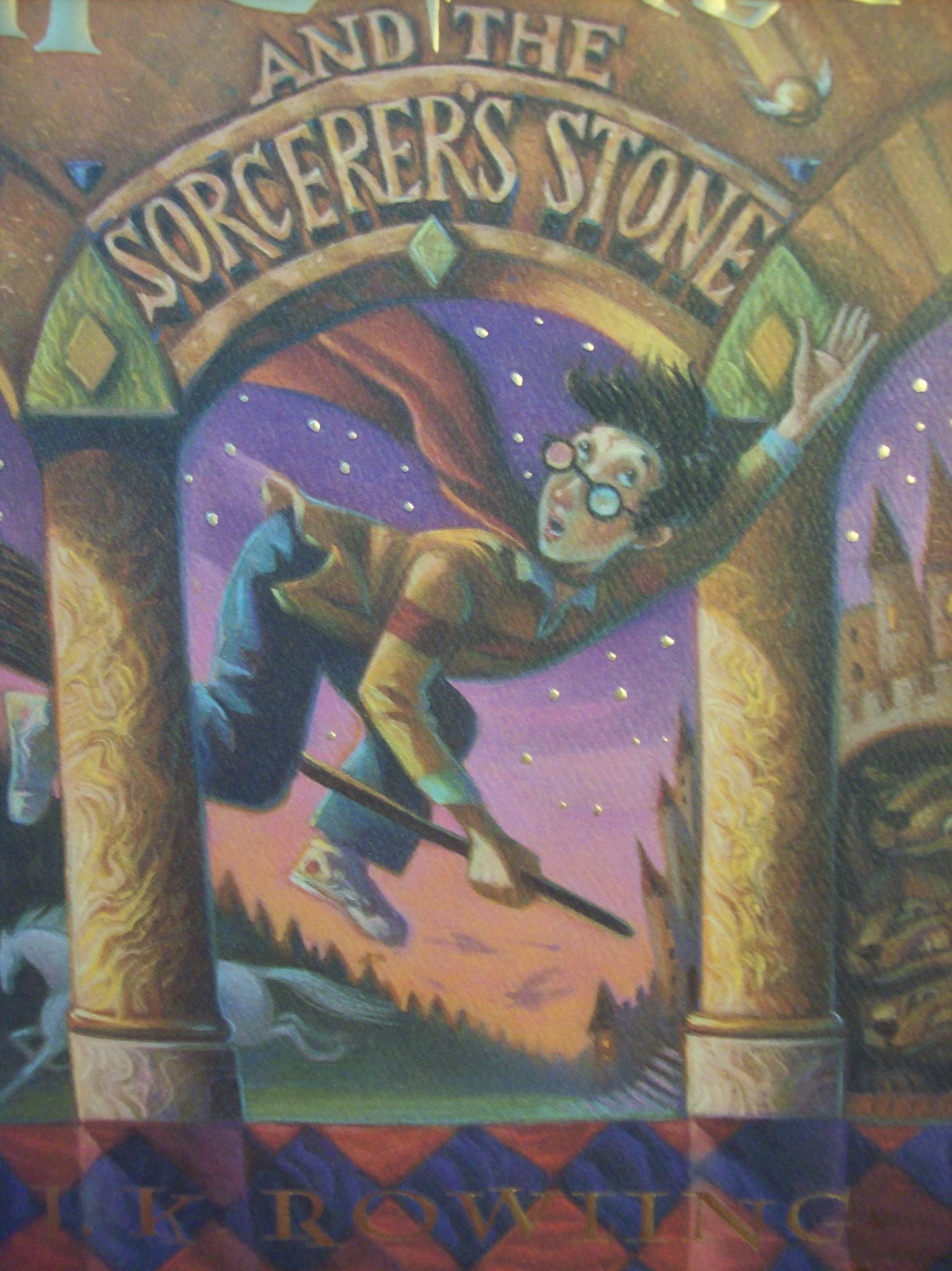
If I were one of the publishers that had rejected this book, I’m not sure I’d be able to sleep at night.
Writers are known for stealing (or borrowing) ideas from other writers, so I might as well be up front about this. I got this idea from a blog post about the ten worst publishing moments in history. I liked the idea, but I also think that sometimes bad judgment is only bad judgment in hindsight. Maybe there was no (or little) evidence at the time that the bad publishing decisions were actually going to turn out bad.
Since I’m not an expert in the publishing business (I’ve never been published, but I have lots of opinions on things I know nothing about), I took the only two bad moments that I was familiar with and then added a third bad moment that wasn’t on the original list. Then I tried to justify the bad decisions that the publishers made at the time.
I might be (and probably am) wrong in my analysis, so if you think I’m off a little bit (or even embarrassingly wrong), I’d like to know.
THREE BAD MOMENTS IN PUBLISHING HISTORY (or were they?)
1. Book publishers rejected JK Rowling’s first Harry Potter book.
Why it was a bad moment:
I pity the fools who tossed JK Rowling’s original manuscripts into the trash (in a figurative way). I wonder if they can sleep at night. It all could have theirs if only they could have recognized the genius of JK Rowling before she was JK Rowling. In hindsight, rejecting Harry Potter and the Sorcerer’s Stone might have been a bad decision.
Why it might not have been such a bad moment:
Who knew? At that time in the mid-1990s, what indicators were out there that a novel like Harry Potter and the Sorcerer’s Stone would be a gigantic (or even modest) hit? Probably none. Everybody is a revolutionary in hindsight, but it’s tough to pick a trend before it happens.
I wouldn’t have recognized Harry Potter as a potential icon, and I’m the kind of person who should be into Harry Potter but isn’t. I read comic books. I read fantasy. I even read YA fiction sometimes (but most of it is the worst of dreck nowadays, but that’s a different topic). I’ve tried to read The Sorcerer’s Stone several times and couldn’t get past page nine. If I had been a publisher in 1995(?), I would have been one of those getting mocked today.
2. Jonah Lehrer’s plagiarism in Imagine
Why it was a bad moment:
Jonah Lehrer was a big name author who got caught plagiarizing. Publishers yanked a couple of his books from the shelves (you can’t even buy them on Amazon the last time I checked) and that had to cost publishers a lot of money (the physical part, not the digital part). It was embarrassing.
Why it might not have been such a bad moment.
Personally, I don’t blame the publisher when an author plagiarizes. I even think the publishers may have overreacted by pulling the plagiarized books. The publishers should have left them there and put a new cover with PLAGIARIZED VERSION on the top so readers would know what they were getting. I might have even bought the PLAGIARIZED VERSION out of curiosity. The publisher could have highlighted all the plagiarized phrases and sentences and then provided footnotes with background information for all the lifted text. That might have been a book worth buying.
3. U.S. Justice Department sues Apple and a bunch of book publishers (this one wasn’t in the original blog list)
Why it was a bad moment:
Several major publishers were accused of collusion with Apple to raise ebook prices in an (alleged) attempt to compete with Amazon (or drive Amazon out of business). Collusion looks bad. Getting sued by the Justice Department looks bad. Settling with the Justice Department looks bad. A lot of book buyers already believe that publishers set artificially high prices anyway, and this didn’t help their image.
Why it might not have been such a bad moment:
What were book publishers supposed to do? Amazon was cutting into their business with artificially low prices (meaning that Amazon was taking a loss every year) and then didn’t have to pay taxes. Talk about unfair competition! The only way Amazon can survive is with support from stockholders (who at some point will want a profit) and the federal government (who wants either taxes or kickbacks). If Amazon wasn’t playing fair, why should the traditional book publishers?
*****
Good decision making is very important in life. Successful people analyze the evidence they have in front of them and make clear, rational choices. That’s not easy. If it were easy, more people would make good decisions. And when it comes to bad publishing moments in history, maybe, just maybe, I can understand why publishers made the decisions that they did, even if those decisions turned out to be bad.
But enough about me! What do you think? Should the publishers at the time have known their decisions sucked? What other bad publishing decisions have been made recently? And what ideas have you borrowed/stolen from other writers?

Atlas Shrugged and love don’t go together very well.
In our two weeks together, Danielle had surprised me in a number of ways. She had flustered me when she cornered me in the library. She had stunned me by going out on a date with me, spending the night, and then moving in the next day. She had startled me when she replaced my beat up furniture with a much classier arrangement, and then flabbergasted me when it turned out that the new furniture had been stolen from a slutty blonde who owed her money. And now she had just surprised (my thesaurus ran out of synonyms) me by invoking the word “love” after I’d dropped her off in front of the topless club where she worked.
True, Danielle had said “Love ya,” and not “I love you.” The phrase “I love you!” would have been a formal declaration. “Love ya!” was casual. Maybe Danielle was the type of flirty girl to say stuff like that to all the men she was familiar with. Maybe she said that to men she lap danced on. Maybe she said that to every man who stuck a bill in her g-string. I wasn’t sure. I hadn’t heard her talk to many other men.
I couldn’t remember Danielle ever saying the word “love” before in any context. She hadn’t “loved” any food. She hadn’t “loved” any movies we’d seen. She certainly hadn’t “loved” any books that she had pretended to read. So maybe, just maybe, her use of “love” meant something.
Even if it did, I was pretty sure she didn’t mean that she “loved” me, not the way I would have meant it. I was pretty sure I wasn’t in love with her, but there was a connection besides the living in sin. Despite our differences, we got along. We watched the same movies, enjoyed the same kinds of food, and even cheered for the same football teams. A relationship can survive a lot of differences if partners agree on football and sin.
Even though Danielle had mentioned “love” first, I couldn’t reciprocate, not until I knew what she meant. If her “Love ya!” had been a casual throw-out phrase and I gave her a passionate statement of true emotions and commitment that I probably didn’t feel, then that would kill the whole relationship. And if Danielle really felt “love,” (which I doubted), then we would have a lot of time to figure things out.
I nodded to myself. It probably meant nothing. My best bet would be to wait this out and see if Danielle ever said it again. If she did, then I could have a casual (and maybe confusing) response ready for her. But what would an appropriate response be?
A car behind me honked. I was still parked at the front of the valet line at Nero’s. I’d spaced out and lost track of time. Feeling like a doof, I waved in apology to the driver behind me and slowly proceeded out of the valet line toward the vast parking lot.
A head-shaved guy with beefy forearms, probably a bouncer, ran in front of the hood and put his arm out. I slammed my brakes, and he ran to my open window. “You alright?” he asked.
“Yeah, sorry about the wait back there,” I said.
“You Danielle’s boyfriend?”
“Yeah,” I said, without thinking. “I was just… making sure… uh, she got in okay.”
“Hey!” the head-shaved guy suddenly bellowed out to a crowd of guys standing by the pillars out front. “This is Danielle’s boyfriend!”
Uh oh, I thought. The one thing Danielle had asked me not to do was to talk to anyone at Nero’s, and I had just blown it. Before I could drive off, a couple other big guys were walking in front of my car trying to peer in through the windshield.
One guy looked in through the open passenger side window and muttered, “That’s the guy banging Danielle?”
The head-shaved guy to my left extended his hand for me to shake. “You… are a fucking genius,” he said.
Genius? I had been given many positive qualities in my life: nice, pleasant, polite, intelligent, sensitive, reliable, but I had never been called a “fucking genius” before.
“Uh, thanks,” I said, even though I didn’t know if he was being sarcastic, and I pretended not to see his hand.
Six or seven large men surrounded my car, big guys with shaved heads, big guys with long hair, and big guys with thin beards and earrings. They were all muscular, and I was the skinny guy who was dating a topless dancer. I had to turn my head right and left to keep track of everybody approaching me.
“I… I… need to get going,” I said, but my quiet voice was useless with all the bouncers and valets calling each other and making comments about me. I was like an animal at the zoo. I was even more out of place than that. I was the geek who’d bagged himself a hot topless dancer.
“I… I….” I kept saying.
My monotone voice wasn’t going to cut it. I had to resort to drastic measures.
I hit the horn on my steering wheel. It was a high pitched blast, a womanly squeal of a horn, but every muscular guy stepped back from my car. It was embarrassing but effective.
“Sorry,” I said, and then I added authority (or my version of authority) to my quiet voice. “But I have to get to work.”
That was something the bouncers and valets understood. A quiet nerdy guy in his car stuttering “I… I…” wasn’t something they could relate to. Getting to work? That was universal, even if it had been a lie.
The words “get to work” had the desired effect. The bouncers and valets scattered, and my path was clear. Amid all the conversation I heard tidbits like “…that guy?” and “…fuckin’ loser” and some guy said “Danielle’s girlfriend,” and that got some laughs. I shook my head at the idea that some bouncer at a topless club thought I was a loser, and I drove slowly off the lot.
During the slow drive (lots of red lights) back to my apartment, I felt a little guilty. I had broken Danielle’s rule. I had talked (briefly) with some guys at Nero’s. Danielle wasn’t going to be happy about that if she ever found out. I didn’t believe that I had really talked to anyone, but Danielle’s definition of “talk” might be different from mine. She might have said “Love ya!” a few minutes earlier, but once she found out that I had verbal contact with some guys at Nero’s, “love” would probably be the furthest thing from her mind.
*****
To be continued in… The Literary Girlfriend: Showing Off .
And to read “The Literary Girlfriend” from the beginning, start here.

When I was in junior high, I read this book and giggled at the profanity, but at least I didn’t highlight or circle any of the bad words. (Photo credit: Wikipedia)
WARNING! Despite the topic of profanity in writing, there is NO profanity in the following article. No caution is necessary while reading (but don’t click on the links if you’re offended easily).
*****
I hardly ever use profanity in my personal life. The two exceptions are during football games and while I’m stuck in traffic. And when I write for Dysfunctional Literacy, I rarely use inappropriate language. Even when I wrote about the etymology of certain vulgar words, I used signs like @, %, *, and # most of the time to take the place of letters. I really didn’t want to spell them out.
I notice profanity in writing. I think some authors put way too much foul language in their books, especially in their dialogue. It won’t stop me from reading a book, but it might keep me from reading another book by that author (if the profanity is pointless). It’s not because the profanity is offensive; it’s that profanity is sometimes a sign of lazy writing.
I notice profanity on blogs too. Most of it is unnecessary (in my opinion), but I don’t stop reading because of it, and it occasionally (if used properly) adds more emotion to writing. It seems that the less profanity is used, the more effective profanity becomes when it’s used.
Even when writing fiction, I hardly ever use foul language. An English teacher in high school said that when our characters used vulgar language, it was best to just say that they swore and not state what words they used. That’s what I did for all of my stories in high school (it kept me out of trouble), and it had some carry over in college too. Now when I write fiction (none of it published, most of it not very good), I try to keep the profanity to a minimum.
But then I started writing “The Literary Girlfriend.” It’s a serial romantic comedy on my blog, and Danielle, the female love interest, swears a lot. It’s part of her personality, and I write a lot of dialogue in this story.
The problem is that I that I don’t know how offensive the profanity is to potential readers. I know some teenagers (and other impressionable souls) occasionally read Dysfunctional Literacy. I know teenagers curse more than Danielle does, but I still feel a bit hesitant to use so much foul language. Even sensitive adults (like me) might be offended if they don’t expect the profanity. My policy is that I don’t mind offending people (well, I do, just a little), but I don’t go out of my way to do it either.
Just a few days ago, the first sentence in The Literary Girlfriend: Car Trouble had two bad words (the f-bomb and the s-word). I liked the opening sentence, but I could see how it might turn off readers who had never read “The Literary Girlfriend” or had never seen Dysfunctional Literacy before.
So here’s the question (or questions): Should I put up a language warning at the beginning of “The Literary Girlfriend” posts when Danielle curses a lot? Do you get offended by overuse (or any use) of profanity in writing? How much profanity do you use in your own writing? And can you get through a traffic jam without using profanity?


 Dysfunctional Literacy