
This wasn’t my first choice of picture, but the one I wanted to use would have gotten me fired from my own blog.
In some ways, Twitter has been a big disappointment for me. First of all, nobody has sent me pictures of their body parts. I was under the impression that if you joined Twitter, people would automatically tweet pictures of their body parts to you, and it hasn’t happened. Maybe I’m supposed to tweet my body parts first, but I’m not the kind of person who does that. I could get fired from my job for tweeting body parts, but I can’t get fired for looking at tweets of body parts, as long as I do it at home and not at work.
Also, I can’t read all the tweets. At first, I tried to follow a bunch of people, but most of them tweeted so much that I couldn’t keep up with everybody’s tweets, and so I unfollowed a bunch of people who tweeted too much so that I could actually read the tweets of people who tweeted at a reasonable rate. I guess I’m the Bizarro Twitter user. I appreciate people who use Twitter infrequently. The less you use Twitter, the more likely I am to follow you.
Everybody knows that Twitter has three intended uses: to send out pictures of body parts, to self-promote projects, and to be the first to tell lame jokes about current events. Even though I don’t use Twitter the way most people do (I’ve tried but failed miserably), I still have several unintended uses for it.
1. Twitter helps me figure out what is cool.
Twitter tells me right away what’s cool. As a middle aged guy, I lost track of what’s cool a long time ago, but Twitter lets me know right away. In the last few months, I’ve learned that a bunch of people I’ve never heard of are famous and cool. I won’t use their names because they’re already famous and cool, and they don’t need me repeating their names. In fact, if a guy like me starts saying these people are famous and cool, they’ll suddenly become unpopular and then they’ll end up in rehab. They’ll probably end up in rehab anyway, but I don’t want to be the cause of it.
2. Twitter shows me that famous people are boring.
I followed a few famous people at first and quickly realized that their tweets were more boring than mine. The good thing about famous people’s tweets, however, is that a lot of people respond to them. It’s good that famous people use Twitter because without famous people, there’d be no conversation starters. Twitter would be a jumble of aimless comments with no responses. If you want to join an actual conversation, follow a famous person and jump in. But then I realized I didn’t like any of the famous people’s tweets/threads, so I unfollowed all the famous people.
Some people get mad when you unfollow them, but the famous people didn’t care. None of the famous people unfollowed me after I unfollowed them. Of course, none of the famous people were following me anyway, but it was still nice of them not to unfollow me.
3. Twitter helps me do research.
I didn’t think I’d be able to do research on Twitter, but I was wrong. When I search a topic or hash tag, I always find something unexpected and useful. I’ve found lots of great book sites, literature sites, and writing sites because of Twitter. They’re great sites, but none of them have interesting tweets. Because they don’t have interesting tweets, I don’t follow the blog/sites on Twitter. I found them because of Twitter, but I don’t follow them on Twitter.
I would tell you what these blogs/sites are, but I’ve just said their tweets aren’t interesting (then again, neither are mine), and I don’t want to insult them by calling them out. I don’t want to make enemies because of Twitter, especially when I don’t use Twitter very much.
4. Twitter allows me to peek into other people’s lives.
I’ve been able to learn a lot about a bunch of random people on Twitter just by jumping from tweet to tweet. People put waaaaayyyyy too much information and waaaaayyyyy too many pictures of themselves on Twitter (not many body parts, though). If I were a creepy guy, I could immerse myself in Twitter in a lot of weird ways. But I know I’m not that kind of a creepy guy because I’ve chosen not to immerse myself like that.
I’m just saying that creepy guys COULD use info and pictures in a lot of weird ways.
But I don’t.
But some creepy guys could if they wanted to.
But I don’t.
And I won’t because I’m just a normal person.
I’m just saying that Twitter COULD be used like that, and it probably wasn’t its intended use, but I don’t use it like that.
*****
Just because I don’t use Twitter much (even for creepy purposes) doesn’t mean I don’t appreciate it. I just don’t use it. I’m more of a blogger that a tweeter. I can barely complete my thoughts in 800-1,000 words. But even though I don’t write on Twitter a lot, I can use it for other productive purposes. And I promise, they’re the NON-creepy purposes. I promise.
But enough about me! What unintended uses have you discovered for Twitter? Do any famous people actually send interesting tweets? And most importantly, has anybody ever tweeted body parts to you?
*****
Speaking of body parts, if you want to see the picture that would have gotten me fired from my own blog, click here.

When I woke up one Sunday morning with flu-like symptoms, I didn’t want Daniella anywhere near me. I’d already had one bad experience with women and illness. A girlfriend in college had broken up with me because of my behavior when I’d been sick. I had warned her to stay away from me, but she’d insisted, and I’d said something unintentionally rude with snot dripping out of my nose, and the combination of rudeness and snot had driven her away. I didn’t want to drive Daniella away.
As soon as I felt the symptoms, headache/sore throat/coughing/congestion, I told Daniella that I was in no condition for a service and communion, so she went to church without me. After she returned, I still didn’t want her to take care of me, but she didn’t listen. She brought me soup and lots of tissue with a grocery bag to throw them into. She didn’t seem to care about the constant streams out of my nose or my loud coughing in the middle of the night or the constant turning in bed. I offered to sleep on the couch, and she refused to let me.
“That’s what we do,” she said. I knew the word “we” meant “soul mates,” but she knew I hated that term, so she didn’t use it anymore.
Dressed only in my Johnny Quest t-shirt, Daniella propped herself next to me and read as I griped and moaned. Sometimes it was poetry: Sylvia Plath, Emily Dickinson, or Dorothy Parker. I even remember an Anne Sexton poem about Little Red Riding Hood that got kind of intense. She didn’t read any male poets, not even Walt Whitman (the whole “Leaves of Grass” stuff with President Clinton hadn’t happened yet).
When she got tired of poetry, Daniella went back to her trashy romance novel. As much of a germophobe as I was (and still am), she didn’t seem to worry about it. Through my antihistamine-induced daze, I admired my angel of mercy as she devoured her library book. Then when she finished, she folded the corner of the page and closed the book.
“Hey!” I said, suddenly alert. “You’re not supposed to do that.”
“It’s just… a… book,” Daniella sing-songed.
“It’s not ours,” I said. I was too grouchy to sing-song with her.
“It’s just… a corner… of a page… of a book.”
I had no sense of humor. “What if everybody who read the book folded the page corner when they stopped reading? How could you tell which folded corner was yours?”
“It’s the one… still… folded down.” Then she added, “Duh!”
“But… but what if a bunch of other pages were still folded, or… or… if your folded page unfolded, then how could you tell?”
Daniella grinned at me, opened the book to the last page in the entire novel, a blank page, and ripped it out. Then she placed the torn page inside the trashy romance novel where she had stopped, and unfolded the corner.
“Happy?” She gave me a fake, wide, open-mouthed smile.
At that point, I knew I wasn’t going to win the argument, so I closed my eyes and tried to sleep.
I stayed home from work for a couple days, and Daniella took care of me. This was a big deal, Daniella missing a couple nights of work, and she didn’t even say anything about it. The thing was, she never got sick. I expected her to start showing signs maybe by Tuesday or Wednesday, but no, Daniella didn’t get sick at all. It almost made me feel inadequate.
When I returned to work on Wednesday, a lot of my co-workers were behind (because they were used to me doing their jobs for them) and asking for help. I was in the middle of getting everybody straightened out in a monotone but thorough way when one of my bosses came lingering around my cubicle. He was almost elderly, balding, stooped a little bit, talked slowly, but he could fire people so nobody made snide comments about him. The three leeching co-workers around me turned silent and backed away from the boss as he pointed at me. At least, I thought he was pointing at me. When he stepped closer, I realized he was gesturing toward the picture of Daniella and me in my cubicle.
“It’s been bugging me for several days now,” he said slowly with authority. “That woman, she’s lovely.”
“Thank you,” I said. “That’s my girlfriend.”
“Lovely woman,” he continued. “I know… I know I know her from somewhere. It’s been bugging me.”
Uh oh, I thought. Without Daniella’s glasses, I realized too late, somebody who’d ever gone to Nero’s might recognize her. I should have thought of that! I never should have put that picture up.
My boss continued. “Then yesterday, I wanted to tell you, but you weren’t here, so I want to tell you now.”
Oh no, I thought.
Then my boss announced, “I remember where I know your girlfriend.”
It wasn’t that big of a deal, I tried to tell myself. If my boss knew that Daniella was a topless dancer, that meant he had gone to Nero’s and he was married, so he really wasn’t in position to judge, except he was my boss, and bosses were unpredictable. I probably wasn’t going to get fired for having a topless dancer girlfriend, but it would make for some interesting talk behind my back, which wasn’t necessarily bad. Having a topless dancer girlfriend would make me more interesting. Co-workers would still wonder about our physical mismatch, but I wouldn’t be so boring to them.
“She goes to St. Luke’s Episcopal Church, doesn’t she? I’ve seen her there, I’m sure,” my boss said.
“You go to St. Luke’s?” I said, confused. I’d been to church with Daniella four Sundays in a row before I’d gotten sick, and I’d never seen my boss there. I didn’t even know my boss was Episcopalian.
My boss nodded slowly and thought. “The 8:00 service. When you get to my age, you have no reason to stay up late.”
That made sense. Daniella and I went to the 11:15. But then how did he recognize Daniella?
I pointed to the photograph. “Then how… where did you… when have you seen..?” The question wasn’t that complicated, but I still couldn’t get myself to ask it properly.
“Bible study on Thursday nights,” my boss said. “She’s almost a regular now. Very lovely young lady.”
Bible study? Daniella worked on Thursday nights, but she’d left early the last few weeks to pick up a friend/co-worker, that’s what she’d said. So Daniella went to Bible study before dancing topless. I probably looked befuddled, staring at my own picture and trying to think all this out. When I shook my head clear, I realized my boss hadn’t left.
“Does she talk much?” I asked. I couldn’t imagine her contributing much to a Bible class.
“Can’t get her to stop once the study’s over,” my boss said. “She says she’s waiting for her boyfriend to propose. I didn’t know that it was you.”
Co-workers raised their eyebrows at each other in varying degrees. From their point of view, my girlfriend wasn’t fake, which was good, and she wanted to get married, which made me look even better, but she was sneaking to Bible study behind my back, and I had no idea what that meant. Daniella was still talking about marriage, even though she said she had thought of a new plan and wouldn’t tell me what it was. Bible study and marriage talk, all behind my back. Did Daniella even know this guy was my boss?
This was a lot to think about, and the work day had just started.
*****
To be continued in… The Literary Girlfriend: The Lull .
If you want to read “The Literary Girlfriend” from the beginning, start here.

Nobody snickered at the name/title Moby Dick when the novel was originally published.
Sometimes names can be distracting. Harry Baals is a distracting name. Dick Butkus is a distracting name. I think a distracting name in real life can be funny because I can’t believe that parents would really name their kid that. But distracting names in fiction are a different matter to me.
The first distracting fictional name that I can recall was Pussy Galore from Ian Fleming’s Goldfinger (which also could be seen as a distracting book title). I probably saw Goldfinger the movie before I read Goldfinger the novel, but either way, I was a teenager and thought Pussy Galore was a great name. Now I’m a bit older, and I look at that name and think… why? If I walked into my office and started talking about Pussy Galore, I’d probably get fired. When it comes to these issues, the company that I work for doesn’t care about context.
I recently stopped reading a novel (The Accident by Chris Pavonne) partly because a character has a really distracting name, Chris Wolfe. At first glance, nothing seemed wrong with the name Chris Wolfe until I realized that the fictional Chris Wolfe started a fictional right-wing cable news network in the 1990s. Gee, I wonder what news network this Chris WOLFE is supposed to represent. Maybe naming a character who ran a cable news network Chris WOLFE would have been clever ten years ago, but now it’s kind of old and distracting.
If an author wants to bash Wolfe… err… Fox News, then bash Fox News. It’s fun to bash Fox News, but don’t bash the readers over the head that it’s Fox News getting bashed when it’s already obvious. Chris WOLFE was a distracting name for this character. It was almost enough to make me stop reading the book, not that I care anything for any cable news networks, but it was a stupidly distracting name to give a character. At least the author didn’t name the character Murdock Rupert. I eventually stopped reading The Accident because it was written in present-tense, and I kept noticing it was written in present-tense. That was even more distracting, but the name Chris Wolfe didn’t help.
I’ve never seen an author write a book with a fictional character named Ennis M. Beasley who ran a politically biased cable news channel. I might read a book with a fictional character named Ennis M. Beasley if the character starts a fictional cable news network (as long as it’s not written in the present-tense).
Ironic fictional names bother me sometimes too. A little over ten years ago there was a movie called Insomnia where Al Pacino played a guy named Will Dormir. Get it? Dormir means sleep in Spanish or French (or both). An insomniac named Will Dormir, some movie critics thought it was deep and/or ironic. I thought it was distracting and unnecessary. Yeah, I still remember Will Dormir’s name over 10 years later, but I remember it for the wrong reasons, and I only saw the movie once, and I told a bunch of people NOT to see it because of the distracting name (I don’t think they paid attention to me), so just because I’m writing about it doesn’t mean it worked. I’m writing about it because it didn’t work with me. The ironic name is rarely clever, and it’s not really ironic if it’s done on purpose. It’s just distracting. On the other hand, Al Pacino is a cool name because it’s just a name (I think).
I know that a lot of people disagree with me about this. Literature is filled with ironic names. And I don’t like them. Part of it is me getting older. When I was younger, I was ambivalent. I wasn’t impressed if an author named a depressed character Sonny, but I didn’t care enough to think about it. To me, a name is a name.
Ironic names are great in real life. There’s an obnoxious football player who everybody hates named Ritchie Incognito. Everybody has hated him since his freshman year in college. Even his teammates (especially the ones who practiced against him) hated him. When he made it in the NFL, everybody hated him even worse. I think it’s funny that an infamous universally-hated athlete is named Incognito. It’s funny when that kind of irony happens in real life. If an author does it to a character, then it becomes forced. And it’s distracting.
The most famous distracting name in literature is Moby Dick. Say “Moby Dick” in front of a group of people, and somebody is going to laugh. Why would Hermann Melville give a distracting name to a fictional whale in a serious book? How can anybody concentrate on theme and symbolism when there are so many Moby Dick jokes to be made? Well, back in the mid-1800s, Dick didn’t mean dick. Dick was just a common male name that didn’t mean anything. Melville was giving the whale a common men’s name. It wasn’t until the 20th century (I don’t know the precise year) when Dick started to mean what it means now. In other words, Moby Dick became a classic well before people started snickering at the title. Maybe one day, the word “dick” will stop meaning what it does, and serious literary types will be able to say Moby Dick without somebody like me snickering. But that probably won’t happen in my lifetime.
I could be wrong about everything. Should writers give their characters ironic names? Was Chris Wolfe a clever name? Was I overreacting to Chris Wolfe? What ironic fictional names do you think are clever? Should I write a serial about a left-wing journalist named Ennis M. Beasley? And should publishers change Moby Dick to Moby Bob?
*****
If you look up Harry Baals , check out his wife’s name. I hope it’s true. Nobody should ever try to make that up.

Why does this author deserve a rant? I can think of at least one reason every month. (image via Wikimedia)
It’s tough for a guy like me with a monotone voice to have a good rant. Even if I yell and scream with passion, other people think I’m just talking loudly in a monotone voice. It doesn’t have much effect. Plus, rants can come across as whining if you do it wrong, or if people disagree with you. That’s a great way to ruin a rant, just call it whining. Being called a whiner is almost as bad as being called a racist (not that I’ve ever been called either); once you’re accused, you have to defend yourself against the accusation, and nothing else you say matters.
The problem with rants is that most of them are too long. Most rants have made their point after the first paragraph, but the rants keep going and going. I decided that my rants are going to be short, but I don’t want to post a 200 word rant. I’m too longwinded to write something that’s a mere 200 words. I’m more of a 800-1,000 word guy, so to meet my standards without overdoing a rant (I know, one of the points of a rant is to overdo it), I’ve combined several literary mini-rants.
THE JAMES PATTERSON RANT!!!!!
James Patterson has written a lot of novels, 13 last year (if I counted correctly), and he’s supposed to publish nine this year (I guess he’s going through some serious writer’s block in 2014). James Patterson is a one-man Book-of-the-Month Club. But most of James Patterson’s books are co-written by authors I’ve never heard of. What a scam!
I don’t blame James Patterson for doing this because all of those books become bestsellers. Man that’s got to be easy money for him. Just have other people write books and then put your name on the cover… I could do that all day.
I don’t blame James Patterson. I blame all those people buying James Patterson books!!! They’re encouraging bad behavior. I hate it when people encourage bad behavior!
THE TOYS IN BOOKSTORES RANT!!!!!!
I don’t like book stores that put their toys at the front. Last weekend, my family went to Brick& Mortar Booksellers, and my youngest daughter bee-lined straight to the toys. I had to explain to her that book stores are for books and that toy stores are for toys and that we were at B&M Booksellers to buy books. There was crying involved (I tried to hold it back), and I bought a book, and she bought a toy. This type of argument doesn’t happen when we buy books on Amazon. I really want to support my B&M Booksellers, but when they put toys at the front of their store, they make it tough.
THE WIKIPEDIA RANT!!!!!
Some guy is printing out every page of Wikipedia into hundreds of volumes that will be over a million pages long. I’m not ranting about the wasted paper; it can be recycled. I’m ranting because this guy is calling it art. I’ve always thought art was something I (or the average person) couldn’t do. I could print out Wikipedia if I wanted to, except I couldn’t afford a million sheets of paper and the ink. Will anybody try to read the print version of Wikipedia? If people want to make corrections to the printed version of Wikipedia, do they handwrite it on the one printed copy and wait until the next million-page version comes out?
I’d hate to make a correction on the print version of Wikipedia and then wait until the new version came out. I’d be ticked off if the correction wasn’t added after I’d handwritten it and waited. Then I’d really rant. I’d be so angry, you might even hear emotion in my voice.
THE BEST SENTENCE EVER RANT!!!!!
Some guys from a literary magazine have devised a list of the ten best sentences ever. I don’t like this list because I’m pretty sure the judges haven’t read every sentence ever written. Their selections are limited to famous literary authors like Ernest Hemingway and F. Scott Fitzgerald and Jane Austen. These might be some of the best authors ever, but that doesn’t mean that one of them wrote the best sentence ever. There’s a chance that some unknown schmuck has written a really great sentence and we’d never know it because it’s in some book that the judges never read.
Maybe the best sentence ever was written on a blog or on Wikipedia or on Twitter (very unlikely). Maybe James Patterson has written the best sentence ever, and the judges never read anything by James Patterson. Maybe one of James Patterson’s co-authors has written the best sentence ever, but nobody wants James Patterson to take credit for it, so nobody has called the real best sentence ever “the best sentence ever!”
I think the best sentence ever is: “You suck!”
“You suck!” is short, but it packs a punch. Ernest Hemingway might not ever have written “You suck,” but he’d know what it means, and he might have wished that he had written it first.
And “You suck!” is the perfect way to end any rant.
When James Patterson decides to write two books a month instead of one, you can say to him: “You suck!”
When some guy wants to print out every page of Wikipedia and call it art, you can say to that guy: “You suck!”
When some literary judge chooses a convoluted sentence by F. Scott Fitzgerald as the best ever, you can say to that judge: “You suck!” or “That sentence sucks!”
Now, I’m not the kind of person who says “You suck!” to other people, so maybe I’m a hypocrite, but “You suck!” is still the best sentence ever, even if I never say it.
*****
But enough about me! What do you think? Should a rant be much over 200 words? Does James Patterson write too many books? Should book stores put toys at the front? Is Wikipedia in print really art? Is “You suck!” the best sentence ever, or would it need to be something more literary? What literary issues would you rant about?

Even though the woman’s nose ended up being broken, everybody said she was okay. By “okay,” they meant she didn’t die or anything like that. Yeah, she had been in a lot of pain, and her nose might always have a bump on it for the rest of her life, but she was “okay.” I still felt guilty. I wasn’t used to physically hurting people. It was a new experience for me. The woman’s boyfriend knew it was an accident; the woman shouldn’t have been walking across a living room when a bunch of guys were dancing by swinging their elbows, so he didn’t want to punch me out anymore. But I still wondered if I should have been more careful.
In other news/gossip, Linda spent the night with the brute she had brought uninvited to Jerome’s party. Linda had barely known the guy, and had probably spent the night with him out of spite because she knew word would get back to Kirk. I wasn’t going to be the one to tell him. Daniella probably wanted me to. Daniella had probably suggested to Linda that she spend the night with the brute, but I wasn’t going to participate in the gossip relay.
I did, however, argue with Daniella about it.
“That guy was a walking genital wart,” I complained. “How could she throw everything away for one night with a human virus?”
“He was cute,” Daniella said. “Not a stud like you, but cute.”
Daniella was calling me a stud (which I knew wasn’t true) and talking me up. It was nice but distracting.
“Kirk spent a lot of money and time with Linda,” I said, “and Linda does that… with… that guy?”
“Linda doesn’t owe Kirk anything,” Daniella said.
“But still, it… should mean something,” I said.
“Things don’t always mean things,” Daniella said. “It’s these books you read that make you think like you do,” Daniella continued, pointing to my shelves of classic literature, even though she knew I hadn’t read most of them. “Stuff always means something in them, but that’s not how it really is.”
That was true, I had to admit. I didn’t like it, but it was true.
“I like that you want everything to mean something,” Daniella said, her tone softer.
“What about you?” I asked. “You keep saying that you’re ‘feeling’ me. Does that mean something?”
“It means a lot,” Daniella said, with no hesitation. “It means as much as anything can mean.”
As tempting as it was to try to get Daniella to explain exactly what she meant, I let it go. After all, we were “soul mates” (I reminded myself to come up with another term that wasn’t as annoying), and we had plenty of time to figure things out, now that I knew we were getting serious.
A couple days later Daniella presented me with a framed picture of the two of us. Jerome had taken a bunch of photos of his 30th party (none that I saw were of the woman with the broken nose) and had them developed. This one was Daniella and me on a couch before she’d told everybody I was a stud. She had an arm draped around my shoulder and a leg over my lap. I looked kind of sheepish, but her smile dominated the picture. Guys kill to have a picture like that with a woman like Daniella, especially if the woman’s smile is sincere. But that was also the problem. Daniella had taken off her glasses for the picture, and without the glasses, we were an obvious physical mismatch. Even with the glasses, it was clear I wasn’t in her league, but without them?
“Take that to work,” Daniella said. “Put it on your desk.”
There goes my productivity, I thought. As strange as this may sound, I kept pretty busy at work and rarely thought of Daniella there. I wondered if she’d start calling me at work next. I’d heard that it was an early milestone in relationships.
The next day, I placed the picture at the highest point in my cubicle where I could see it almost at all times. Despite my productivity at work, I still had a cubicle. A few employees younger than me (but not by much) had gotten small offices, and I was a little resentful, but they went to the office socials and parties, and they schmoozed with the bosses and each other. I’ve never felt comfortable in that environment, so I just went to work to work. I got passed up for several promotions, which was bad, but when recessions hit later on, the people who’d gotten promoted were let go, and I wasn’t. A couple bitter ex-employees said I was lucky. I think I had a smart boss.
A few co-workers noticed the picture (not at the same time) and asked who that was in it. I was tempted to say “Me,” but I wasn’t known for having a sense of humor, so that response might not have gone over well. I told them (again, not at the same time) that the woman was Daniella, my girlfriend. I stated that proudly. As an average-looking boring guy with a hot girlfriend, I deserved to be proud. A couple co-workers nodded without comment. One said, “Hmmmm.” I knew what that meant. They believed Daniella was a fake girlfriend. It wasn’t something you accused another adult of doing, but they were thinking that.
Despite being the kind of person who might have invented fake girlfriends, or fake long-distant relationships, I’d never done that. When I didn’t have a girlfriend, which was most of the time, I always admitted it. Faking a girlfriend was worse than admitting I didn’t have one. I might lie about having read a classic novel, but I’d never lied about having a fake girlfriend. It’d not that I was especially honest. I knew that if more experienced guys started asking too many questions about the details of my fake girlfriend, I’d mess up the answers. Most of those same experienced guys could question me all day on classic literature and they’d never know if I was telling the truth or not.
The week after I put the picture up, I overheard a conversation about me. I’ve always been pretty good at eavesdropping because people were usually unaware that I was around, but I had never been the topic until then. One co-worker (whose name I don’t remember) said that the woman in the picture was NOT my girlfriend, that she had probably been drunk (that part was actually true), that she probably took pictures like that with a bunch of other guys. Basically, he accused me behind my back of having a fake girlfriend. My suspicions, my paranoia, had been right all along.
Some guys would have gotten angry, but I wasn’t the confrontational type. I thought it was funny. I had no social life at work; why would I put up a picture of a fake girlfriend? It didn’t make sense. But I inwardly grinned and returned to my cubicle without being noticed. The picture was a conversation starter. I was being talked about. I was being falsely accused. It felt good. But that picture, that photo that Daniella had thought was so important, was about to cause a huge problem.
*****
To be continued in… The Literary Girlfriend: Sickness and Health .
If you want to read “The Literary Girlfriend” from the beginning, start here.

It looks harmless, maybe even inviting, but checking out a brand new library book can turn into a high stake situation!
Opening an old library book is like being the first cop at the crime scene; you’re never sure what you’re going to find. You might find pages ripped, folded, or even torn out. Pages can be water damaged (at least we hope it’s water). Red stains can be blood or catsup or both. Brown stains can be… I don’t want to talk about it. And those tiny yellow-green pieces of debris that stick to the pages? Ugh. I wash my hands a lot after reading old library books.
But new library books are different. New library books are exciting. The books themselves are flawless and unblemished. There won’t be any water damage, or folded pages, or red stains, or green-yellow specks that stick to the pages. I might not have to wash my hands immediately after reading a brand new book from the library.
And today I checked out a brand new book from the library! At first, I felt great about my selection. It’s a recently published book, a bestseller. I’m kind of interested in it. I don’t have to pay anything to read it. There probably won’t be any unpleasant, unsanitary surprises waiting for me. But then I realized something.
Being the first to check out a brand new library book can be a high-pressure situation. If anything happens to the book, I’ll get blamed. I can’t drink coffee or eat spaghetti around the book. I can’t fold the corners of the pages as bookmarks. I can’t walk outside in the rain with it. I can’t let anybody in my family do those things either. It’s my responsibility to return the book in the pristine condition in which I checked it out. If I were the third (or even the second) person to check out the book, I could blame somebody else for any new blemishes. I would have plausible deniability. But when you’re the first person to check out a library book, there is no deniability.
I gave a speech to my family about how to treat the new library book. It was a guest in our house. The librarians and future book readers would judge us by the condition of the book when we return it to the library. Nobody else was to touch the book, I declared. Nobody was to move the book, breathe on the book, not even look at the book. Nobody else was supposed to be in the same room as the book (except me). If our house caught on fire, my family was instructed to rescue the library book first, and then the dog and the family pictures.
I had a couple close calls with this brand new book. As I was reading, I felt a sneeze coming. In a nick of time, I tossed (but did not throw) the book to the couch on my right, and then I sneezed to my left. I washed my hands afterward and returned to the book. The next reader to check out this book might not appreciate my efforts, but I did what was necessary.
Later, somebody in my family left a cup of fruit drink next to the brand new library book. When I asked who had done such a careless thing, nobody would confess. I was outraged! Somebody had snuck into the room where the brand new library book rested, in clear violation of the orders that I had given, and placed the cup within spillage range of the book. If the cup had been knocked over, the brand new book would have been drenched in purple. I couldn’t have returned a brand new book drenched in purple to the library. I would rather have paid for the book than suffer the humiliation of returning a brand new book drenched in purple. It would have come out of somebody’s allowance, I can promise you that.
I don’t like these high-pressure situations. I try to avoid them as much as I can. My heart rate goes up, and I don’t think clearly. Book reading should be relaxing. I don’t want to be tense when I read a book (unless the book itself is so good that I get tense). I don’t get like this when I’m reading brand new books that I myself purchase. After all, I treat my own books casually. I use them as coasters, paper weights, and back scratchers. They’re my books. I can do with them as I please. I might read them again, but I probably won’t. I have my limits, though. I don’t bleed on my books, and I don’t fold the corners as book marks, and I have never rubbed anything green-yellow onto my own (or anyone else’s) books. I pride myself on good hygiene.
After getting stressed out, I realized there was only one thing I could do. I locked the brand new library book in a safe until I’m at a point where I can read it some more or return it to the library. Now the book is safe from sneezing noses, coughing mouths, bleeding hands, and fingers that like to rip and fold. It’s even safe from fire. I just hope I can remember the safe’s combination.
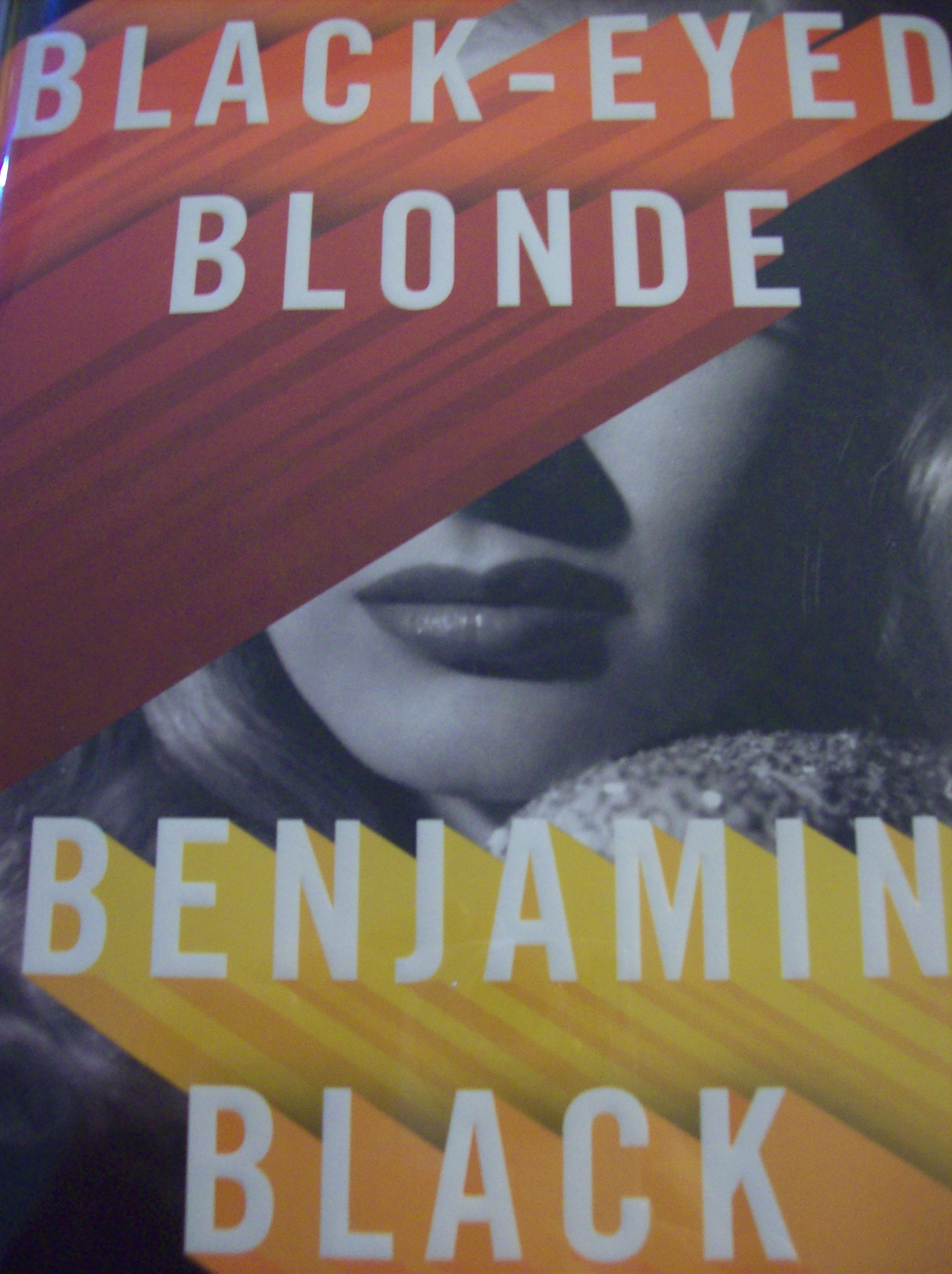
The first twist in this mystery is that the author is not really who he says he is.
Somebody who is not Raymond Chandler just wrote and published a Phillip Marlowe book. Phillip Marlowe books are/were usually written by Raymond Chandler. I never got around to reading any Raymond Chandler novels. I was more of a Dashiell Hammett and Mickey Spillane type when I was in my (brief) hardboiled detective phase. If I ever decide to read a Phillip Marlowe book, I’ll probably read one that’s written by Raymond Chandler and not one written by the new guy.
I checked out the new Phillip Marlowe book from the library, almost by accident. The reason I was attracted to The Black-Eyed Blonde by Benjamin Black in the first place was because of the title and the author’s name. You rarely see a book where the author and the title have the same word in both (unless the book is about the author). Maybe the word “black” isn’t really in the title; purists might say the word is “black-eyed” instead of black, but I don’t complain about near-rhymes in poetry, so I won’t complain about the difference between “black” and “black-eyed.” Sometimes I have odd reasons for selecting books.
But then I found out that Black isn’t really the author’s last name. His real name is John Banville, and he’s written some award-winning novels (Christine Falls and Holy Orders) that I’ve never heard of. So John Banville used a pen name to write a novel about a popular classic character that he didn’t create. Now I feel cheated, even though I didn’t spend any money on the book (unless you count my tax money that pays for the libraries).
But my outrage is nothing compared to what Raymond Chandler fans probably feel. When all the Raymond Chandler fans get mad and want to vilify whoever ruined a Phillip Marlowe novel, Benjamin Black will get all the grief instead of John Banville.
From what I’ve read about John Banville (not much), he has a decent reputation as an author. And writing a Phillip Marlowe novel is probably a good gig, as long as you know ahead of time some readers/critics are going to hate you no matter what. Benjamin Black (I keep getting confused) may have written an outstanding whodunnit, the best in decades, and it still wouldn’t matter to Raymond Chandler fans. Since it’s not Raymond Chandler, it will automatically suck. That’s not necessarily my opinion. I’m not a Raymond Chandler fan, so I have no biases, except I’m mad that the author’s last name isn’t really Black.
I don’t blame John Banville or Benjamin Black or the publishing company for wanting to write/publish a Phillip Marlowe book not written by Raymond Chandler. From their point of view, this is an opportunity to increase book sales and make lots of money. Even if the new Phillip Marlowe book isn’t very good, it will probably sell a few copies and maybe even lead to more sales of old books that Raymond Chandler actually wrote.
This isn’t the only time that a beloved character has been written by somebody other than the original author, but it doesn’t always work. A James Bond novel written by somebody other than Ian Fleming is just a book about a spy who happens to be named James Bond. A Godfather book written by anybody other than Mario Puzo is just a book about a bunch of gangsters who happen to have the last name Corleone. And a Phillip Marlowe mystery written by anybody other than Raymond Chandler is just a book about a detective who happens to be named Marlowe.
A book written by John Banville/Benjamin Black isn’t going to be automatically worse than a novel written by Raymond Chandler, but The Black-Eyed Blonde will probably be compared to The Big Sleep or The Long Goodbye. The Black-Eyed Blonde probably won’t be compared to Raymond Chandler’s worst book, (whatever it is); it will be compared to his best, and some people will hate Benjamin Black’s version, no matter what.
I don’t have a problem with this “hate it before I read it” attitude. I’m not one of those people who thinks everybody should be open to everything. When it comes to literature, readers should be closed-minded at times. There are too many books out there to keep up with, and being closed-minded brings an order to a chaotic publishing industry.
I’m not going to read the Phillip Marlowe novel that’s not written by Raymond Chandler, but I don’t have a problem with it. How about you? Would you read a book about your favorite character if it wasn’t written by the original author? Would you write a book about your favorite character, and which classic character would you write about? And if you do write a novel about a classic character, should you use your real name or a pen name?
DISCLAIMER:
Much of this post was plagiarized from something I wrote about six months ago, when I found out that a new Hercule Poirot novel was being written by Sophie Hannah, an author who is NOT Agatha Christie. If my self-plagiarism confused you, I apologize. If my self-plagiarism offends you, I probably won’t apologize because you might get offended too easily.

When people talk about me behind my back, I don’t care. I’m a quiet person, so I probably don’t get talked about that often, and even if I am being talked about, I’m not the kind of guy who’ll confront a person who talks about me, and I won’t yell stuff like, “If you have something to say about me, say it to my face!” I’d rather somebody say something bad about me behind my back than to say it to my face. If people talk about me behind my back, then I don’t have to deal with it. If they say it to my face, then I have to respond, and I usually don’t like responding to people to their face(s).
According to Kirk, Daniella was saying stuff about me to a group of women in the next room. We were at Jerome’s birthday party, and over a hundred people were in his house, and it was loud, and I was sitting watching a basketball game that I didn’t care about in a side room just so to get away from all the noise. If anybody else had been talking about me, I wouldn’t have cared, but Daniella was my girlfriend, and things seemed to have been different recently. She was acting more affectionate and didn’t seem to care about the money situation as much. I didn’t know what was going on with her. She said she was “feeling” me, and that’s a term that guys didn’t use back then (in the early 1990s), so I was a little confused.
I sighed after Kirk was done talking. “Do I really want to know what she’s saying?”
“Yeah, you do!” Kirk said. “Daniella’s been telling all the girls that…” He looked toward the other room where Daniella was still the center of attention. “She says… you’re a great… you’re the best…she’s ever… you know…”
Kirk looked around again and then shook his hips a little. The women around Daniella cackled loudly again, but it wasn’t at Kirk. “You know what I’m talking about.”
Kirk knew I was not comfortable having conversations about personal matters, so I just leaned forward in the sofa and pressed my fingers to my forehead. At least Daniella was saying something nice about me, even though it probably wasn’t true. Of all things, the double standard bothered me. If I had complimented her about the same thing that she was praising me for, everybody would have thought I was inappropriate and vulgar. I’d never even think about saying anything similar about Daniella. I thought it, but I didn’t say it. And I didn’t think she should say stuff like that about me, especially in public, especially around a bunch of my friends.
Plus, it was a lie, the idea of me being the best… I knew that wasn’t true. Then again, I had no frame of reference. I couldn’t really compare myself with other guys, or with her previous boyfriends. There really was no way to verify that what Daniella was saying was true or false. I couldn’t build a time machine and watch her with her ex-boyfriends. That would have been gross. And obsessive. And probably an invasion of privacy.
“At least she’s talking you up,” Kirk said. “I was worried about you when she watched all of us pee in the trough, but she’s a keeper.”
I really didn’t like Daniella talking about topics like that. A part of me was tempted to grab Daniella and shout at her “WHAT ARE YOU THINKING???!!!” but that was a good way to get a beer bottled shattered on my head. Plus, it would have been kind of abusive. She’d already had a couple (that I knew about) abusive boyfriends.
Instead, I got up, went into the next room, scooted myself next to her, and linked an arm to hers. The women around her looked me over and giggled. I could feel my ears turn red. I could barely talk to her over the music in the next room.
“Can we talk someplace quiet?” I said as loudly as I could without yelling.
“What?” Daniella shrieked directly in my ear. Then she grinned, took my hand, and walked me out the front door. Kirk nodded at me when we passed him. It was much quieter outside.
“I’ve heard that you’re spreading vicious rumors about me,” I said in sing-song voice after we stepped outside.
“I don’t know what you’re talking about,” she sing-songed back with her grin.
“You’re saying very… personal… things about me… us.”
“So?”
“It’s embarrassing.”
“Why? You’re a stud.”
I laughed. “You’re exaggerating, a lot.”
“No, I’m not. That’s how I feel about you.”
“But…I…”
Daniella stood in front of me with her hands on her hips. “You’re my man, and I can’t stand it when you put yourself down,” she said.
I stepped back. “It’s called self-deprecation.”
“I don’t care. Stop it.” She pointed at Kirk through the open front window. “He’s a piece of shit, and he never says anything bad about himself. And all my old boyfriends, they’re all pieces of shit, all of them.”
She moved forward and kept talking. “So, from now on, I want you to stop putting yourself down. I want you to walk around like you’ve got a big…”
“I know,” I said. “I heard about what you told everybody.”
“Good,” she said. The dispute was settled. “I want to dance.”
She grabbed my hand again and led me inside to the living room in the back of the house. The last time we’d danced was on New Year’s, and she’d worn a tight dress and rubbed herself all over me on the night club dance floor, while I’d clung to a beer bottle that I didn’t drink from and kept still with a blank expression on my face. In Jerome’s house, there was no techno and hardly any R&B. It was punk, new wave, and classic rock. The Ramones were singing about beating a brat with a baseball bat (this was back in the early 1990s when people still listened to The Ramones), and a bunch of guys in their 20s and early 30s were jumping around swinging their elbows. I could jump around and swing my elbows. Daniella ran onto the floor in front of me and jumped around swinging her elbows.
The key to being a bad dancer is to not care that you’re a bad dancer. That’s very logical, but self-consciousness is an irrational enemy that overcomes logic. Even as Daniella jumped around, I wondered if others around me noticed how clumsy I looked. Then Daniella pounced and stuffed her beret on top of my head. She shook her whole body, and her long, dark hair flew around in all directions. Nobody was going to think twice about my clumsy bouncing around while she was doing that. Then she started swinging her two fists together in a baseball bat motion, and a bunch of other guys started up too. There were about 30 of us on a living room floor jumping around pretending to swing baseball bats. I guess none of us liked kids.
When the next song came on (one I didn’t recognize), Daniella reached for the beret, but it fell and I caught it and gave it back. We started jumping around swinging elbows, and I was feeling good. I didn’t care if I looked stupid. At that moment, I was a stud with a hot girlfriend, and a bunch of guys were jealous of me. I could swing my elbows all I wanted, and nobody would care. I was starting to understand why people liked jumping around and swinging their elbows.
Then my elbow cracked against something hard. The jolt of pain shot up my arm, and I reflexively cradled my elbow and bent down. Even in my pain, I noticed that everybody was staring at the floor behind me. A woman curled on the floor, her hand over her face. Her boyfriend and a couple other guys knelt beside her, asking her questions and trying to get a look at her face. When she turned toward me, I saw blood cover her face. Her boyfriend got up to fight me, but Jerome and Kirk held him back.
“I’m sorry, I’m sorry,” I repeated all around me, while holding my elbow.
Even though Daniella’s head was down and her hair covered her face, I knew exactly what her expression was.
“I know it’s not funny,” Daniella said, trying to keep a straight face when she peeked up. “But I’ve seen a lot of fights, and I never saw anybody go down that fast.”
As we watched the woman being carted off, I said, “That’s why I don’t dance.”
“It was her fault,” Daniella said. “But I shouldn’t say that too loud.”
“I didn’t mean to…” I said to Daniella and anybody else who could hear me. The music kept playing, but nobody was jumping around anymore. “I didn’t know she was…”
“How’s your elbow?” Daniella grabbed my arm and twisted it in several directions. “Does that hurt?”
It hurt a lot, but I didn’t want to yank my arm away from her, so I used it to pull her closer. She took my arm and guided me to a dining room that was almost empty. We could speak softly there.
“The next time you get into a fight…” she said quietly.
“I’ll use my elbows, I know.”
Daniella laughed. “I’ve never had a boyfriend who finished my sentences.”
I thought about that. We were starting to do that a lot, and I’d never noticed it until she mentioned it.
“I would tell you what I think it means, but you’d get mad,” Daniella said. “I know you hate the word I’m thinking of.”
I didn’t know what she was talking about. Daniella hated the word “love,” but it didn’t bug me. I hated the word “share,” but I didn’t think it was the word Daniella was thinking of. What word was she talking about?
“Soul mates?” Daniella said with hesitation.
I cringed. I despised the term “soul mates.” I didn’t even know I despised”soul mates” until she’d said it.
“I knew it!” she said. “I knew you’d hate it. And if I knew you hated it before you told me you hated it, that means we’re…”
“Don’t say it,” I said. “I mean it.”
“Sssssoooouuuuuuulllllll mates,” she whispered.
I studied Daniella, with her thick, black glasses and her cheese-eating grin. Then she bear-hugged me tightly around the waist and pushed us against a wall. “I promise, I’ll never say that to you again.”
The way she’d bear-hugged me, the warmth of her body against mine, the way Jerome watched as us we thudded against his living room wall, I couldn’t believe how good I had it right then. I’d never had it this good. Even with my elbow still throbbing, it didn’t matter. The beret tilted down on Daniella’s head at a sharp angle, pushing hair over her face, almost covering her smile. Daniella was talking about me like I was stud, groping me in public. No girlfriend had ever done that before. I didn’t condone such behavior, but it was a great feeling. And even though I hated the word “soul mate,” and thought the whole idea was ridiculous, if I had to have a soul mate, I was a lucky guy to be emotionally or spiritually connected to hot chick who could act cool, recite dirty limericks, make everybody think she’d read classic literature when she hadn’t. Despite everything I knew about her, at that moment I believed we were going to be together for a while, and it was a great feeling.
This would have been a perfect place to end the story.
*****
To be continued in… The Literary Girlfriend: Proof of Relationship .
If you want to read “The Literary Girlfriend” from the beginning (it’s gotten kind of long), start here.
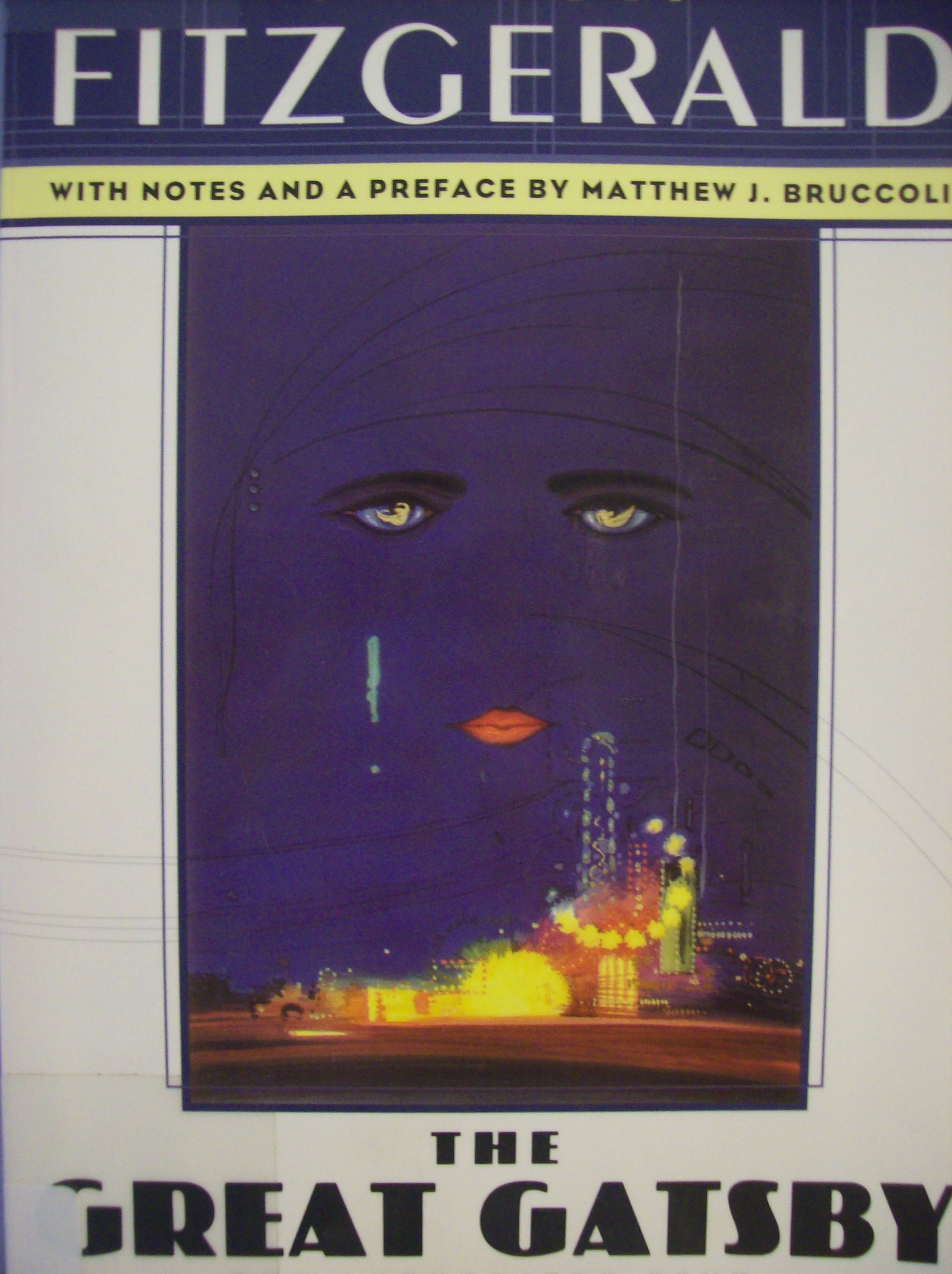
Even a great author can write an occasional bad sentence.
When I first read The Great Gatsby decades ago, I didn’t question anything about it. Everybody I knew who read books said it was a great book, so I assumed I was reading a great book. As far as I was concerned, if F. Scott Fitzgerald wrote it, if Hemingway or Steinbeck or Twain or Dickens wrote it, then whatever it was must have been great. I didn’t question these things. Who was I to question the writing of a great novelist?
I started reading The Great Gatsby a couple weeks ago, but I had to stop because of some of the sentences. I don’t know how critical to be of sentences in a great, influential book. I hesitate commenting on The Great Gatsby because I criticized Holden Caulfield last week, and I don’t want to come across as constantly nit-prickety. But at the same time, if anybody (or any book) can be criticized, it’s The Great Gatsby. It’s not like F. Scott Fitzgerald is going to have his feelings hurt.
I know I have my fair share of bad sentences in my own writing. You can probably find a few of them here at The Sunset Rises: A 1990s Romantic Comedy.
Whenever I edit anything I’ve written, I cringe at poor word choice, poor sentence structure, and stilted dialogue. But I have a time-consuming job that has nothing to do with writing. I have a family that I spend time with. I write when I get the chance. I don’t get all day to bang away at a keyboard, and I don’t get to hang out with cool, famous people at cafes at night and talk about the world (or talk about whatever cool, famous people talk about).
Heck, I don’t even have an editor. I am the editor. Being my own editor is like being my own lawyer, so I know what I am. But I don’t have much choice.
I promise, I wasn’t looking for sentences to criticize or complain about. I was just reading The Great Gatsby when I noticed the first bad sentence early on (p. 11 in my copy) when Tom Buchanan is introduced:
“Two shining, arrogant eyes had established dominance over his face and gave him the appearance of leaning aggressively forward.”
Why is that a bad sentence?
I could maybe understand explaining that Tom Buchanan had two eyes. It seems unnecessary because most people have two eyes, but that’s okay. It’s the “shining, arrogant eyes.” If I had written “shining, arrogant eyes” in college, my writing instructors would have explained to me that eyes cannot be shining or arrogant (maybe I could have gotten away with “shining” if the eyes were reflecting in the dark). There might be an arrogant expression on a person’s face, but eyes by themselves are not arrogant. And then to have two arrogant eyes? Maybe if Tom had had one arrogant eye when he had two eyes, that would have been worth mentioning. A person with one shining, arrogant eye and one dull, normal eye… now THAT’S someone worth describing.
After thinking about that bad sentence for a few minutes, I continued reading. Then a couple pages later , I ran into another bad sentence, this one describing Jordan Baker:
“She was extended full length at her end of the divan, completely motionless and with her chin raised a little as if she were balancing something on it which was quite likely to fall.”
Why is that a bad sentence?
I get the impression that this was a rough draft sentence that Fitzgerald never went back to finish. She was balancing SOMETHING on her chin. The word “something” is kind of vague. If I had written that in college, my writing instructor would have demanded that I come up with another word for “something.” “Something” is what you write when you’re not sure what word you want to put in in its place. I kind of want to know what that something could have been. If I am going to write that a character has her chin raised like she were balancing something that was likely to fall, I should be able to think of something that could be balanced on a chin. A napkin? A cocktail glass? Several cocktail glasses? A book?
If The Great Gatsby were 800 pages long, I could understand “something” being in the book. But The Great Gatsby is short. F. Scott Fitzgerald was a professional writer. When I was in college, I couldn’t use the word “something” without getting chewed out. If F. Scott Fitzgerald could get away with using the word “something” in a universally acclaimed work of literature, I at least want to point it out. And I want to know, what could have been balanced on her chin that was quite likely to fall?
Yes, I know I get bothered by trivial things. I can’t finish reading The Great Gatsby because Tom Buchanan has “two shining, arrogant eyes” and Jordan Baker raises her chin “a little as if she were balancing something on it which was quite likely to fall.” Maybe it’s because I’m getting older and grouchier. Maybe it’s because I’m writing more than ever, so I notice things that I wouldn’t have picked up on before. Either way, it’s probably a miracle that I finish reading any books at all. Before I read any further, I must know if these sentences are bad, or if I am a bad reader.
Am I being too critical? Was my college writing instructor too critical? Without his criticism, I never would have become this critical. Is The Great Gatsby such an awesome novel that it can no longer be criticized? Am I just a crank who uses any lame excuse to not finish a book?
While I ponder these questions, I’m going to balance a copy of The Great Gatsby on my chin. Despite it being such a small book, I believe it is quite likely to fall.
*****
Here are more Bad Sentences in Classic Literature!
Bad Sentences in Classic Literature: Jane Eyre
Bad Sentences in Classic Literature: Moby Dick
Bad Sentences in Classic Literature: The Great Gatsby
Bad Sentences in Classic Literature: The Scarlet Letter
Bad Sentences in Classic Literature: Harry Potter and the Sorcerer’s Stone
Bad Sentences in Classic Literature: Great Expectations
Bad Sentences in Classic Literature: Pride and Prejudice
*****
A grammar-obsessed English teacher falls in ‘luuuvvv’ but discovers how chaotic and dangerous ‘luuuvvv’ can be.
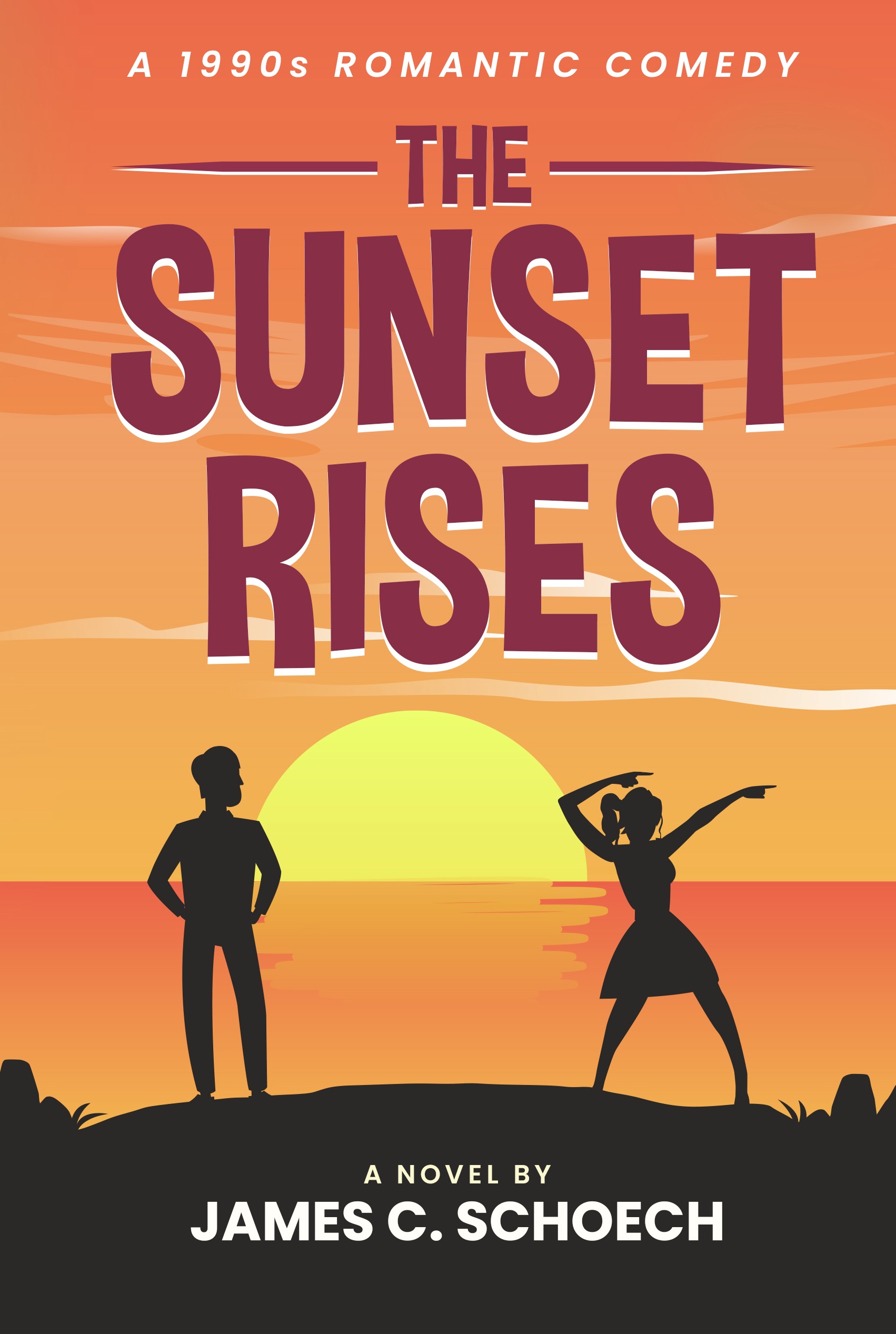
The Sunset Rises: A 1990s Romantic Comedy
Get a signed copy of my one and only novel The Sunset Rises: A 1990s Romantic Comedy. My handwriting is actually legible, but I’m left-handed, so I might smudge the signature. Free shipping!
$20.00
Or you can buy a copy here on Amazon!
Not sure? Read a sample chapter of The Sunset Rises: A 1990s Romantic Comedy.
I liked this book, but I wish I could remember the author’s name.
I was just surprised by a book. I had read a sample of it a month ago and thought I knew what it was about. Then I saw a copy at the library and checked it out. The book went in a direction that I hadn’t foreseen. It wasn’t a great book, but if you like action-thriller novels, then you’d probably like this book.
Runner by Patrick Lee is a guy’s book. I hope it’s okay to call a book a guy’s book. Sometimes when I refer to certain novels as women’s books, women (not all) get mad at me and claim that it’s sexist to call a book a woman’s book. I’m not saying women’s books are inferior. I’m saying that most men wouldn’t enjoy reading most women’s books, and most women wouldn’t enjoy reading men’s books. I think a lot of men would like reading Runner, but most women wouldn’t. My wife understands that. She reads women’s books and doesn’t expect me to read them, and she doesn’t lecture me about centuries of repression when I start reading books with lots of explosions and high body counts. She also watches football. I can’t really ask for much more than that.
Runner was published in 2014, so there hasn’t been much time for other people to damage the library book that I borrowed. Somebody had already folded the top corners of pages as bookmarks, and that would have ticked me off if the book had been mine, but it was the library’s book, so that didn’t bother me. The book didn’t have any boogers or blood stains in it, so that made me happy. When a library book’s worst blemish is a few folded pages, then that’s a relatively clean library book. I was mildly surprised by that.
It’s rare that a book surprises me. If it’s a classic, I know most of the story because I read a bunch of Classics Illustrated comic books as a kid (some might call that cheating). If it’s a recent book, the book jackets usually give away too much information, and online reviewers sometimes reveal what the book jackets don’t. So anytime I get surprised by what happens in a book, I’m… surprised?
Runner went in a couple directions that I never would have predicted from the sample or the book jacket. And it worked. I don’t do spoilers, so I can’t tell you what surprised me. The pace was quick, but I knew that from the sample. There was a lot of cat-and-mouse stuff going on, but I knew that from the sample. The bad guys were powerful government people, and the protagonist was ex-military elite, and I knew that from the sample. There was a lot of action, explosion, a high body count, but I had guessed all those things from the sample as well.
I’m glad I didn’t know ahead of time what the book was really about. If I had known, I probably wouldn’t have read it because it sounds implausible, and I wasn’t in the frame of mind to read that kind of book. But I was enjoying it too much to stop. The turn of plot that surprised me wasn’t even on the book jacket summary. Book jackets usually give out way too much information, like movie previews. I wonder if the book publishers intentionally kept the plot of the novel off the book jacket because they believed it would have turned a lot of readers off. I’m glad they didn’t mention what the book was really about.
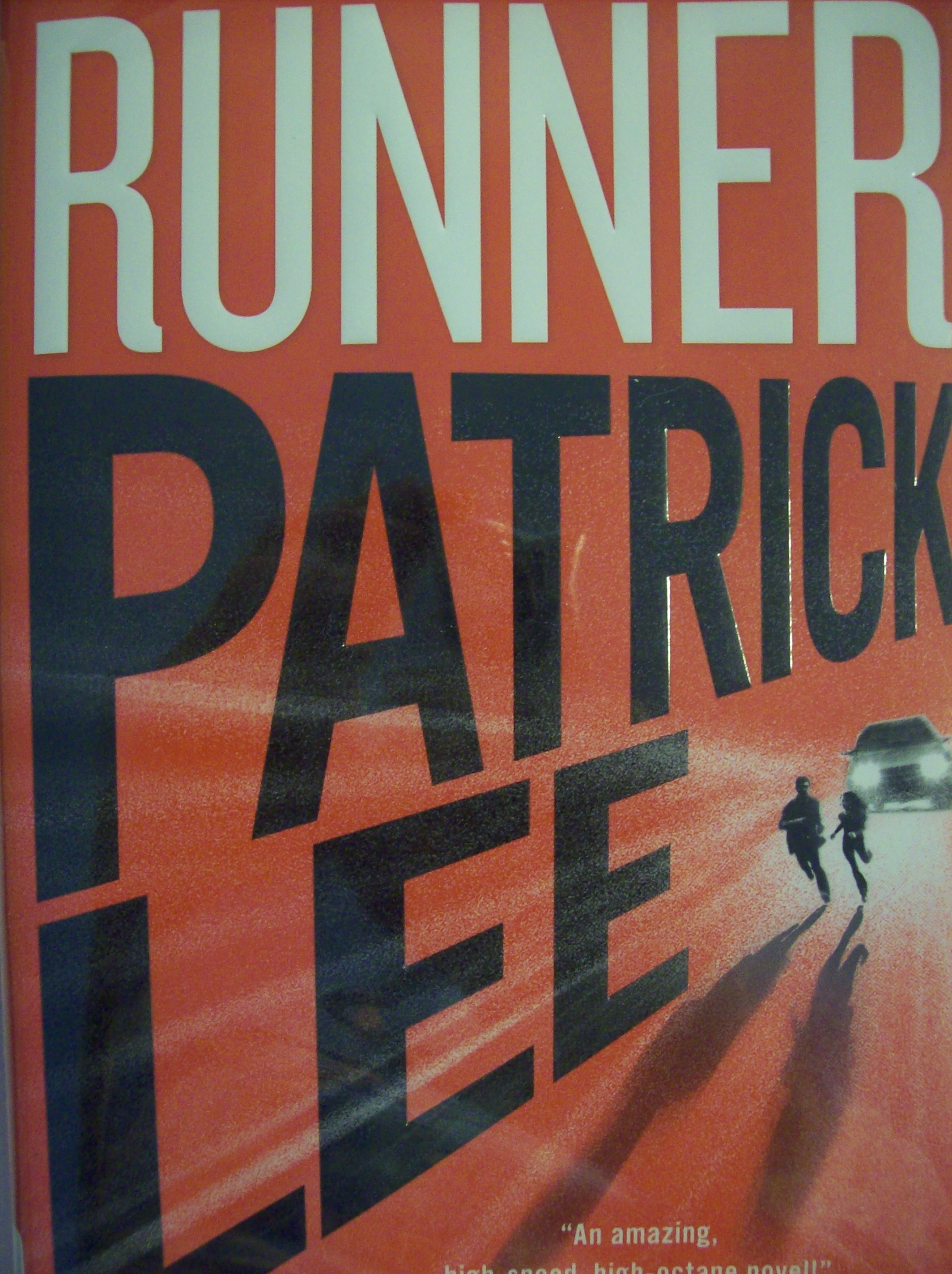
I wasn’t wild about the cover of Runner because the author’s name is in bigger letters than the title. I don’t know what it means when the author’s name is in bigger letters than the title. I had never heard of this author Patrick Lee before. Seeing his name in big letters didn’t help me remember his name any better. I still had to look at the book cover a few times to remember who wrote the book. I don’t like it that an author I’ve never heard of has his name in such huge letters on a book cover. It probably shouldn’t bother me, but it does. Maybe if his name were Stephen King, or John Grisham, or even (shudder) James Patterson, I could see why the publisher would put the author’s name in such big letters. But I’d never heard of this guy before. I should barely see his name on the cover.
On the negative side, about 2/3 of the way through the book, there was a really implausible escape. Action-thrillers always have implausible escapes, and this was right up there. It’s the kind of implausible escape that belongs in a Hollywood blockbuster, but I don’t like it when Hollywood blockbuster escapes are in the books I read. I think a book should be more believable than a movie, but maybe I expect too much from an action-thriller novel. I don’t mind implausible plots, but the escapes should be plausible. Something in action-thrillers should be plausible. But even with that highly implausible escape sequence, I still liked Runner. I liked it more than I thought it would, and that was a good surprise.
What books have you been surprised by? How much do you usually know about a book before you start reading it? Should action-thriller novels have implausible escapes? Am I wrong to care about how big the letters of an author’s name are on the cover? Is it sexist to call certain books “men’s books” and other books “women’s books”?


 Dysfunctional Literacy
