
During The Pledge of Allegiance and The Star Spangled Banner, TAKE OFF THAT CAP!!!! I’m sorry. I didn’t mean to yell. (image via Wikimedia)
I just saw a clip of a celebrity telling a joke at a college graduation speech. The punch line wasn’t that good, but the audience laughed heartily, and it made cable news, so everything worked out fine.
I understand why a school would want a celebrity for its graduation speaker. Celebrities bring publicity, and every school wants good publicity. Plus, it makes the graduates excited. Graduation ceremonies can be boring, so anything that livens it up is good. There’s one big problem with celebrity graduation speakers, though. Celebrities give lousy advice.
Celebrities often say mushy stuff like “Reach for the stars!” or “Follow your passions!” or “Go buy my next movie/book/song/etc!” The advice sounds great, and it’s always delivered well, with just enough emotion to make it believable (I’ve always had problems putting emotion into my voice. How do people do that?), but when you think about the advice, it’s impractical. Maybe I’m too practical, but graduation advice should be practical.
I don’t want to pick on any particular celebrity. They’re not doing anything wrong by speaking, and hopefully they’re speaking in the interests of the students and not for their own careers. Unless it’s somebody like James Franco or James Patterson (and I don’t know if they do graduation speeches), I don’t want to name names. I don’t want to become that kind of blogger.
Despite their success, celebrities aren’t the best people to give advice to graduates. This isn’t a knock on celebrities. They’re rich and famous, and a lot of graduates would like to become rich and famous, but most celebrities have advantages that most graduates don’t have, such as a combination of talent, good looks, family money, and/or extreme ambition.
Graduates might have some of those advantages, but most don’t to the degree that celebrities do. For example, when I graduated, I had some talent, but not the good looks, family money, or extreme ambition. If a writer had spoken at my graduation and had said “Follow your passions!” and I had listened to that advice and tried to become a writer, it would have disastrous. I wasn’t ready. Sitting at home for eight hours pounding keyboards wouldn’t have made me ready. I would have ended up broke and bitter.
Fortunately, I decided in college to use my education to get a job where I’d be employed for a long time. It’s a boring job. I didn’t reach for the stars. I didn’t follow my passions. But I’m doing pretty well. It’s the kind of story that graduates need to hear, but not from me because I’m a boring guy.
That’s why schools hire celebrities for graduation speeches. A normal guy like me is boring. I could have the most inspirational story (I don’t), but I’d put everybody to sleep with my monotone voice. A lot of non-celebrities are boring. On the other hand, most celebrities are great public speakers, and they’re interesting. My graduation ceremonies had non-celebrity speakers, and they were boring, and I don’t remember anything they said. But they probably gave great advice.
Last year at this time, I wrote a piece called Bad Graduation Advice (it looks amazingly similar to the piece I wrote this year). In that piece, I criticized a lot of bad advice that celebrities give graduates. I also gave one piece of advice:
Be content with having a job that sucks.
I regret phrasing my advice that flippantly. It turned some people off. I didn’t mean that you had to be content with having a job that sucks (so I probably shouldn’t have written “Be content with having a job that sucks”). I meant that not everybody can be a celebrity or live off their passion. Some people have to do the hard work that has to get done. Celebrities, as much as we might celebrate them, don’t do the jobs that have to get done.
So this year, I have rewritten my advice to graduates. I hope it doesn’t come across as too negative this time. I’m really not a negative person, and graduates don’t want to listen to negative advice. I don’t blame them. So here is my second attempt to give advice to graduating students this year:
Find your passion; then find a job that will fund your passion.
*****
I have nothing against celebrity graduation speakers. If my daughters’ graduations have celebrity speakers, I’ll be eager to attend. I’ll just urge my daughters not to pay attention to their advice. I’ll also explain to them that off camera, celebrities are just people (with talent, good looks, and extreme ambition). After all, I’ve met two celebrities.
One celebrity hit on my wife, which I thought was funny. I was proud. The other one yawned in my face before I could even say anything. Most people wait until I start talking before they yawn. At least when the celebrity photo was taken, he wasn’t yawning. He just looked bored. But my eyes were open and I was looking straight at the camera, so I don’t care if the celebrity was bored. Neither of my celebrity meetings were at graduation ceremonies.
*****
What advice do you have for high school/college graduates? What advice do graduates have for us old folk? Do graduates get tired of hearing advice from people they don’t know? Is “Follow your passions/dreams/heart!” really good advice and I’m too shallow to recognize it? Has a celebrity ever hit on you and/or your significant other?
*****
My job helped me pay my bills so that I could write this book in my spare time.
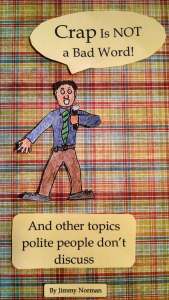
Now available on Amazon!

Maybe you’re not really afraid to ask the following questions about social media, but I am. (image via Wikimedia)
As a blogger, I probably should know more about other forms of social media, but I have a blog to write. I don’t have time to be social. Plus, there are a lot of things about the OTHER social media that I’m not wild about. There are too many tweets, too many selfies, too much staring at a phone while walking/talking/driving. It makes me cranky enough to open my front door and tell a bunch of kids to get off my lawn, except they wouldn’t listen to me because they’re all staring at their phones.
Since I’m an aspiring writer, I feel the need to utilize this… ugh… social media. It’s too potentially valuable not to use. But a lot of it could also end up being a waste of time, and I don’t want that either. So before I decide to commit time to other sites like Twitter or Instagram or Tumblr, I’d like to get answers from people who might know more than I do. I’ve felt like asking these questions for a while, but I’ve hesitated because I don’t want to come across as rude.
However, I’ve always been told in school and in training sessions that if I have a question, then a bunch of other people probably have the same question and are too afraid to ask. So here are five questions about social media I was afraid to ask:
1. How many tweets do you actually read?
This question might seem rude, but it’s very important to me. A lot of people have hundreds, even thousands of followers on Twitter . To get those followers, you have to in turn follow almost that many other people (unless you’re a celebrity or you’ve got a great gimmick). I have less than 20 Twitter followers. I would follow more, but even by following less than 20 people, I have a tough time keeping up with their tweets. If I can’t do it, how can somebody who follows hundred, maybe even thousands, of people?
So, if you follow hundreds or thousands (or hundreds of thousands) of people, how many tweets do you actually read?
*****
2. How do you find the time to do all this social media stuff?
I have a blog and a Twitter account (which I hardly ever use). Other people have both plus Facebooks, Instagrams, Link’d, Google+, and a bunch of other stuff that has cropped up recently. I have a full-time job and a family, and use my free time for writing (blog and one other major project). If you use more than one kind of social media, how much time do you devote to each? I go to my blog at least once a day (usually more, especially if I write something that day). I look at my Twitter account maybe once every few days (which defeats the purpose of having a Twitter account, I understand that).
I don’t have much time for anything else. If you spend a lot of time on more than one site, how do you do it? Do you do it at your job when you’re supposed to be working? I have co-workers that do this. Do you not get enough sleep? Do you never step foot outside? What part of life do you ignore so that you can spend so much time on social media?
*****
3. How much of social media is actually useful?
When I read through Twitter, Instagram, and Facebook, I think most of it is a waste of time. It’s a fun waste of time, but most of it seems to have little real purpose. It looks like something people use to kill time, which is fine because I watch football, and nobody who watches football can complain too much about what others do with their spare time. But I expected more.
For example, most people blog for a purpose. My main purpose is to improve my writing skills so that I maybe I can do something with my writing when I retire from my job that has nothing to do with writing. No other form of social media does that for me as much as a blog does. Other bloggers use Twitter, Facebook, and Instagram as supplements, but most stuff that I see out there seems pointless, except to let others know they’re out there. All they’re doing is being social, which kind of makes sense because it’s called “social media.”
Okay. I get it now. I’m not very social so, of course, I wouldn’t understand social media.
*****
4. Where am I supposed to respond to you?
If you use a blog, and Twitter and Facebook, and Instagram, and more, and it’s all connected, then which one do you want me to leave a comment on? If you write a blog post, and I notice you publicizing it on Twitter, do you want me to respond on Twitter, or do you want me to go to your blog and comment? Because you know… I can’t do both. I just can’t.
*****
5. Have you ever sent out pictures of body parts?
Maybe I should rephrase that.
*****
5. Why do people put so many pictures of themselves online?
Even if I wasn’t somewhat anonymous as a blogger, I wouldn’t want many pictures of me on Twitter, Facebook, etc. I wouldn’t want potentially millions of people looking at my picture. I’m not ugly (maybe kind of average), but it’s just the idea of so many pictures. I don’t understand the selfie fascination. The novelty of it should have worn off by now.
I’ve taken one selfie just to prove that I could do it, and it’s a good picture. You can see the background, and you can’t even see my arm. I nailed it on my first try. And I did it in public. And I showed it off to my daughters, who then wanted to be in a selfie with me (well, the youngest one wanted to, the oldest one just turned old enough to be too cool to be seen in a picture with her dad). But once I was done selfie-ing , I didn’t text it, Twitter it, email it, Instagram it, Facebook it, or anything. I kept it. Maybe that’s one reason some people think I’m a boring guy.
*****
I’m glad all this technology wasn’t around when I was growing up. Between the porn (which I don’t have many questions about) and the social media, I never would have gotten my school work (or anything) done. I’m glad that all this stuff has happened at a time when my brain can handle it without getting carried away.
But enough about me! Which of these questions about social media can you answer? What questions about social media do you have that I haven’t asked? What questions do you have about my own usage of social media? Were these questions rude, insensitive? Were you afraid to ask the same questions? Have you ever been afraid to ask a question?
Daniella had pulled a knife on me. As I rolled around sleepless in the hotel room that night, that was all I could think about. Maybe I shouldn’t have been so surprised. After all, she had once smashed a bottle on an ex-boyfriend’s head. She had stolen furniture from another dancer who owed her money. She almost got me beat up by three big guys in a parking lot when she had been pissed off at me. I had seen her start several loud arguments in public. She had even gotten herself punched out in a restaurant just to get an old nemesis arrested. In high school, she and her friends had jumped a homeless guy. And that was just the stuff I knew about.
I reviewed the argument and the knife-pulling. I tried to remember who said what to whom and in what order. I tried to imagine Daniella being counseled by Father Murdock and then pieced together how he had kissed her. Despite Daniella’s history of lying, I believed her about that. I also believed that she had set him up to do it and that if she had set him up to behave a certain way, she shouldn’t sue him for behaving the way she had set him up to behave. But she had a shady lawyer involved (I don’t really believe that “shady lawyer” is redundant), so that reinforced my belief that Daniella had set the poor guy up.
I wasn’t sure what I’d be greeted with when I returned to the apartment the next morning. I had to go back. I didn’t want to call first. Phoning ahead would seem wimpy, almost like I was asking permission to return to my own apartment. I half-expected my sliced up clothes to be strewn across the apartment complex lot. Maybe she had already changed the locks. Instead, the complex was serene in a typical Sunday morning calm, but when I walked up the steps outside my apartment, a brute of a guy stood at the door blocking my entry. He was curly haired and muscular with a gray shirt and jeans. His eyes remained set on me while I slowly, almost reluctantly, walked up the steps. I reminded myself that I really needed to get a carry permit.
“Good morning,” I said, trying to be casual and polite. “This is… uh… my apartment.”
“Hey!” the brute called into the apartment. “Some skinny guy says he lives here.”
I heard Daniella’s voice, and the brute stepped aside with a quizzical expression. I’d seen that look before. Daniella and I were a physical mismatch.
“What the hell?” I said as I walked in.
The apartment was empty, except for my old bookshelf in the living room and some boxes lying around. Daniella, in a tight red t-shirt and spandex shorts, came out of the hallway. I put everything together, the stud brute, the empty apartment, and Daniella in a skimpy outfit. I felt sapped. My shoulders slumped. I stared at the brute for a moment and then muttered to Daniella, “That didn’t take long, even for you.”
“I’m paying him to move my furniture out of here,” she said, and nudged me hard with her shoulder. “Dumbass.”
Okay, that made more sense, I thought. “Sorry,” I said.
Then a second brute in a matching gray shirt lumbered into the hallway. I knew that Daniella would never spend the night with two brutes in matching mover’s outfits. That would have been tacky.
“Six months, Jimmy,” Daniella said. “We live together for six months, and this is what you think of me.”
“I’m… still… processing,” I said.
“You were my boyfriend, Jimmy. You were supposed to back me up, no matter what.”
“The priest,” I asked slowly. “Did you lead him on?”
Daniella rolled her eyes. “Of course, I led him on. But he’s a priest, who’s engaged. And he still kissed me. He deserves whatever happens to him.”
I whistled out in exasperation. I didn’t know what to say. Father Murdock shouldn’t have done what he did, but I still felt sorry for him.
“You didn’t even hesitate when I told you yesterday,” Daniella said. “Six months together, Jimmy, and you didn’t even start to believe me. That tells me what you think of me.”
“But I don’t really think of you like that,” I said. “That’s why you shouldn’t be suing the church, or trying to marry a rich guy. I think of you as better than that.”
“You’re full of shit,” she said. Then she nodded to the two brutes. “Take the rest of the boxes to the van and wait for me there.”
The brutes marched into the bedroom and came out with stacks of boxes. Daniella watched them as they left the apartment and went down the stairs. Then she turned to me, looking me in the eye.
“Can I have those?” she asked, pointing to the books she had pretended to read, the Jane Austen novels, the Bronte novels, and some miscellaneous poetry.
“Sure,” I said. I figured she would still carry a novel with her and wear a beret and her thick, black glasses. When she dressed up as library girl, she was irresistible to educated guys with money. Evidently, she was irresistible to young priests as well.
“Can I have those too?” She pointed to my boxed set of Little House on the Prairie books. I couldn’t remember why I had those in the first place, so I nodded.
“What about those?” she asked, motioning to a hardcover collection of the Frank Baum Wizard of Oz books.
I shook my head. “Those have been in the family a while.”
She bent down and scooped the paperbacks into a box, and I watched her bend down. I felt kind of guilty, like I had the first time I’d run into her in the laundry room. After six months, I was back to sneaking cheap glances at a hot chick in a skimpy outfit.
“All your stuff is still in the second room, if you want to check,” she said, looking down at my shoes. “I didn’t cut anything.”
“I know,” I said, even though I didn’t.
“Go check anyway,” she said.
I peeked into the second bedroom where I stored most of my books and comics. Everything seemed in order. Even though my heart wasn’t in it, I flipped open a few comic boxes and inspected the condition of some of the more valuable issues. I wandered through the empty main bedroom into the walk-in closet and made sure my wardrobe hadn’t been slashed. Everything on my side of the closet was fine. Everything on her side was gone.
When I returned to the living room, Daniella had the book box stacked on top of another slightly larger box.
“Would you please carry those for me?” she asked softly.
I leaned down to pick up the boxes, and Daniella said, “Bend your knees, or you’re going to hurt your back.”
“I’m fine,” I said, cradling the boxes securely. The bottom box was heavier than I had expected.
Daniella saw me struggling and said, “That’s why you should use your legs.”
Or you could carry one of these yourself, I thought, or have one of your brutes do it.
She walked in front of me and led me down the stairs, reminding me a couple times to step carefully. When we reached the sidewalk, she again hogged the center, forcing me to either walk behind her or walk on the grass. I chose the grass, so she veered to the side so that our arms brushed together. Even after breaking up, she went for the arm brush.
“Six months, Jimmy,” Daniella said, and then sighed.
“It was a good six months,” I said. Much of it had felt surreal, but I’d remember most of it fondly, I knew.
“It didn’t have to end,” Daniella said.
“You put a knife to my throat.”
“I wasn’t going to use it. I was just making a point.” Then she groaned. “I didn’t mean to say that.”
When we reached her car, she opened the door and flipped the front seat up so that I could stuff her boxes into the back. There were already piles of stuff on the floor and the seat, so I balanced the boxes and pushed the seat back into place. When I turned around, Daniella was facing me just inches away. I had no place to move without nudging her aside. I could feel her presence, even though we weren’t touching.
“I’d never cut you,” she said. I could barely hear her. “I’d never hurt you. I just… felt betrayed.”
“You’ve got a lot of stuff in the back,” I said. “You might scrape bottom.” I pointed to the parking lot exit where low riding cars sometimes scraped.
“Oh, you’re talking about my car,” she said, fluttering her eye lashes.
I thought for a moment before I spoke. “I can’t believe we’re ending like this.”
“This is it,” Daniella murmured. I thought she was going for a hug, but instead she stood her ground. Her hands were on her hips, she stuck her chest out, and she glanced at the moving van on the far left side of the lot, and then the opposite way to the street, and then at the apartments behind me. She peered up at the sky, sighed, and then stared past me at her car.
“Goddammit, Jimmy,” Daniella said, startling me with her harsh tone. Finally, she looked directly at me and said:
“Aren’t you going to ask me to stay?”
*****
To be continued one last time in… The Literary Girlfriend: The Shocking Conclusion .
If you want to start all over again 58 episodes away, click here.

Whether you’re forced to read it, translate it, copy it, or drop it on your foot, there are many ways a book can be used as punishment.
My youngest daughter complained this week that her teacher made her copy the entire dictionary entry for the word “talk.” It’s a long entry with lots of definitions, and my daughter’s hand hurt when she was done. It was punishment because my daughter had talked a lot in school that day. My daughter thought that I would complain to the school about that kind of unconventional punishment (I think other parents have complained), but I just laughed and told her not to talk without permission at school anymore.
Even when I was a kid, the dictionary was sometimes used for punishment. My meanest English teacher forced students to copy the entire entry for words like “talk” or “run” or if they got caught talking or running. It made sense to me. Kids who farted, however, were given other disciplinary measures, though one boy volunteered to copy the definition of “fart” 100 times. The teacher told him to shut up. Some critics might say that forcing kids to write definitions makes them hate dictionaries, but the kids who had to do the copying already hated dictionaries. I liked dictionaries, and I never was forced to copy definitions. Maybe that’s why I think it’s funny.
Sometimes the courts use books as punishment as well. A few months ago, an eco-terrorist in Portland, Oregon was ordered to read a Malcolm Gladwell book David and Goliath as part of his/her punishment/rehabilitation/sentence. I’m not going to use the eco-terrorist’s name. I’m a coward. I admit it. I don’t want to make an eco-terrorist mad at me by mentioning the eco-terrorist’s name, so I shall refer to the eco-terrorist being punished simply as the eco-terrorist.
Anyway, the judge in this case hopes that the Malcolm Gladwell book will enlighten the eco-terrorist and teach him/her how to protest nonviolently. I’m a bit skeptical. I think most terrorists believe they’re already enlightened, and a mandatory book might not change his/her mind. Terrorists (eco or otherwise) are not known for being open minded.
I wonder how Malcolm Gladwell feels knowing that an eco-terrorist is being forced to read one of his books. Is he proud? Or does he roll his eyes and think, “Egads, I’ve just become one of ‘those’ writers.” I don’t know that Malcolm Gladwell says or thinks stuff like “Egads!” I’m just speculating.
Maybe the judge should have sentenced the eco-terrorist to copying an entire unabridged Merriam-Webster dictionary. It would take a long time. But it would also require a lot of paper, and the eco-terrorist might not like that. I don’t care what the eco-terrorist thinks (as long as he/she isn’t mad at me), but the eco-terrorist might have a point. Copying an unabridged dictionary really would be a waste of paper, and most environmentalists are against wasting paper.
I’ve read a couple Malcolm Gladwell books but not the one being used for punishment/rehabilitation. I read one Malcolm Gladwell book on an airplane while I was waiting for the legal drugs to kick in. One minute I was enjoying the book, and the next minute my wife woke me up telling me the flight was over. I’m not suggesting the Malcolm Gladwell book was boring. Legal drugs make me sleepy, which is what they’re supposed to do. The Malcolm Gladwell book kept my mind occupied while the legal drugs made me sleepy, and that was what the Malcom Gladwell book was supposed to do. I slept soundly on the airplane, which was what I was supposed to do. The eco-terrorist probably shouldn’t be allowed to take legal drugs while reading the Malcolm Gladwell book.
Even though I laughed at my daughter for getting punished with a dictionary, I’ve never punished any of my children with a book. I once punished them by forcing them to watch FOX News for an hour. I’m not picking on Fox News; any other the cable news channels would work, but “Fox News!” rolls off the tongue better. It was a punishment I had to use only once. For the next few years, whenever their behavior was getting out of control, I’d say “If you don’t stop, we’re watching Fox News!!” It worked. Other parents were amazed that it worked. But to get it to work, I actually had to watch Fox News with them for an hour.
Using a book as punishment might not work because it’s almost impossible to force somebody to actually read the book. It’s like the stubborn kid who refuses to eat his/her vegetables; it becomes a waiting game between the stubborn kid and the stubborn parents. The eco-terrorist could simply refuse to read the book (maybe he/she’s already read it, and it never got reported or I missed it). You can’t force a prisoner to read a book, just like you can’t force a horse to drink water. Except, I’m pretty sure a horse will eventually drink the water. It might not drink the water right away, but it will at some point. I’m not sure a prisoner will read a book, unless you deprive the prisoner of food, water, and porn, and civil liberties lawyers might have an issue with that. Or the prisoner could lie and say he/she read it. Or the eco-terrorist could get somebody else to read the book for him/her.
Music is much easier to use as punishment. There’s no way to ignore an annoying song, no matter how faint it’s being played. I won’t make a list of songs that could be used as punishment. That would be for a different blog, and I’m almost 50, so songs that make me cringe would make a young punk dance, so my punishment song might accidentally be a reward for my kids. I’m sure the songs I like make young punks cringe, so I have no problem with using music as punishment. And I’d have no problem using books as punishment, if I believed it would really work.
I might try to punish my kids with a book to see if it works, but I’m not sure which one to use. Should I use a book for pure punishment only, or should I go for a book with educational/moral value? What songs are good for punishing kids? Can a book make an eco-terrorist more enlightened? And does forcing kids to copy definitions make kids hate dictionaries?

You might be a writer if you use this, but you also might want to update your technology. (image via Wikimedia)
I don’t talk about my writing much. Nobody I know asks me about my writing because I haven’t told anybody I know that I write. If I told people that I wrote a blog and ebooks, then they would want to talk about my writing (or feel like they were obligated to talk about my writing when they didn’t really want to, and I don’t want to put them in that position). I don’t mind writing about what I write, but I don’t like to talk about what I write. I’ve had bad experiences talking about my writing.
Twenty years ago, I (semi-pretentiously) said I was a writer or wanted to be a writer, and that led to a bunch of awkward conversations. I’d explain my projects/ideas, and they always sounded lame when I tried to describe them. For example, I once wrote a manuscript about a private detective who pretended to be a psychic. He used his notoriety to drum up business, but it also got him into trouble, like when his predictions turned out to be wrong. Even though I liked my idea, and parts of the book were pretty good, I hated talking about it at social gatherings where I barely knew the people I was talking to. Eyebrows would go up.
“Psychic detective?” they’d ask.
“Fake psychic,” I said.
“Then how does he solve crimes?”
“By doing detective work.”
“Are you a detective?”
“No.”
“Then how do you know anything about what detectives do?”
“I have a couple friends who are private investigators, and they tell me stories.”
“Really? Who?” They probably asked me that because they’d rather have talked to a real private investigator than some guy who said he was a writer.
“They don’t want people to know they’re private investigators.”
“Why not?”
“It’s easier to get information from people if they don’t know you’re a private investigator.”
“So you could be a private investigator, and you’re just not telling me.”
“I could be, but I’m not. I’m not a fake psychic either.”
“You’re not a detective or a fake psychic. Then you’re extremely unqualified to write this book.”
“Maybe, but I’ll still sign your copy if you buy one when it comes out.”
I was optimistic back then, but the skeptics who cross-examined me were right, kind of. The psychic detective was a good idea for somebody else to use. I had no business writing something like that when I was in my mid-20s. I should have been writing stuff like Having a Few and Getting Some or The Writing Prompt or even “The Literary Girlfriend.” I was extremely qualified to write those.
If anybody asked me now if I was a writer, I’m not sure if I’d say yes or no. I don’t make money from my writing, and that’s an important criteria. Some would say an activity is only a hobby until you can live off it, but I wouldn’t go that far. I have a job that has nothing to do with writing. I don’t write my blog or ebooks when I’m at my job. I pretty much focus on work when I’m at work (some coworkers don’t have that philosophy). When I get the time at home, though, I write. And I take it seriously. That’s the important thing.
I’ve been writing a blog for three years. Today is the third anniversary of Dysfunctional Literacy, and this the 400th post (it just worked out that way). I missed the first two anniversaries. The good thing about blogs is that they don’t care if you miss the anniversary. They say they don’t care, and they actually don’t care, so you don’t get punished if you forget. I’m not sure writing a blog makes me a writer, but I’ve been at it for three years, and if a writer can sustain a project for three years, that means something too.
I might not spend enough time each day writing to be considered a writer. I come home from work tired, and if I’m lucky, I can get between 30 minutes to an hour to write and/or edit. When I think of a writer, I think of somebody who pounds the keyboard for several hours or more every day. Or they claim to, and I can’t claim to.
It might be easier to consider myself a writer if friends/acquaintances knew I wrote, but I don’t tell anybody I know about Dysfunctional Literacy or my ebooks because I don’t want my employer to find out about them. I don’t mention my employer at all on this blog (except that what I do has nothing to do with writing), so I can’t be seen as a representative of the company I work for. I’m not a lawyer, so I don’t know if it matters from a legal standpoint, but I don’t want it to be an issue. Plus, I don’t want some young punk at work picking an argument with me at the café about what I wrote on my blog about James Franco’s novel (it sucks. I didn’t read it, but I know it sucks). I don’t need that hassle.
Writing this has helped me figure things out. If anybody asked me whether or not I considered myself a writer, I’d say no, but I’d be lying. I do consider myself a writer, but I just don’t like to talk about it.
*****
If you’ve read this far, there’s a good chance you’re a writer or thinking about writing. Do you consider yourself a writer? What does it take to be a writer (other than writing)? How much is money an issue? How much (or long) do you need to write to consider yourself a writer? How awkward do you feel talking about your writing to people who don’t write? And feel free to answer any questions about writing that I haven’t asked.
*****
A shy writer + a cheerleader + a sick teacher + a class that hates everything = The Writing Prompt.

Now available on Amazon!
I always knew there was a possibility of Daniella and me breaking up, but I never imagined she’d put a knife to my throat. I thought our break up, if/when it happened, would be business-like. She’d tell me that she had found a rich guy she wanted to marry (and then divorce a few years later) or a handsome stud she had wanted to fool around with instead of me. It wouldn’t be ugly or messy, like Daniella’s break ups usually were. It would be a good break up.
But breaking up wasn’t on my mind as much recently. Daniella had been talking about staying together, buying a house with me, opening a joint bank account. She’d been talking me up and calling me the best boyfriend she’d ever had. She was calling me a stud, and I was starting to believe it.
It all began to fall apart when Daniella stopped going to church. I had quit going a few weeks earlier, and she hadn’t cared. Whatever her new secret financial plan was, it didn’t involve me going to church, so I enjoyed sleeping in and I gave her grief about being devout, and she’d flip me off or cuss me out just before leaving. Even when going to church, it was important for her to stay grounded.
I didn’t think anything of it when she stopped going too. Sleeping in was more fun when she was with me. Her morning grumpiness was endearing when there was nothing planned for the day. And because she didn’t go to church anymore, she didn’t secretly go to Bible study, which meant she no longer had to leave early on Thursdays to pick up her two mythical co-workers, Eve and Delilah (those were the names I’d given them). I asked Daniella once why she had stopped going to church, and she said she didn’t feel like going, and I had never felt like going either, so that was the end of it. We were two religion-free, godless (or Godless) “soul mates.”
Things became awkward at work because my boss suddenly stopped talking to me. When Daniella had been going to Bible study, my boss had been treating me in a more friendly way and would occasionally stop by my cubicle and tell me what a delightful woman Daniella was. But then he stopped visiting, and I got work-related messages from him via other coworkers (this was in the 1990s before email), and I knew that wasn’t a good sign.
After a couple weeks of a distant work relationship, I felt like I needed to know what was going on, but I wasn’t sure whom to talk to, Daniella or my boss. My boss would probably give me a more honest answer, but then I’d have to admit that my girlfriend kept secrets from me, and I’d probably end up with more new questions than answers, questions that only Daniella could answer. Daniella would either lie or just refuse to tell me (or do both), so once I decided to confront Daniella, I devised a strategy. I couldn’t demand answers because that would lead to an argument. I had to be firm and casual at the same time. I had to make her want to tell me.
I was chopping peppers for my spaghetti sauce (or maybe for our salads, I don’t remember, but I was chopping something that wasn’t an onion) on a Saturday evening just a couple hours before Daniella would leave for work. Daniella sat watching me in our tiny dining area next to the kitchen. She rarely helped cook. She didn’t wash dishes either. She also never complained about my cooking, even when I screwed things up, so I never complained about her not helping.
“I’ve got a question for you,” I said. “My boss recognized you in our photo that you gave me, the one in my cubicle. He goes to St. Luke’s. He says you go to Bible study on Thursdays. Is he right?”
I had decided ahead of time that if she lied, that I’d drop the matter, so I gave her a way to lie that wouldn’t make it sound like she was telling a lie. She could just say that he was wrong, it must be somebody that looks like her (an unlikely possibility), and I’d act like I accepted her answer.
“I guess I should have told you,” she said.
I hadn’t expected that, an indirect admission.
“Why didn’t you?” I asked.
She hesitated. “You’d of asked a bunch more questions. Why are you going? Who did you see? What did you talk about? Have you found Jesus yet?” She made a fart sound with her lips.
“Why did you stop going?” I asked instead.
“It’s a long story,” she said, stretching her arms out and pretending to yawn. Neither of us said anything for a few minutes while I made the sauce and started boiling the noodles.
“You’re giving me the silent treatment?” Daniella said.
“I’m always quiet,” I said. “And I’m cooking.”
“This is a special kind of quiet. You’re giving me revenge quiet.”
“I don’t do revenge quiet,” I said. If I had wanted passive-aggressive retribution, I would have turned on C-SPAN really loudly instead, and she knew that.
“Fine, here’s what happened,” Daniella said. She got up and paced around the dinner table. “After Bible study on Thursdays, I would get counseled by Father Murdock. In his office.”
Oh no, I thought, not the priest. He already had an attractive fiancé, but I still had an idea of where this was going. I really hoped that I was wrong.
“He counseled me about marriage and said if you weren’t ready, then I shouldn’t push you, but he also said that I shouldn’t live with you if you weren’t ready to commit.”
I braced myself. This wasn’t going to be good.
“Then, after a couple more sessions, he started telling me about what was going wrong with his own relationship. He said he was having doubts, that he might not want to get married either.”
Here it comes, I thought.
“And then, a couple weeks ago, when we were in his office, and we were alone, he… he…”
“Oh my God,” I said. I rarely say (or said) “Oh my God!” I’ve believed for a long time that “Oh my God!” is an overused expression. People say “Oh my God!” to things that don’t deserve an “Oh my God!” But this deserved an “Oh my God!”
“I didn’t, you know,” Daniella said. “I told him I wasn’t like that, but he…”
“You’ve got to be kidding me!”
“I had to push him away.”
“I can’t believe this,” I said.
“I couldn’t believe it either,” Daniella said.
“No, I mean, I can’t believe you’re doing this.” Everything made sense now. The Bible study. The phone calls from that lawyer, Darren B. Smelley. The secret plan.
“Doing what?” Daniella said, brushing hair out of her face.
“This was your plan?” I said. “No wonder you wouldn’t tell me.”
“You think I’m…” Daniella squinted her eyes and shook her head.
“You can’t go through with this,” I said. “There are too many people that get harmed by this. If you sue him or the church, it damages a lot of innocent people.”
“He’s a priest,” Daniella said, her voice getting louder. “He didn’t have the right to touch me like he did. He was abusing his power, and he thought he could get away with it.”
The way she said it, I could tell that it was the lawyer talking.
“So you’re going to sue him and the church and get a lot of money out of this.”
“Damn right, I am!” Daniella said, hands on her hips. “Smelley says we’re getting a settlement, maybe even a big one.”
“I… you can’t do this,” I said.
“It’s none of your business. And you can’t do anything about it anyway.”
“I… could tell the church that you planned the whole…”
Before I could finish, Daniella leaped into the kitchen, grabbed the chopping knife off the counter, and stuck it at my throat. It happened so quickly, all I could do was lean back and grip the counter.
“You tell anybody that, and I swear I’ll cut you,” she hissed.
Even though the point of the blade didn’t touch me, it seemed so close that I could feel it pinch my skin. I was tempted to make a play for her wrists, but Daniella was strong. She worked out, and dancers tend to be muscular in certain places, and if I grabbed her wrists and she pushed forward, my blood would be all over the place. I leaned back against the counter and trusted Daniella. She wouldn’t stab me, I knew it. I was pretty sure.
Then the knife moved back, enough for me to get a good look at it, and I saw it shake and slowly waver. I’d been told if somebody ever pulled a weapon on me to not look at the weapon but to focus on the assailant’s eyes or elbows or whatever, I couldn’t remember which just then, but all I could focus on was the knife. It moved slowly down to my right, and when I felt safe taking my eyes off it, I saw Daniella, her own eyes wide and red, stare at it as she placed it on the kitchen counter without a sound. Then she pushed it with her fingertips into the sink.
“I’m sorry,” she said. “I didn’t mean that.”
But then her finger was in my face, and her voice turned rough again. “But if you talk, I’ll cut you, I swear I will!”
“That’s much better,” I said. “I don’t feel as threatened.”
“It’s not funny,” Daniella said. “Just stay out of this. It’s none of your business.”
“Yes, it.. it is,” I sputtered. I couldn’t believe what I was hearing and what had just happened. “Everything with us has been a lie. I thought maybe we were together because we somehow fit. But now, I know all that ‘soul mate’ talk was just a bunch of crap.”
“What are you talking about?”
“You just used me as a front, to make you look respectable. I can’t believe I fell for it.”
“You think that’s what this is about? You think I’m…”
“I can’t believe I was stupid enough to believe that you’d feel anything for me, or for anybody,” I said.
“Get out!” Daniella said. She pointed to the door.
“It’s my apartment,” I said.
“GET OUT!” Daniella’s hard voice carried, the voice that threatened immediate violence, even without the chopping knife. I hadn’t heard that voice in months, had almost forgotten she was capable of it.
I could feel everything escalating again, which wouldn’t do either of us any good, so I moved out of the kitchen.
“Alright, I’ll just grab some clothes.”
“You want your clothes?” Daniella said, brushing past me. She reached into her purse/bag and pulled out a pair of scissors. “You really want your clothes? I’ll get you your clothes!”
And then she rushed down the hallway toward the bedroom.
Whoa, whoa, I thought, still trying to grasp that Daniella carried scissors in her purse/bag. And then I realized what she was going to use the scissors for.
“Alright, alright!” I called down the hallway. “I don’t want my clothes! Keep the clothes! I absolutely… do… not… want… the clothes!”
Before I could hear her response, I darted into the kitchen and turned off all the stoves. Then I walked briskly (maybe I ran, and my brain won’t let me remember it that way) out the apartment, down the stairs, and through the labyrinth of apartment units to the parking lot. If Daniella was going to shred my clothes or curse me from the balcony, it would be better if I wasn’t there as an audience.
I got out of there as quickly as I could. I could be cursed at, flipped off, insulted, but Daniella had pulled a knife on me and was likely cutting up my wardrobe and maybe even my comic books (probably not, because those were worth money. She might pawn them, but she wouldn’t cut them). I drove out of the apartment complex as quickly as possible (but still safely). Daniella could have the apartment for a day or two. As I drove, I felt my pulse beat faster, and I started processing everything that had happened. Too much had happened too quickly for me to think clearly, but I knew one thing was certain.
Daniella and I had just broken up.
*****
To be continued in… The Literary Girlfriend: Penultimate Episode .
If you want to read “The Literary Girlfriend” from the beginning, start here.

(image via Wikimedia)
I’ve noticed recently that a lot of people are writing letters to themselves in the past. Usually, the letters are to their teenage selves because the teen years are almost always pretty rough. The letters are meant to be encouraging, I guess, or to offer advice, and I remembered my teenage self. He had some social issues and self-esteem issues and there was some family stuff going on, so he could have used some encouragement from his future self.
As intrigued as I was about writing a letter to my teenage self in the past, I knew I had to be careful with it. I didn’t want the letter to be very specific. There was a slight chance that my teenage self would read it, and any information that could change my past behavior might lead to incalculable alterations in history or cause a butterfly effect. If there’s one thing I’ve learned from reading lots of science fiction, it’s to not mess with time and history. If my letter caused me to change anything I did in the past, it could completely change what’s going on right now.
This presented quite the dilemma. I really didn’t want to mess with the possibility of a butterfly effect. Still, writing a letter to my teenage self was tempting. It would be nice to contact my teenage self. It would be a good writing exercise, a way for me to get out of my comfort zone (writing is my comfort zone; sending a letter through time travel isn’t). Besides, he probably wouldn’t get the letter anyway. Too many things would have to go right for it to work.
After a lot of thought (at least a couple minutes), I decided to compose a safe letter and try sending it to my former self. If it worked, at least the letter wouldn’t cause any harm. I was pretty sure of that. And it probably wouldn’t work anyway.
So I wrote what I thought was a safe letter:
Dear Jimmy,
This is your future Jimmy about 30 years in the future. I just wanted to say hello and let you know that you’re future is great. Hang in there!
Sincerely,
Your future self (I don’t want to tell you what people call you now because that might influence your behavior and cause a time ripple)
As far as letters to past selves go, this one seemed harmless. I found an old hardcover book that I had bought when I was nine–years-old (I was a book hoarder) and placed the book in a shelf that I had when I was a high school student (the shelf had belonged to my grandparents, and I got it when I was in tenth grade). I thought if I placed the note in a book I owned in high school and put the book on a book shelf that I owned in high school, maybe the note would find its way to me when I was in high school.
I know, it was kind of a stupid thing to do, but how many people really have the opportunity to communicate with their past selves? It was worth a try.
A few days later, I returned to the book and found the note, and, as much as I couldn’t believe it, there was a hand-written response at the bottom. It was in my handwriting too. Wow! I was shocked that I’d written back to me. I hardly ever write back to anyone. Even now, I rarely even respond to emails or texts. But then I thought about the implications. I checked my memory. My career (well-paying but unsatisfying) was the same. I clearly recalled everything about my wife and daughters. I was pretty sure nothing had changed in my life with because of my letter. Then again, if something had changed, I probably wouldn’t have been able to tell.
Convinced that everything was stable, I read my teenage response.
Dear whatever your name is now,
You risked causing a time ripple for that? Next time, tell me something I can use. And it’s “your future,” not “you’re future.” I guess I suck at grammar 30 years from now. Have you gotten any letters from your future self? I hope “you’re” future self writes better letters than mine.
Sincerely,
Jimmy
I folded the note and put it back inside the book. I guess I was a prick 30 years ago, I thought. Maybe I deserved to have self-esteem issues.
And then I realized, I’ve never received a letter from my future self. That’s the problem when you write a letter to your past self, your past self at least knows he/she will be alive in the future, but if you never receive a letter from your future self, then…
Oh no! Oh no! Oh no!
I began flipping through every single book that I owned. After all, if my future self sent me a letter, I would have no idea which book he would slip it inside of. And my future self (if I have one) would know to write me a letter because he would know how worried I am about having no future self.
Every day now, I flip through every single book I own, hoping to find a note from my future self. I’m thinking of selling off all my books except one (I haven’t decided which one that would be yet.), so that my future self would know exactly which book to put his note in, and it would save me a lot of time every day. If I had never sent that stupid letter to my smartass teenage self, I would not be in this situation now. If I had it to do all over again, I’d never write that letter to my past self, and if I wrote it, I’d never send it. It really bugs me that I might not have a future self, especially since I don’t know when my future self stops existing.
I wonder if there are alternate universes where I’m thinking about sending a note to my past self. If there are, I’m going to write letters to my alternate selves and tell them not to do it. Those teenage selves probably won’t appreciate it anyway.
So… future self, if you’re out there, reading old stuff that you (and I) wrote and laughing at it, could you please slip me a note and let me know that you (and I) are okay? I’d feel much more secure. Please? Hello?
Hello?
*****
Have you ever written a letter to yourself in the past? If you did, how much information did you put in your letter? What kind of response did you get? Did it cause a ripple in the time stream, and how could you tell? Has your future self ever written you?

Banning books and censorship might not quite be the same thing, but you know what I mean. (image via Wikimedia).
Whenever banning books is mentioned, book readers get outraged. I understand that. I don’t like other people, especially people I don’t know, making my decisions for me. Banning books is wrong, very very wrong. But sometimes, I run across a book and think, “This simply should not exist.”
The American Library Association has just published its 10 most banned books list, and book readers are again outraged that anybody would try to ban books. The list isn’t that impressive. 35 years ago, real books got banned. Go Ask Alice, and Sybil, and Massage Parlor II, now those were books that were worth banning. The current list of banned books is lame.
Captain Underpants? Fifty Shades of Grey? Perks of Being a Wallflower? My God, is this what the current generation of book banners has come to? I yearn for the day when trying to ban a book actually meant something. If was going to ban books (and I’m not, but if I were), I’d pick books that people could agree with me about. I’d pick books where I could gather the support of millions, and storm libraries all across the country (in a figurative way, of course).
1. 1984 by George Orwell and 2001: A Space Odyssey by Arthur C. Clarke
This is what happens when you write a futuristic book and use the futuristic year as your title. Both 1984 and 2001 have passed us by, and both books with these years as their titles were way off. They weren’t even close. Once the year of a futuristic book with the year in the title has passed us by, the book should get banned because it might confuse people who read. What if befuddled readers thought 1984 and 2001: A Space Odyssey were historical novels? We must prevent such confusion and ban the books just to be on the safe side.
By the way, I also believe the Prince song “1999” should be banned. I was there in 1999 and saw how people partied that year, and believe me, it was ugly.
2. Z is for… by Sue Grafton
The alphabet mystery series (starting with A Is For Alibi and B Is For Burglar) is a preposterously bad idea with several corny titles (W Is For Wasted), and yet it seems like the author Sue Grafton might get to book 26. I don’t want anything bad to happen to Sue Grafton before she finishes this bad idea of a series. I want her to finish, but this alphabet series idea was so bad that the last book should get banned, just so that nobody can read all 26 books. That would teach a valuable to all famous authors; persistence might pay, but bad ideas still get punished in some way.
Anybody can ban a book once it’s published. I want to ban a book that hasn’t even been written yet. I don’t think even the title has been released yet. I like being unprecedented.
3. Any James Patterson book with a co-author
James Patterson has enough books published already (I’m not going to count them). He doesn’t need any more, especially if somebody else is wring the books for him. Therefore, any new James Patterson book not completely written by James Patterson should be banned. I will not allow the reading public to have the freedom to make bad decisions on this issue.
I’m not completely unreasonable. If James Patterson completely wrote a new book, I’d allow it to not be banned.
4. Palo Alto and Actors Anonymous by James Franco
I tried to read Palo Alto. I had my biases, I admit. I thought it would be poorly written, and it was worse than I thought it would be. I’m not even going to think about reading Actor’s Anonymous. If people want to watch James Franco movies, look at James Franco artwork, study with James Franco in college, or watch James Franco hosting awards shows, that’s their business. But books are my business. And these novels by James Franco should be banned… just because!
Maybe if he hired one of James Patterson’s co-authors, his books would be better.
5. Any Book on a MUST READ List
Almost every literary website/blog has “Must Read” book lists. I’ve seen “10 Books from 2013 You Must Read!” I’ve seen “10 Books You Must Read Before You’re 50!” I’ve seen “10 Books You Must Read Before the Movies Come out!” I’ve even seen “10 Books You Must Read before You Die!” That was pretty morbid. I know when I’m going to turn 50, but I don’t know when I’m going to die. I wouldn’t want to jinx myself by reading all 10 books on that list.
I don’t like it when websites tell me what I must read. I didn’t like it when high school teachers and college professors did it. I really don’t like it when somebody who has no authority over tries to tell me I “MUST READ” a book. I’ll decide what books I must read. And if I could, I’d ban every book from those “Must Read” lists just to discourage others from making such lists. I believe in doing what it takes to discourage bad behavior.
*****
Believe me, I take the act of banning books very seriously. I don’t like making decisions for other people, but sometimes I feel like I have to take a stand. If somebody else wants to ban 50 Shades of Grey because it has poorly written sex scenes, somebody else has to point out that there are so many other books that are far more worthy of getting banned.
But enough about me! What books do you think should get banned? Do the books that I mentioned deserve to get banned? What criteria do you use when deciding what books to ban?
*****
Here’s a book that’s never been banned, but maybe it should be.
Now available on Amazon!
Most of the time, I could understand why Daniella was dishonest. She lied about her job, telling everybody that she was a paralegal when she really danced topless at Nero’s, but I understood that because she didn’t want my friends to think of her a certain way. She also lied about all the classic novels she read, but I did that too, so I didn’t have a problem with it. All those lies, however, were directed at other people. Now my boss was telling me that he had met my girlfriend at our church’s Thursday night Bible study. Daniella had been telling me she was picking up some other dancers before her shift at Nero’s.
This wasn’t the time to think about it. I was at my cubicle talking to my boss with a bunch of co-workers standing around. I didn’t want them to think I was clueless about my own girlfriend’s religious activities, so I tried to play it off.
“Bible study? I’d forgotten about that.” I hoped that I sounded convincing.
“Your personalities are very different,” my boss said. I knew he meant that Daniella was hot and personable while I was average-looking and boring. “How did you two ever meet?”
“Library,” I said. That was better than explaining the whole laundry room story. “Both of us read books.”
My boss and co-workers nodded. My boss patted me on the back.
“Maybe we’ll see you at Bible study tomorrow night,” he said.
“I… uh… maybe,” I said. Everybody laughed, including my boss.
I wasn’t sure how to handle this revelation. If I had found out that Daniella had been cheating on me, or had maxxed out my credit cards, or had stolen furniture again, I would have had a reason to be angry, but this was going to Bible study. How could I get angry that my “soul mate” girlfriend was going to Bible study?
Maybe I could ask her about it, maybe I could tell her how I’d found out about it, but then Daniella would have to explain why she was going, and that would cause a new problem. If she wasn’t telling me about Bible study, then she wouldn’t want me to know why. I was pretty sure she wasn’t interested in the Bible.
Now that I thought about it, something else gnawed at me too. Darren B. Smelley, the defense attorney with the obnoxious television ads, was leaving messages for Daniella on our answering machine about twice a week. He never said what he was calling about. He just kept telling her to call him back.
“What did he want?” I had asked once, trying to be casual.
“I think he expects me to get in trouble again,” she had said with a grin. “Can you believe that? Me? Getting into more legal trouble?”
Part of me wanted to be suspicious. Smelley had money and notoriety, a combination that was an aphrodisiac to women like Daniella. At the same time, I didn’t want to be that kind of boyfriend. How could I be a soul mate and then make accusations of unfaithfulness? It would be very uncool. But if she was lying about going to Bible study, maybe she was lying about Smelley too.
Between the Bible study and the Smelley phone calls, I could feel the paranoia stirring inside me. But instead of acting suspicious, that evening I stopped by a local bookstore (this was in the early 1990s when there were more local bookstores) and bought the new release of a trashy romance by Daniella’s favorite author and stuck in a few bookmarks, since I didn’t approve of the way Daniella folded the corners of pages. I figured if I surprised her with a new book, she wouldn’t wonder why I was being so quiet, and I knew I was going to be unusually quiet, even by my standards. This whole Bible study thing left me with a lot to think about, and if I tried not to think about it, I wouldn’t be able to stop.
“What are you trying to tell me?” Daniella asked when I gave her the book. She waved the book marks in my face.
I just laughed. I had just bought her an overpriced hardcover, and she was ticked off at the bookmarks.
Daniella tossed them aside. “The store charges for these.”
“But they have such positive messages about reading on them,” I said. The bookmarks had only cost a nickel, but that wasn’t the point. It was the principle of the bookmark that bothered Daniella.
“If it makes you feel any better,” I said, “I swiped them when the cashier wasn’t looking.”
“Really?” Daniella asked, eye-balling me.
“A nickel for a bookmark is highway robbery,” I said. I was lying about stealing the bookmarks, but she was lying to me by omission about the Bible study, and probably lying about Darren B. Smelley, so I figured we were even.
“You’re full of shit,” she said sweetly.
“It was the least the bookstore could do.”
Daniella hugged me around the waist. ”You stole something for me.”
“You’re a bad influence.”
“You’re fun to corrupt,” she said. “Let’s go roll a homeless guy.”
“They don’t have any money,” I said flippantly. Then I thought about her comment. “Wait a minute! Have you ever…”
Daniella didn’t say anything, and I’m pretty sure her expression didn’t change at all except for a little lip tightening, but I knew as soon as I asked.
“You have,” I said. “You’ve rolled a homeless guy!”
“It’s not like that,” Daniella said, tightening her hug. “I was in high school, I swear. I was with some guys, they were drunk, and we didn’t hurt him, I swear.”
“I can’t believe you did that,” I said. I knew Daniella’s history of violence, and I knew her other victims had deserved what they’d gotten. But a homeless guy? “Did he threaten you or something?”
“No, I don’t want to talk about it. I don’t hang around those people anymore. I’m with you.”
Things were going so well between us that the homeless guy thing didn’t bother me. After all, it was in her past. And I had decided early on that I wasn’t going to worry about Daniella’s past.
In fact, arguing about bookmarks was about as serious as our conflicts got. Live-in girlfriends were supposed to be hell on guys once the girlfriends took over the apartment, but Daniella wasn’t like that. We never had the screaming, raging fights that couples were supposed to have. We watched the same movies, read quietly (or pretended to) at the same time. I didn’t make fun of her trashy romances, and she didn’t make snide comments about my sword&sorcery books with paintings of half-naked women on the cover (there were also barbarians and monsters, but that wasn’t where the eyes went first). We agreed where to eat out, and she didn’t complain when I cooked. Daniella never even asked me what I was thinking. The more I thought about it, the more I realized that Daniella was turning into the calming influence that my mom had mentioned at Christmas. But in the back of my mind, there was always the lying.
I wondered, what kind of woman has a shyster lawyer leaving messages a couple times a week? And what kind of woman lied about going to Bible study? A part of me didn’t want to find out.
*****
To be continued in… The Literary Girlfriend: The Good Break Up .
If you want to read “The Literary Girlfriend” from the beginning, start here.
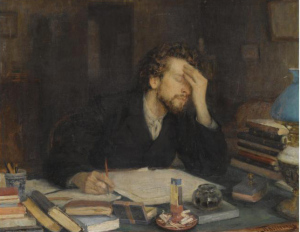
Many readers get this look while reading A Tale of Two Cities.
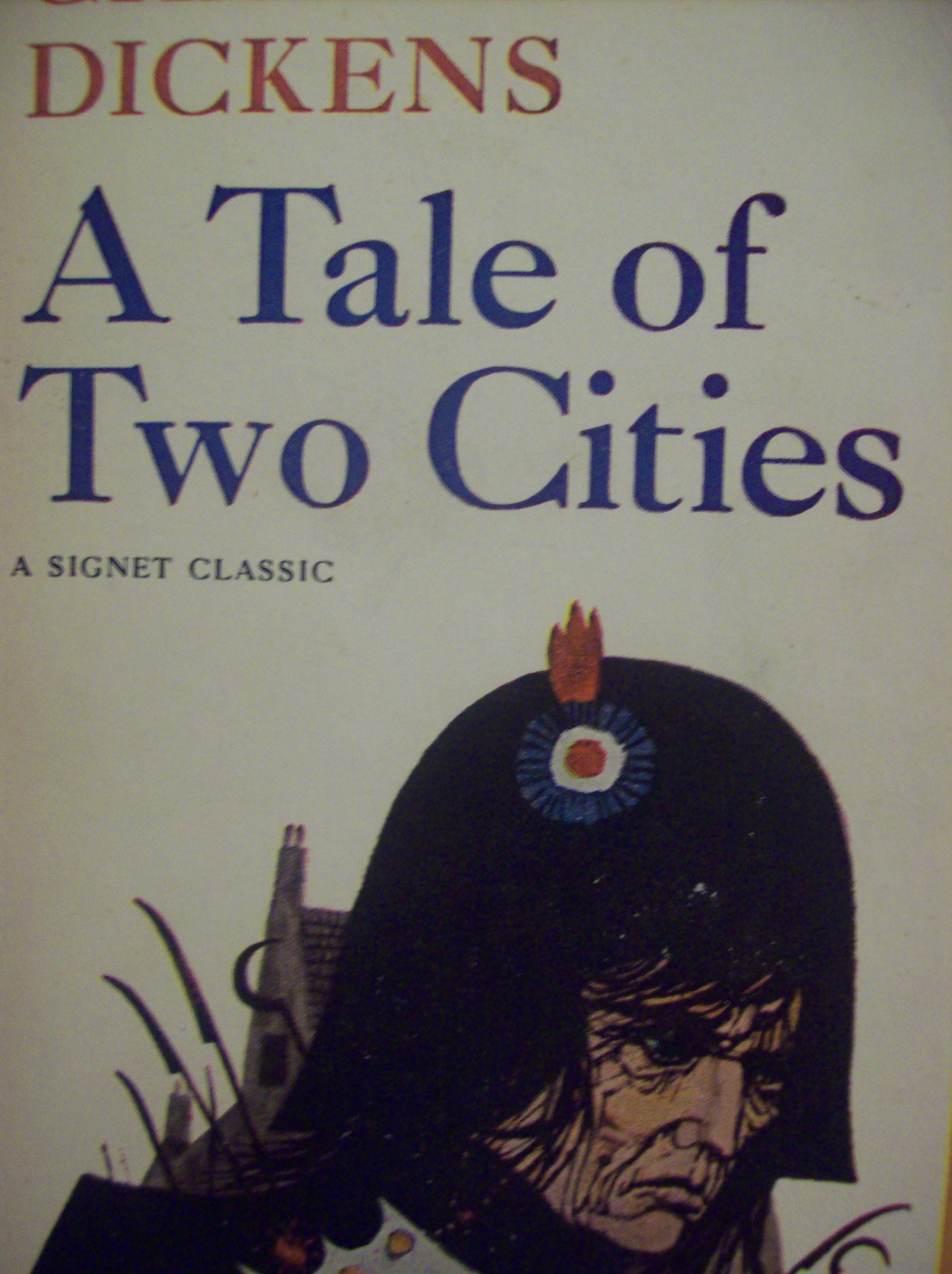
Even when I was a kid, I knew that A Tale of Two Cities began with “It was the best of times; it was the worst of times.” But I didn’t read any further than that. After all, I had Classics Illustrated comic books for that. In seventh grade, however, for whatever reason I cannot remember, I decided to try reading an unabridged version of A Tale of Two Cities and was greeted by the mother of all opening sentences.
“It was the best of times, it was the worst of times, it was the age of wisdom, it was the age of foolishness, it was the epoch of belief, it was the epoch of incredulity, it was the season of Light, it was the season of Darkness, it was the spring of hope, it was the winter of despair, we had everything before us, we had nothing before us, we were all going direct to Heaven, we were all going direct the other way- in short, the period was so far like the present period, that some of its noisiest authorities insisted on its being received, for good or for evil, in the superlative degree of comparison only.”
If I had written a sentence like that in school, my English teacher would have called it a run-on and said that I should have used periods and semicolons instead of a bunch of commas. If I had then showed him A Tale of Two Cities, he would have said that when I have a bunch of books published, then I could misuse commas and write repetitive run-on sentences whenever I wanted.
Now that I have my own novel The Sunset Rises: A 1990s Romantic Comedy (I don’t think my English teachers will ever see it), I leave myself open to criticism of my own writing, but even with that risk, I must continue.
Despite the opening sentence of A Tale of Two Cities, I kept reading and made it through page 1, only to get emotionally destroyed on page 2 with this Dickensian gem:
“Under the guidance of her Christian pastors, she entertained herself, besides, with such humane achievements as sentencing a youth to have his hands cut off, his tongue torn out with pincers, and his body burned alive, because he had not kneeled down in the rain to do honour to a dirty procession of monks which passed within his view, at a distance of some fifty or sixty yards.”
I’ll give myself a little credit. I worked through that sentence, understood what it was about, and I think I even picked up on the sarcasm (maybe that’s wishful thinking), but it was work. And it warned me that the novel was going to be nothing like the Classics Illustrated comic book. I took a deep breath and then ran into this buzz saw of a sentence.
“It is likely enough that, rooted in the woods of France and Norway, there were growing trees, when that sufferer was put to death, already marked by the Woodman, Fate, to come down and be sawn into boards, to make a certain moveable framework with a sack and a knife in it, terrible in history.”
Charles Dickens was making torture really difficult to read. But I kept trying.
“It is likely enough that in the rough outhouses of some tillers of the heavy lands adjacent to Paris, there were sheltered from the weather that very day, rude carts, bespattered with rustic mire, snuffed about by pigs, and roosted in by poultry, which the Farmer, Death, had already set apart to be his tumbrils of the Revolution.”
It is also likely that I stopped reading right after that sentence.
One problem with these sentences was the references to things I knew nothing about. Back then (when I was in seventh grade), there was no internet and therefore no Wikipedia. There was no place to easily look things up (except a dictionary and encyclopedia, and those didn’t count). Cliffnotes was not an option (It existed, but I didn’t know about it yet). If I didn’t understand a reference, I was stuck. Today, I don’t have an excuse, except that I’m older and crankier, and if I don’t understand a reference in a book that I’m reading, I have the option to stop reading the book that I don’t understand without feeling any guilt. At my age, I don’t feel guilt for stuff like that.
The bigger problem with reading A Tale of Two Cities, however, is sentence structure. I believe in variety when it comes to sentence structure, with long sentences and short sentences, with simple sentences, compound sentences, complex sentences, and even compound-complex sentences with lots of prepositional phrases. I believe in beginning and ending sentences with prepositions. But I also believe that a sentence should be diagrammable. Subject and simple predicates should be easy to find. Even a long compound-complex sentence with strings of prepositional phrases can be diagrammed easily. I’m not sure I can diagram some of these Dickensian clusterf***s.
If I can’t diagram a sentence, then it’s a bad sentence.
Maybe these were great sentences in 19th century England. Maybe they’re still great sentences now, and I’m too stupid to recognize them. Maybe I need to brush up on my sentence diagramming. All I know is that if I’d used sentence structure like Charles Dickens used sentence structure, I would have failed all of my writing assignments. And if my teacher had used these sentences on the diagramming tests, I would have failed those too.
I have never finished reading A Tale Two Cities, and I know I never will. For a long time, I pretended to have read it (and got away with it), but I don’t do that anymore. If anybody gives me grief about not reading A Tale of Two Cities (I don’t know why anybody would care), then I’ll say that I have a low tolerance for really poorly constructed sentences written by Charles Dickens. It’s a concrete reason. It’s way better than saying the book was too hard. That’s just lame.
*****
What do you think? Are these sentences from A Tale of Two Cities examples of bad sentences? Should sentences written by famous authors be diagrammable? If a sentence isn’t diagrammable, is it a bad sentence? Can you diagram these sentences? I’d like to see what these sentences look like when they’re diagrammed.
*****
A grammar-obsessed English teacher falls in ‘luuuvvv’ but discovers how chaotic and dangerous ‘luuuvvv’ can be.
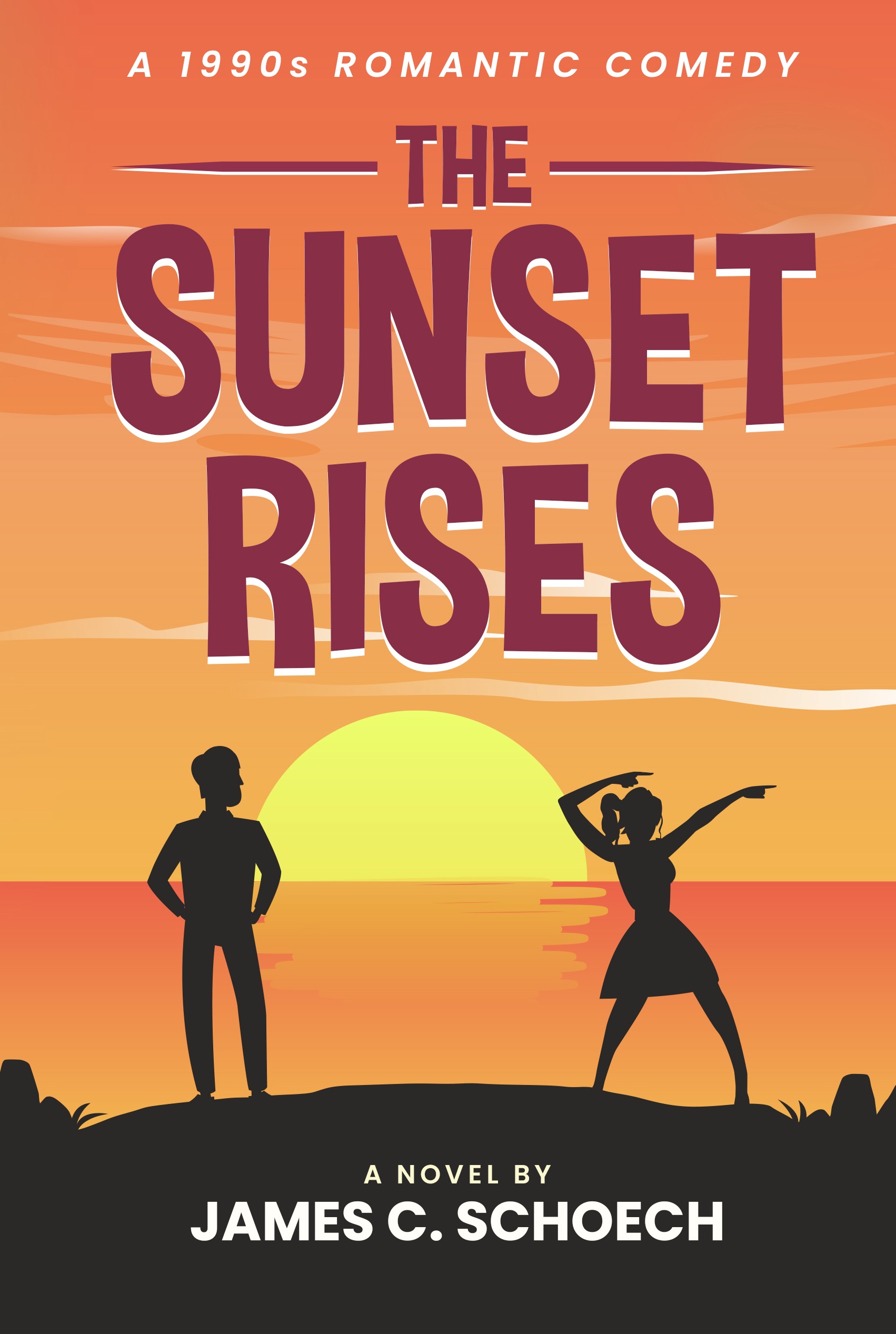
The Sunset Rises: A 1990s Romantic Comedy
Get a signed copy of my one novel The Sunset Rises: A 1990s Romantic Comedy. My signature is actually legible, but I’m left-handed, so I might smudge it. Free delivery!
$20.00
Or you can buy a copy here on Amazon!
Not sure? Read a sample chapter of The Sunset Rises: A 1990s Romantic Comedy.


 Dysfunctional Literacy