
(image via Wikimedia)
Sometimes when there’s a public dispute, I like to choose a side before I really understand the complexity of the disagreement. It’s more fun to learn about the conflict if I have a little bit of an emotional stake in it. That way, if my side wins, I can claim that I knew all along that was going to happen. If my side loses, I can pretend I never knew about the dispute in the first place.
Right now, Amazon is in a negotiation dispute with Hachette publishing, and I don’t know who is going to win or who should win, but I’m choosing Amazon before I learn about many of the facts. The details are kind of boring and I’m not about to explain the whole thing, but the outcome might affect my book buying habits, so I’m trying to understand this as much as I can.
Hachette is the first of the major book publishers to renegotiate its contract with Amazon after the collusion fiasco a couple years ago, and a bunch of other publishing companies are closely watching. If Hachette gets buried by Amazon, then the other companies will know not to mess with Amazon. If Hachette can negotiate a favorable contract, then the other publishers will be able to take tougher stands as well.
At first, I didn’t know whom to root for. Both companies make a lot of money, but I buy from Amazon a lot, and I wouldn’t miss buying new books from Hachette. I can’t afford new releases anyway. I understand why people don’t like Amazon. Amazon intentionally takes losses on its books (and makes profits on other items), and other book sellers can’t compete with Amazon’s prices. Amazon could become a monopoly, especially in the ebook business, and people hate monopolies. I’m not wild about monopolies either, but I also hate overpriced new books, and Hachette tends to overprice its new releases.
If I were a major book publisher or a Brick & Mortar Bookseller store owner, I’d probably dislike Amazon too. But I don’t have much sympathy. Brick & Mortar Booksellers didn’t show much sympathy for Mom & Pop Booksellers 15 years ago, so I don’t have much sympathy for Brick & Mortar Booksellers. Also, Hachette was one of the five publishers that got busted for collusion with Apple by the U.S. Justice Department a couple years ago, so I don’t have a lot of sympathy for them either. As outraged as Hachette is acting about Amazon’s business practices, they tried their own underhanded (and illegal) tactics a couple years ago and got caught. They shouldn’t have gotten caught, so I don’t feel sympathy. In fact, I just don’t have much sympathy for any big company, even Amazon, and I’m rooting for them, kind of.
Maybe I should have had sympathy for Mom & Pop Booksellers 15 years ago, but I never did. It’s not their fault. I was always greeted and talked to and watched when I went into a Mom & Pop Booksellers, but I don’t want to talk to anybody when I go into a bookstore. Mom & Pop Booksellers rarely had what I was looking for when I went there, and I always felt guilty walking out without buying anything. Maybe if I had purchased something, Mom & Pop Booksellers would still be open today, but I don’t want to think about that. Then I might start feeling sympathy.
Even though I feel no sympathy for Brick & Mortar Booksellers, I like walking into their stores. I like being ignored by clerks who are either too busy or too cool (it’s never both), and I’m not being sarcastic. It’s weird to see how people who hate Amazon now have sympathy for Brick & Mortar Booksellers when Brick & Mortar Booksellers put Mom & Pop Booksellers out of business about 15 years ago. If Tom Hanks and Meg Ryan do another movie together, Meg would own a chain of dying mega-bookstores and Tom would own the online bookseller superstore that is trying to crush her.
Even though I’m mildly rooting for Amazon right now, I’m not emotionally attached to my position. I won’t raise my blood pressure or START YELLING AT PEOPLE WHO DISAGREE WITH ME!!!!! I might even change my mind. 15 years ago, I rarely changed my mind on issues like this, but I realized that life is easier when you don’t really care about stuff like that too much. Still, it’s fun to choose a side sometimes and then see what happens.
But enough about me. Who do you root for in this Amazon vs. Hachette dispute? Are you emotionally attached to your position? Are you going TO YELL AT ME FOR ROOTING FOR AMAZON?!!!! Do you even care who wins this negotiation battle? If not, choose a side and defend it, no matter what. It’s more fun that way.
.jpg)
Oddly enough, this probably should bother me, but it doesn’t. (image via image)
Sometimes I’m better off not knowing things. Yesterday I didn’t know that James Frey was making a comeback. Today, I know. And it ticks me off. There are a bunch of reasons that James Frey’s comeback rubs me the wrong way, and this puts me in an odd position because I usually like comebacks.
James Frey was vilified by readers for lying (or conducting extreme exaggerating) in his memoir A Million Little Pieces. I didn’t see the big deal about that at the time. I figured everybody lied in their memoirs anyway. I guess Oprah Winfrey didn’t know that people lie in their memoirs because she vilified him on her show. I wonder if Oprah has ever lied in her memoirs or her magazine or her television show(s). I’m not asking for evidence. I don’t care that much. I just wonder, and then I move on.
I don’t have a problem with an author lying in his memoir. It’s tough to get published. If you need to lie in your book to get published, then lie, and then stand by your act of lying. If I had to do everything over again, I would have started this blog by pretending to be a hot chick with lots of cleavage. Hot chicks with cleavage have some disadvantages in life, but they get attention, way more attention than boring guys who can’t reveal much information about themselves. So when I started this blog, I should have been a hot chick, and I should have written books while pretending to be a hot chick. But if I ever wrote a successful book while pretending to be a hot chick, I’d know not to go on Oprah. That would be stupid.
Anyway, I’m a little bothered about James Frey making a comeback, but it’s not just because he’s James Frey.
1. He’s writing YA fiction.
James Frey’s book (memoir or fiction, I don’t care) A Million Little Pieces dealt with a bunch of stuff that would be deemed inappropriate for YA readers. It would probably be banned from a lot of school libraries. Now James Frey is writing YA fiction. I’m not saying he shouldn’t have the right to do it. I just wonder what compels an author to go from adult-themed stuff like A Million Little Pieces to YA fiction. If you’re making the transition from adult-themed, fake memoir to YA fiction, at least give it 20 years.
2. It’s a 12 book series.
If there’s anything YA fiction doesn’t need, it’s another series. Most YA has become unreadable in the last five years because authors are churning out books faster than editors can (or want to) revise them. This new series by James Frey is three novels and nine digital stories/books/novellas. Plus, there are set to be movies, Youtube videos, and the usual social media stuff.
If adults want to read a series, that’s their business, but these Endgame books are geared toward kids who (for the most part) will be spending their parents’ money. A 12 book series for kids is obnoxious (even if most of the stories are digital). As an adult, I will not read a 12 book series anymore. I’ll rarely even read trilogies anymore. Luckily, neither of my daughters will have any interest in this James Frey endeavor, but I’m not out of the woods. We have other cash cow issues, like American Girl and Monster High. I’m not sure which is worse, but I’m sure (and I hope) that no Monster High authors have written anything like A Million Little Pieces.
3. It has the word “Game” in the title.
“Game” has become overused in book/series titles. We have Game of Thrones, Ender’s Game, Hunger Games, and now James Frey presents us with… Endgame. The cynical part of me has a bunch of snide comments about Endgame and its apparent lack of originality, but people don’t like my snide side, so I’ll keep those comments to myself. I’m just … (shaking my head)… disappointed.
To make things worse, readers supposedly can win a prize if they solve a bunch of puzzles. The first one is hidden in the cover of the first book The Calling. The cover was just released a few days ago, and that’s how I accidentally found out about it. There is a clue hidden in the cover, but I haven’t looked at the cover too closely. I was too busy reading about this whole Endgame stuff and getting (unnecessarily) bothered.
I don’t think I’m going to win the prize.
The idea of an interactive 12 (or 3 + 9) book series with the word “Game” in the title put together by a guy who wrote an adult-themed, fake memoir and said it was true… this whole project bothers me in a lot of ways, and I was better off not knowing about it.
*****
This Endgame series probably shouldn’t bother me, but it does. I wish I didn’t know about it. There’s nothing I can do about it. I can’t stop it. I’m not going to start an online petition or a boycott because I’m not that kind of guy. I’ll just try to ignore it. If my daughters ever hear about it, they’ll call it stupid. In that regard, I’m lucky. Maybe I’m part of the problem by writing about it, but I don’t think so. I’m not exactly providing free publicity, since people who read Dysfunctional Literacy probably want nothing to do with Endgame.
Maybe I’m wrong. Are you at all interested in Endgame? Do you like interactive fiction? Do you like 12 book series? If you like 12 book series, do you trust an idea to become a 12 book series before one book from the series has even been published? Should a guy who wrote A Million Little Pieces write YA fiction? Has most YA fiction become completely unreadable lately? Am I wrong to be bothered by this, even a little bit? Do you have something that shouldn’t bother you but does? I could probably come up with a million little questions, but this paragraph is getting too long.

Even though I’ve owned a copy of Pride and Prejudice for over twenty years, I’ve never had any intention of reading it. It’s a woman’s book. There’s a reason I have a copy of Pride and Prejudice (a college girlfriend gave it to me), but that story isn’t for today. Pride and Prejudice is one of those novels that I feel I should read, but whenever I try, I feel like it’s a novel I shouldn’t read.
Maybe I shouldn’t prejudge books as women’s books, especially a book with the word “prejudice” in the title. Now I really feel guilty. I pride myself on being open-minded, and now I have just admitted to prejudging a book as a woman’s book simply because it was a written by a woman about a bunch of women. I know a lot of women who have read Pride and Prejudice, but I don’t know any men who have read it. Now that I think about it, I probably know some men who have read Pride and Prejudice, but I just don’t know who they are.
Out of all the Jane Austen books, Pride and Prejudice is said to be the best one. It’s not universal, and if somebody wants to argue with me, that’s fine. I don’t have an opinion. I’m just basing this on what I’ve read.
First of all, Pride and Prejudice has one of the most famous opening sentences ever!
“It is a truth universally acknowledged that a single man in possession of a good fortune must be in want of a wife.”
I’m not so sure of this. I don’t know many men in possession of a good fortune, but the ones I read about in real life often don’t want wives. At least, they act in public like they don’t want wives. Some of them carouse and have (sometimes numerous) kids without marrying the (sometimes numerous) women they have caroused with. Obviously, this behavior does not apply to all men in possession of a good fortune, but it applies to enough men to contradict Jane Austen’s universally acknowledged truth.
I don’t want to disagree with the first sentence in Pride and Prejudice. I want to agree with it because it’s a classic first sentence, one of the most quoted. Since I’m an agreeable person, I’m the type to agree with a first sentence if it’s possible to do so. But Jane Austen claims that her assertion is “a truth universally acknowledged,” and even though her assertion might apply to some men “in possession of a good fortune,” it does not apply to all, and therefore cannot be considered a “truth universally acknowledged.” I don’t acknowledge her assertion as truth. Maybe I’m just one person, but one person is all it takes to change a “truth universally acknowledged” into “a widely acknowledged truth.”
I have no problem reading a book when I disagree with its opening sentence. After all, I’m an open-minded guy (even if I prejudged Pride and Prejudice). I disagree with a lot of books that I read.
I’ve tried to read Pride and Prejudice, but some critics might accuse me of not making a serious attempt. I only made it (barely) through the first chapter, and in my copy that’s a little over two pages. I made it further through Atlas Shrugs than Pride and Prejudice. I made it past page 50 of Atlas Shrugs. If Jane Austen fans find that insulting, keep in mind that I still read a bigger percentage of Pride and Prejudice than I did of Atlas Shrugged. At least, I think I did. I didn’t really do the math.
I don’t know if anybody can convince me to read Pride and Prejudice. It wasn’t written for me. It was written (maybe for women) in the early 19th century. Football wasn’t even invented back then. I’d have a tough time relating to any of the characters, even the male ones.
Even though I have no intention of reading Pride and Prejudice, I’ll keep it around the house. It makes me look smarter, and maybe my wife will want to read it one day. She’s a woman, and sometimes she reads women’s books. If my wife hasn’t read Pride and Prejudice, or Sense and Sensibility, or Emma (all of which I have around the house), then I don’t feel like I need to read them either.
*****
What books do you have that you’re certain you won’t read? Would I be a better person if I read Pride and Prejudice? Or would I be better off with books that I’m interested in? Are Jane Austen novels really women’s books, or have I prejudged them incorrectly?
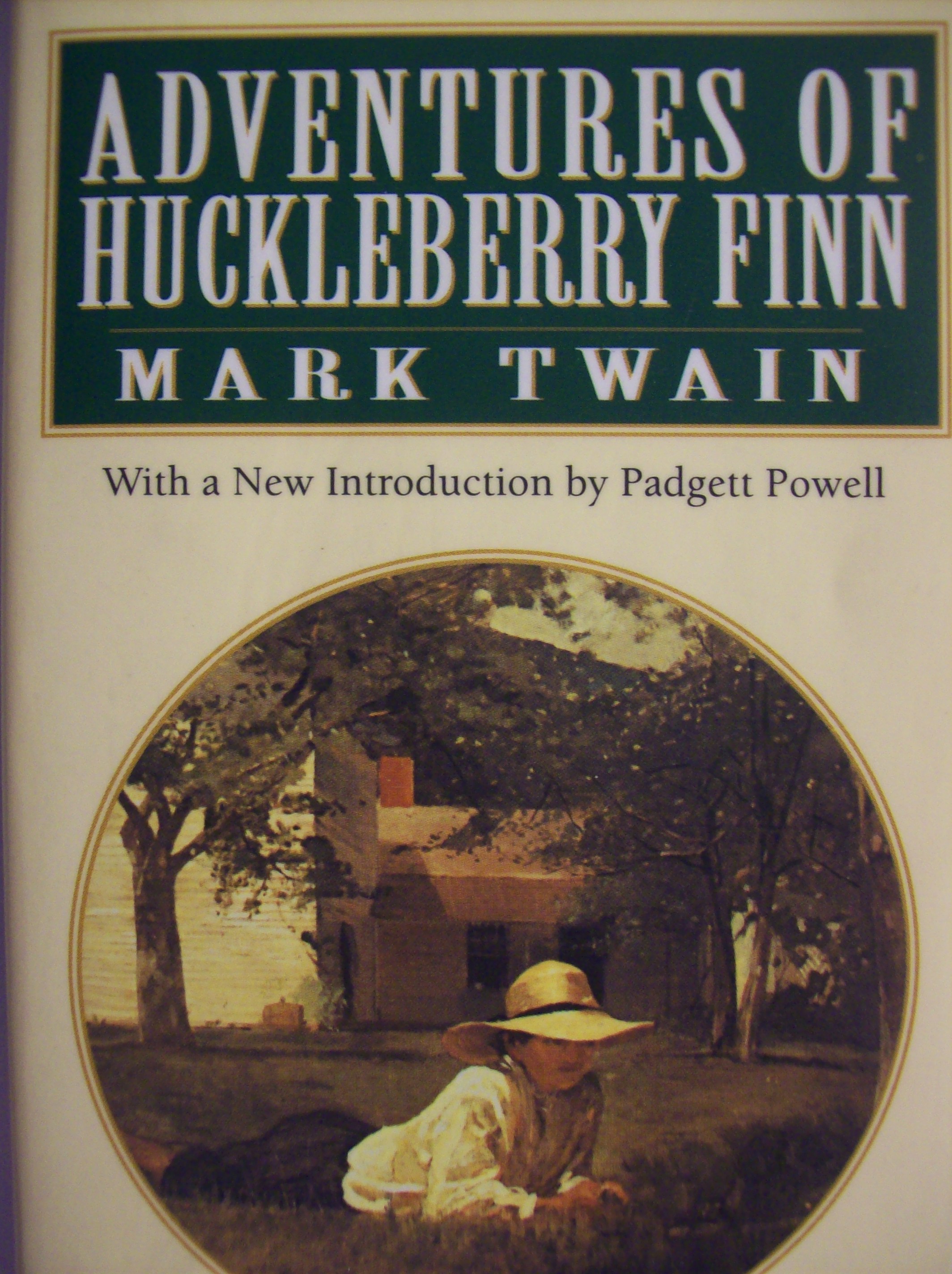
I’m a quiet guy, and I usually keep to myself, but even I slip up every once in a while. I’m not Huckleberry Finn, by the way. I’m Jimmy. I’ll get to Huck Finn in a few paragraphs.
Last week at work, a group of younger employees in my department was talking loudly about a professional football player who lives an alternative lifestyle, and they spoke of him very loudly in a derogatory way. Normally, I would have kept quiet, but these guys were talking loudly, and the stuff one guy was saying was so bad I won’t even write his words in my blog. I don’t want to be associated with those words.
But instead of keeping to myself like I usually do, I said:
“You might not want to say things like that while you’re at work.”
Those were my exact words. I know those were my exact words because I rarely interject myself into other peoples’ conversations. I’ll eavesdrop, but I usually stay out of the discussions.
The worst offender of the bunch sneered at me and said, “Lighten up.”
I took this as an insult. I had spoken to the obnoxious guy in in a respectful manner and he had in turn told me to lighten up when he was the one causing a scene. That type of arrogance rubbed me the wrong way.
I’m not the kind of person who can think of good spontaneous retorts, so I said (with an unusual amount of inflection in my voice), “You want ME… to lighten up?”
The entire section of cubicles turned silent, and I could feel others staring at us. I’m not known for causing a scene and didn’t think I had said anything that bad. It was probably the way I said it, I thought. I found out later that they thought I had implied something offensive, but my co-workers couldn’t agree about what I’d meant. Some thought I was referring to the loud guy’s weight because he is much broader than I am. Others thought I was referring to his skin color because his skin is much darker than mine. I thought all of this was unfair. I had used the phrase “lighten up” because the loud co-worker had used it first, and he had been the one who was uptight.
As the day progressed, word got out that he made remarks about people of another lifestyle, and that I had said something offensive in response, though witnesses couldn’t agree about what I had meant. The company that I work for takes matters like this very seriously, so it was announced that in a few days, the entire department would have to attend a morning-long sensitivity training session. The sessions weren’t technically “sensitivity training,” but that’s what everybody called it. The company had a weird acronym that actually spelled out a word (in a misspelled way), but I don’t want to say what the acronym was because I don’t want this to get back to my company. Either way, I got a lot of dirty looks from people the rest of the day.
“Why are people blaming me for this?” I asked a mousey co-worker. I’d probably be called mousey too except I’m tall with broad shoulders, so I’m quiet and reserved instead of mousey.
“You told him to… lighten up,” she said, almost aghast.
“He said it to me first,” I said.
“It was the way you said it,” she explained. “We could tell you meant something different.”
I wondered, how? I have a monotone voice. People, including co-workers, make fun of my lack of inflection. I’m okay with that. I was puzzled, though, how I could have said something that could have been so misinterpreted.
I sighed. I guess I had to go to sensitivity training no matter what.
Nobody wanted to go to sensitivity training. It was punishing everybody for what a few people (including me, I guess) had done. It wouldn’t have been so bad if it had been only me and the three guys who were talking loudly about the alternative lifestyle football player, but a few dozen others had to go to sessions because of us. Even though I didn’t think I had done anything wrong, I felt guilty. I didn’t want my co-workers to think I was that kind of person.
It was an interesting role reversal. Since I was the oldest guy in my department, I think people expected me to be the one complaining about the behavior of football players who lived an alternative lifestyle. Instead, it was a young guy, and I thought young guys were supposed to be more tolerant of alternative lifestyles than middle-aged guys, but this young guy wasn’t. Even though I thought it was an interesting observation, I kept it to myself.
When we have morning sessions (they’ve never been about sensitivity training before), I usually take a book with me. I sometimes read on my phone, but my new phone eats up battery, so I grabbed my paperback copy of The Adventures of Huckleberry Finn by Mark Twain and went to my sensitivity training. I like Huckleberry Finn and Tom Sawyer. They’re tough kids. They grew up in rough environments and didn’t whine. They ran away from home, faked their own deaths, saved people’s lives, and helped out escaped slaves. And despite everything, they never resorted to stream-of-consciousness.
A lot of the attendees at sensitivity training were staring at their phones, which I thought was insensitive to the feelings of those presenting. At least I don’t read while others are presenting.
When my mousey co-worker saw me, her mouth hung open. “Why did you bring that book here?”
She wouldn’t even utter the title. It was simply… that book.
“It’s classic literature,” I said proudly. People think I’m smarter than I really am because I carry classic literature with me (and sometimes I actually read it).
“But it has… the word.”
I knew what she was talking about. Huck Finn uses the word that should never be uttered several times in the book, and since he’s the protagonist, some critics see his usage as an endorsement of the word that should never be uttered. In some books, the word that should never be uttered is used, but it’s used by villainous characters to make them even more evil, so it’s not as controversial. But Huck uses the word casually, so some critics find the usage of the word that should never be uttered offensive.
The thing is, I knew that The Adventures of Huckleberry Finn could be controversial and that it had been banned in the past (and maybe even the present) because of that word. I have no problem with a slightly abridged version without the word that should never be uttered, if that would lead to some readers who would otherwise not read the book to read the book. When I was a kid, I had an abridged version without the word, but a lot of other stuff was left out too, so it had been abridged for the sake of making it easier for kids to read. Sensitivity hadn’t had anything to do with it.
I didn’t want to get into an argument about The Adventures of Huckleberry Finn at a sensitivity training session. When it comes to sensitivity training, context doesn’t always matter.
“I’ll put it away,” I said, and turned the book over so that nobody could see the cover. I thought about pulling out my phone and staring at it. Instead, I propped my elbows on the table where I was sitting and leaned my forehead on my palms.
Despite my frustration, I got my act together within a few minutes. I was polite during sensitivity training. I nodded, even though I never paid attention. I ignored the co-workers who whispered lame jokes to each other while the sensitivity specialist pretended not to hear them. Since everybody was getting paid to be there, nobody acted out too much. I managed to step out to the restroom just before volunteers were selected for the role-playing activities. I have a talent for getting out of role-playing activities.
Today, I decided to discreetly ask a few co-workers about what had happened last week. One co-worker said that the only people who blamed me were the ones who agreed with the loud guy’s opinion about the alternative lifestyle football player. Another co-worker was disappointed that I hadn’t criticized the loud guy’s opinion of the football player. He was also disappointed that I had only complained about him talking loudly about such things at work. A female co-worker said that she was giving me the benefit of the doubt about how I’d used the phrase “lighten up,” but she wasn’t sure about me because she was suspicious of everybody in my demographic group, that we could say the right things most of the time, but that she was never sure what we really thought or felt about her own demographic group. Even though I’m paraphrasing them, I hope I did justice to their opinions.
All of them thought the mousey co-worker was out of line for worrying about The Adventures of Huckleberry Finn. They said it was probably the mousey girl’s fault that the whole sensitivity training happened at all. The mousey co-worker has a reputation of being too sensitive.

There’s a book I’d never read in public, and I’m not going to put its image where somebody I know could associate the book with me. (image via Wikimedia)
This week I got lectured at by a co-worker for reading The Adventures of Huckleberry Finn in public. It’s a long story, and I’ll tell it soon, but I’m embarrassed by something I did (it had nothing to do with reading The Adventures of Huckleberry Finn in public). But being criticized about it made me think about the books that I don’t want to be seen reading.
When I was in junior high, I had a copy of Massage Parlor II by Jennifer Sills. I probably shouldn’t have had it, but I did, and I read it during study hall in school. No teacher ever took it away from me. Study hall teachers seemed to only care if students talked, so if I didn’t talk, I got left alone, and they never noticed that I was reading a book I shouldn’t have had. When I was done (I think I read it several times), I loaned out my copy to my friends who read it during study hall (and maybe took it home, but I don’t think about that anymore). The point is that I’d never read a book like that in public anymore. I wouldn’t read a Fifty Shades of Grey type of book. It would be embarrassing. I wouldn’t do it.
I don’t read political books in public anymore because people argue too much and get too angry too quickly. I don’t want anybody who disagrees with me seeing me reading a political book and then starting an argument with me in public. Arguing about politics in public is more humiliating than reading a sex book in public. And I really don’t want somebody who agrees with me to start a conversation either. I’m usually more embarrassed by the people who agree with me because when they say something stupid, I feel like I’m associated with them.
I’m not suggesting that I’m more enlightened about politics than everyone else. I’m just as likely to say something stupid as anybody else who talks politics, and that’s why I don’t want to talk politics (or read about politics) in public.
If I have to go to jury duty, I might pretend to read a book about politics. I have an Ann Coulter book jacket that I slip onto the novel that I’m reading whenever I get called to jury duty. If I hold up the book jacket while the lawyers are looking over the jury pool, I’m always sent home quickly.
I’m not really trying to get out of jury duty. I’d gladly serve, but I’ve learned that where I live, people in my demographic group don’t get selected, so if I’m not going to get selected, I might as well not get selected quickly than stick around all day to not get selected. Before Ann Coulter, I’d stick around all day and then not get selected. With Ann Coulter, I’m home before lunch.
I usually don’t care if people see what novels I’m reading, but there’s one book that I wouldn’t be caught dead with. That’s Lolita by Vladimir Nabokov. I’m a middle-aged bald guy with two daughters who have their friends over all the time. The last thing I need is to be seen reading Lolita.
Other than being a middle-aged guy, I’m not like Humbert Humbert in any way (except I might be an unreliable narrator sometimes, but not about this). I’m not obsessed with anything or anybody that I shouldn’t be obsessed with. It’s just that I don’t want people to think that I’m obsessed with things I’m not obsessed about. So I’m not going to be seen with that book.
I don’t want to be associated in any way with Lolita. I’m not reading that book. I’m not going ever let that book in my house. I won’t even put it on my phone. If I get called to jury duty, I will not take it with me, even with an Ann Coulter jacket on it. I won’t even take an Ann Coulter book with a Lolita jacket on it. I would be embarrassed to be seen reading Lolita in public or in my house.
People already assume I’m a bit strange because I’m quiet. I don’t need the reputation of being the quiet guy who reads Lolita while a bunch of teen girls are running around my house. If I ever take my daughters to a house and the parent is a quiet guy reading Lolita, I’ll politely take my daughters back home with me.
I’m sure Lolita has some literary value, but somebody else can explain it.
*****
What books are you too embarrassed to read in public? What book jacket would you take to get out of jury duty?
*****
Even if you are embarrassed to read my book The Writing Prompt in public, it’ll be on your phone, or tablet, or Kindle, so nobody else will know.

Now available on the Amazon Kindle!
 My youngest daughter told me today that I spend too much time on the computer writing.
This was tough to hear. I pride myself on spending a lot of time with my family. Weekends used to be filled with family excursions to interesting places in and around the city. Evenings would be spent eating meals and doing nightly chores together. In the last few years, though, my daughters have begun to spend more time with their friends and less time with me. It’s a difficult adjustment in some ways, but it has opened up some time for me to write, especially on weekends.
In the last few months, I’ve gotten more intense with my writing. I’ve spent more time on the computer than I used to, and I get grouchy when the writing isn’t going well. I’ve justified it by saying that grouchiness is a sign of passion, and the passion is what drives me to be successful. But I don’t want to turn into a jerk at the same time.
My daughter’s statement “You spend too much time writing on the computer!” was a wake-up call. Maybe I need to cut back on my writing, I thought. Maybe I need to take a breather. Maybe my daughters and I should get back to going on those weekend excursions and doing more chores together each night. I always enjoyed them (maybe not so much with the chores). And those weekend activities brought my family together.
Then I realized what my daughter had just said.
“You spend too much time writing on the computer.”
My daughter didn’t want to spend more time with me. She wanted to spend more time on the computer.
That little shi… shi… shyster.
All my youngest daughter does on the computer is watch videos. She can do that on my phone or my wife’s phone or on the shmyPad (an iPad knockoff tablet). I can’t write on my phone or on the shmyPad. I once tried to write on the shmyPad, but it was disastrous. I was born 35 years too late to write on the shmyPad. I’m not even going to try writing anything other than a text on my phone. The only place I can write my blog and my other projects is on the computer. I ask/demand only 30 minutes each night. That’s reasonable. And my daughter thinks that’s too much time?
Even though my daughter’s complaint was a false alarm, I will still take a moment and pretend that it was a cry for help. I can get grouchy when I’m writing. My grumpiness is probably more of an issue than the amount of time that I spend writing. If I get interrupted while I write, I yell a little bit. It doesn’t scare my family. They think it’s funny. The boring dad with the monotone voice gets loud and monotone when he’s interrupted. I don’t swear too much. And I’ve never threatened them (except with the possibility of watching Fox News for an hour) if they interrupt me while I’m writing.
The good news is that my daughters don’t NOT want to spend more time with me (great, now I write like they talk). They simply want to have more time on the computer. After all, the screen is big. If that’s the only reason my younger daughter thinks that I write too much, I can live with that. Next time, she can text her complaints to me on the phone while I write on the computer.
*****
How much time is too much time writing each night? Is it okay to get grouchy when writing isn’t going well? Is threatening them with Fox News (or any other cable news channel) acceptable, or will that get me into trouble with parenting authorities?

This is not an ad, I promise, but for $9.99 a month, all of this (and much more!) can be digitally yours.
This is not an advertisement. When I watch the news and see a reporter talking about a brand new product, I change the channel. I watch the news for the news, not to watch a reporter give free(?) advertising to a product I’m probably not interested in. That’s what commercials are for. But that might just be me being grouchy.
Today I’m writing about a product, but I’m not confident about the product or its concept. I’m not endorsing the product that I’m writing about. When I write about a product to endorse it, it will probably be a product that I created, and I’m uncomfortable even doing that. If I’m uncomfortable trying to get others to spend money on stuff that I created, I definitely don’t want to waste effort getting others to spend money on somebody else’s stuff.
According to Publishers Weekly , ebook subscription provider Oyster (which I had never heard of) has added a bunch of new publishers to its service. I’m not interested too much in the details. I am intrigued, though, by the concept of paying $9.99 a month for an “unlimited” number of digital titles. It’s kind of like Netflix, only with books. It’s an interesting idea, but I’m not sure it’s right for me.
First of all, Oyster and I might disagree slightly about the meaning of “unlimited.” Oyster says you have “unlimited access” to their books each month, but their selection is 500,000 books. That sounds like a limited number to me. I know I can’t read all 500,000 books, and I know that 500,000 books is a lot of books, but it isn’t “unlimited.” I’m pretty sure new books aren’t in Oyster’s selections, and that would put a limit on my usage. If there are millions of books out there, and Oyster has 500,000 books available, that’s less than 25% of books available, and that’s not really unlimited; it’s a good start.
The thing is, I get annoyed at people who use the same logic that I just used. I know exactly what Oyster meant when they said “unlimited.” You get “unlimited access” to their books. I know that. It’s clear in the article. That’s why the article used the phrase “unlimited access.” I probably shouldn’t obsess over the word “unlimited.” I don’t believe in starting unnecessary arguments. Oyster used the term “unlimited access” correctly. I’m just guessing 500,000 books might mean the selection isn’t great for everybody.
$9.99 over 12 months means $120.00 a year. Yeah, I know that technically it would be $119.88 over a year, if I was completely literal and multiplied $9.99 by 12 instead of rounding up. I’m the type of person who estimates instead of doing precise math. If I were figuring this out on a spreadsheet, I’d use precise math, but I’m writing a blog post, so I’m estimating. If I were taking a test to get into (or out of) college, I’d use precise math and show my work, but I’m writing a blog post. When I write a blog post, I usually focus more on grammar, spelling, and punctuation than I do on precise math.
I also ramble sometimes.
Despite writing a blog about books, I don’t spend $120.00 a year on books. I don’t even spend $119.88 a year on books. So far this year, I have spent less than $30.00 on books, and I’ve read almost everything that I’ve desired to read. I bought two books at a used book store. I’ve read a bunch of free samples on my e-reader. I’ve purchased two really cheap books on my e-readers. And I’ve read a bunch of books from the public library. I can’t think of any book that I’ve wanted to read and haven’t been able to. My system works for me. At this rate, I’ll spend less than $75.00 on books this year.
However, this doesn’t include my daughters’ books. My daughters like new books, and I often buy them the new books they ask for because they usually read them. I spend between $20.00-$40.00 each month on new books for them. Maybe it would be worth it to get a subscription service so that my daughters could use it, but they don’t read digital books. They prefer real books. That’s great for the book publishers who might fear the possibility that young people will stop buying books. I don’t know if my daughters are an indication at all, but they don’t like digital books. They like tablets for games, videos, gossiping about each other, but they don’t like tablets for books. In a way, that’s too bad. They might have been able to save me a lot of money.
*****
But enough about me! How much do you spend on books each year? How much would you be willing to pay each month for unlimited books? Is a selection of 500,000 titles enough to justify the cost? Do the “youth” whom you know prefer real books or digital books? You can tell me. I promise not to share any information with Google or Facebook.

One part of the brain is for reading books. Another is for watching football. Another is for writing. And one last section is for making excuses when you’re not paying attention. (image via Wikimedia)
Today my wife asked me, “What are you thinking?”
There is usually no good answer to this question. Years ago, I heard a comedian say that when his girlfriend asked him what he was thinking, he responded with: “If I wanted you to know what I was thinking, I’d be talking.” The audience laughed, but even as I laughed too, I knew responding that way was a bad idea (unless a guy doesn’t care about his girlfriend).
Women sometimes ask “What are you thinking?” during quiet moments, but women might not really want to know what a man is thinking. If guys answered honestly about what they were thinking, the women asking the question would likely get disgusted. The women who wouldn’t get disgusted probably aren’t the type to ask, “What are you thinking?”
Men sometimes get thrown off by the “What are you thinking?” question because it seems random. It comes out of nowhere. Maybe if women prepared men for the question ahead of time, men would be more likely to answer. Maybe women could say something like, “In a couple minutes, I’m going to ask you what you’re thinking.” Then maybe men would be ready. Maybe the answer would even be honest.
When my wife asked me, “What are you thinking?” it was not a random question. My wife does not ask random questions.
My wife and I are buying a house, and we’re going to close on it in a couple weeks. There are inspections coming up and then more papers to sign and a bunch of contractors coming in, and there are a bunch of numbers involved. My wife was sitting at the computer adding more numbers to a spreadsheet, and I stood and watched her add numbers. Watching somebody add numbers to a spreadsheet is mind numbing, even if you love the person who is adding the numbers. I’ve always thought one person should add the numbers and then call the other person in when the numbers are done. That’s how I do it when I’m the one doing the spreadsheet. But when my wife does it, I have to stand by her and watch (or pretend to watch).
While I pretended to watch, my mind wandered a little bit. I have a couple writing projects that I’m working on, and I started thinking about them. I won’t discuss them right now because that’s not the point. I was supposed to be paying attention to my wife adding numbers to the computer spreadsheet, and instead I was thinking about my writing.
Then out of the blue, my wife asked, “What are you thinking?”
It was more like a statement than a question. She wasn’t really asking me for my spontaneous thoughts; she wanted to know if the numbers added up and if they were within our budget. Was there anything missing? Could we afford the house with these numbers? That’s what I should have been thinking about. That’s what I should have been paying attention to. Instead, I was thinking about my writing. But if I had admitted that I was thinking about my writing, it would have led to an unnecessary argument with my wife, and that would have meant less time to write later.
“It looks good, but I need some time to think about it,” I said.
That sounded like something I would say if I had been paying attention. I’m a deliberate thinker. I always want more time think about stuff. I probably need too much time to think about stuff. The problem was that if I was going to use that as my excuse, I’d better actually look at the numbers. So I willed the writing out of my mind and inspected the numbers for a few minutes. I even found an expense that my wife had forgotten about. I’m glad that my wife forgot about that expense and that I later remembered it. It demonstrated to her that I was paying attention to the details, even though I had a momentary lapse.
I was lucky this time, but my mind can wander any time. If my wife ever decides to ask “What are you thinking?” then I need to have a new answer prepared. I probably can’t use the same answer twice. My wife is too smart for that. Should I just admit that I was thinking about my writing? Should I claim that I was thinking about football? I usually think about football when I’m not thinking about my writing. I’m probably fortunate that my wife doesn’t ask me “What are you thinking?” very often.
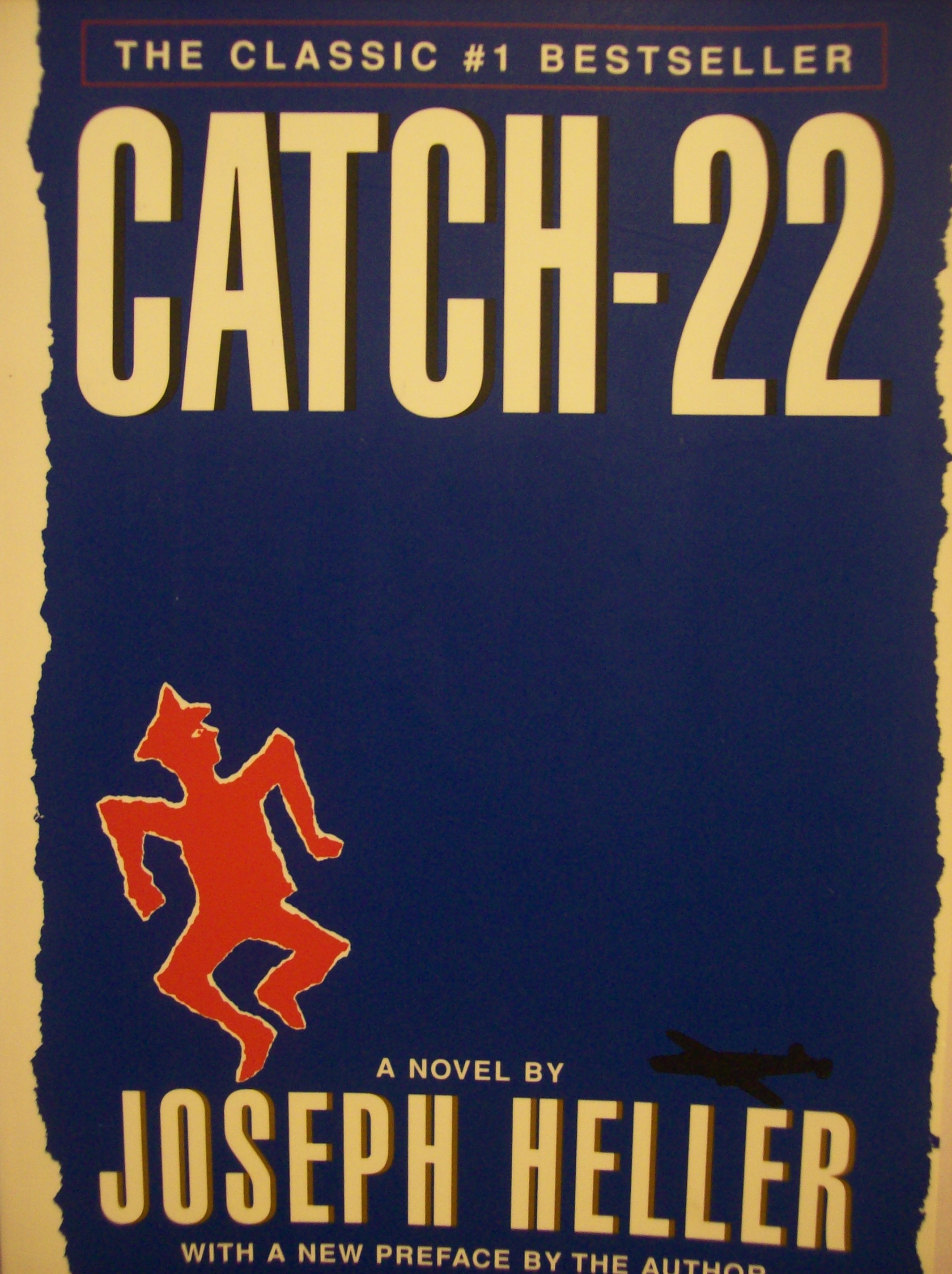
Maybe Catch-22 by Joseph Heller isn’t classic literature. When I was a kid, a book had to be represented in Classics Illustrated comic books for me to consider it a classic. But a lot of those comic books were published before Catch-22 even came out, so maybe that’s not a fair standard.
Catch-22 is over 50 years old, and people still read it. If a book is still relevant after 50 years, then it’s probably a classic. And if it’s not a classic, it will be. At the very least, Catch-22 is a future classic.
Catch-22 is a novel filled with great sentences. I would list some of the examples of great sentences in Catch-22, but this is about the bad sentences. A bunch of other (more serious) literary critics have written about the great sentences in Catch-22, so there are plenty of places to look if you’re interested in the great sentences in Catch-22. You could even read Catch-22 if you’re interested in the great sentences in Catch-22. Every page has lots of great sentences. But every once in a while, in an effort to write a great sentence (speculation on my part), author Joseph Heller came up with a stinker.
Here’s an example (p. 23):
There was a urologist for his urine, a lymphologist for his lymph, an endocrinologist for his endocrines, a psychologist for his psyche, a dermatologist for his derma; there was a pathologist for his pathos, a cystologist for his cysts, and a bald and pedantic cetologist from the zoology department at Harvard who had been shanghaied ruthlessly into the Medical Corps by a faulty anode in an I.B.M. machine and spent his sessions with the dying colonel trying to discuss Moby Dick with him.
Phew! If I have to stop and take a deep breath in mid-sentence while reading it aloud, it’s probably a bad sentence. And I don’t even smoke. I ride an exercise bike while I watch television or read. I’m not in the greatest shape in the world, but I don’t lose my wind that easily. I should be able to read a complete sentence out loud without having to take a breath in the middle.
To be fair, there is a semicolon in the sentence to break it up. If I pause at the semicolon, I can read the entire sentence in two breaths.
The bad sentences in Catch-22 might not really be bad sentences. A lot of readers love the bad sentences in Catch-22. I kind of like the bad sentences in Catch-22. It’s just that if I had ever tried writing sentences like the sentences in Catch-22 when I was in writers groups or in school, I would have been told I was writing bad sentences. If I’m told that a sentence is bad when I write it, then it’s a bad sentence.
Here’s a bad sentence that doesn’t have a semi-colon (p. 42):
“The system worked just fine for everybody, especially for Doc Daneeka, who found himself with all the time he needed to watch old Major ____ de Coverley pitching horseshoes in his private horseshoe-pitching pit, still wearing the transparent eye patch Doc Daneeka had fashioned for him from the strip of celluloid stolen from Major Major’s orderly room window months before when Major de____ Coverley had returned from Rome with an injured cornea after renting two apartments there for the officers and enlisted men to use on their rest leaves.”
Sometimes writing out somebody else’s convoluted sentence helps me to understand it. This time, it didn’t help at all. And if a book has a character with a name like Major Major, I usually stop reading. But Catch-22 was written 50 years ago, and back then Major Major might have been funny.
Despite Major Major, I kept reading. And then, later on, just as I was in the flow of reading a series of great sentences, out of nowhere, came a monstrosity that I had to read and reread and rereread (p. 65):
“It was a night of surprises for Appleby, who was as large as Yossarian and as strong and who swung at Yossarian as hard as he could with a punch that flooded Chief White Halfoat with such joyous excitement that he turned and busted Colonel Moodus in the nose with a punch that filled General Dreedle with such mellow gratification that he had Colonel Cathcart throw the chaplain out of the officer’s club and ordered Chief White Halfoat moved into Doc Daneeka’s tent , where he could be under a doctor’s care twenty-four hours a day and be kept in good enough physical condition to bust Colonel Moodus in the nose again whenever General Dreedle wanted him to.”
Sometimes writing somebody else’s convoluted sentence makes me laugh and change my mind. I just rewrote this sentence and laughed and changed my mind. Maybe it’s still a bad sentence that simply has to be rewritten word-for-word to be appreciated.
Most of the time when you’re reading a book, you shouldn’t notice the sentences. If you notice the sentences, it can detract from the book. Catch-22 is the exception. When I first read Catch-22, I think I paid attention to the story and barely noticed the sentences. Now that I’m reading it 30 years later, I’m paying attention to the sentences and have no idea what’s going on in the book. Maybe 30 years from now I can read it while loving the sentences AND the story.
For now, I’m enjoying the sentences. But a few of them are stinkers.
*****
I read first Catch-22 when I was in high school in the early 1980s. I think Catch-22 reminded me of the television show MASH, and I liked MASH a lot back then. I know Catch-22 was written before MASH, and there was a series of MASH books (which I have never read). I once told a guy in college that Catch-22 reminded me of MASH, and the guy told me that I hadn’t really read Catch-22. I wish I had told him that, no, I hadn’t really watched MASH (or I could have told him that his mom never read Catch-22), but I wasn’t that quick of a thinker. It’s one of my few regrets in life.
I watched an old MASH rerun a few weeks ago. I realized that Hawkeye Pierce was a bully, and maybe Frank Burns would have been more tolerable if Hawkeye had left him alone. But it was just one episode. Maybe Frank was the bigger jerk most of the time. When I was younger, I never thought Hawkeye was the jerk.
*****
Are these sentences from Catch-22 as bad as I think, or am I a bad judge of bad sentences? What’s your favorite or least favorite sentence from Catch-22? Was it wrong for me to be reminded of MASH when I was reading Catch-22? If it wasn’t wrong, should I have kept it to myself because it’s one of those things you’re allowed to think about but you’re never supposed to admit?
*****
Here are some more Bad Sentences in Classic Literature!
Bad Sentences in Classic Literature: Jane Eyre
Bad Sentences in Classic Literature: Moby Dick
Bad Sentences in Classic Literature: The Great Gatsby
Bad Sentences in Classic Literature: The Scarlet Letter
Bad Sentences in Classic Literature: Harry Potter and the Sorcerer’s Stone

It’s been 60 episodes spanning a full year, but this blog serial has finally come to an end. That in itself is a shock!
Six months was a long time for a short-term relationship. When Daniella first moved into my apartment, I never believed we would have lasted six months. In that time, I paid all her bills, ran out of money, went to church to get her a rich husband, and finally became her “soul mate.” But this lawsuit against the church, it was a bridge too far. When I had said no, she’d flipped out and put a knife to my throat. That’s how Daniella handled conflict, go nuclear and worry about the fallout later.
Now my/our apartment was empty, her (stolen) furniture was in the moving van, and two brutes were waiting for her signal to leave. I had assumed that everything was over between us. I felt that gnawing in the pit of my stomach, but I had fought it. It was time for our relationship to be over. I’d just had an entire lonely night to think about it, and had resigned myself to it. I was okay with breaking up. But just when I thought Daniella was going to drive away, she had verbally blindsided me in the apartment complex parking lot.
“Aren’t you going to ask me to stay?” she had demanded.
I stood there, dumbfounded.
“Fight for me, Jimmy,” Daniella said. “You can still get me to come back to you.”
I wasn’t sure whom to fight. The moving guys?
“Tell me why you want me to stay,” she said.
I knew I shouldn’t ask her to come back. But that previous night, I had missed her, and it wasn’t just the affection. After six months, I was used to her next to me. I could wake up knowing that I could put my hand on her leg. I enjoyed hearing her curse if she was aroused too early. The warmth of her next to me, I couldn’t just let that go. She had become a part of me. When she called me her “soul mate,” I scoffed, but also thought it was true. For some reason, we had a connection, and I couldn’t figure out why. And despite her flaws (emotional, not physical), I was going to miss her.
“I know you still luuuuuvvvvv me,” Daniella said. “I can see it. I can feel it when I stand next you.”
She was right. Standing so close to me in her tight t-shirt and spandex, I couldn’t help checking her out, watching the way her clothes shifted with each movement. Even though she had been my girlfriend for six months, I felt a little guilty eyeing her like that.
Daniella looked up and sighed. “I told you for the last two months how I feel about you. Now it’s your turn.”
This was why she had stayed with me for six months when she could have been with a nicer-looking guy with a lot more money. Daniella knew she could manipulate me. She knew I’d fold like a page in a library book. Her former boyfriends had argued with her, called her names, emotionally abused her (that had probably gone both ways), but I had simply paid her bills until my money ran out. I had let her run the apartment. I had backed her up when she stole furniture. I had helped her sneak into a men’s room to watch a bunch of guys pee. With me, all she had to do was tell me to ask her to come back, and she knew I would.
“You have to promise to drop the lawsuit,” I said.
“Shit, you’re giving me conditions?”
“It’s the right thing to do,” I said.
“Shit,” she said. “But… okay.” She nodded and folded her arms.
“You still make me stammer,” I said, collecting my thoughts. I knew not to mention her appearance or the affection she gave me because any man could do that. I had to put my words together quickly.
“I’ve never had a soul mate before,” I said. “I… love how you can finish my sentences. I love how you can never open a book and still get away with pretending you’ve read it. I even love hearing you snore.”
“I don’t snore,” Daniella said.
“I love hearing you breathe heavily when you sleep. And maybe this is shallow of me, but every time I look at you, I notice something new. I want you to stay. I think you should stay. You might not love me. In fact, you’ll never love me. But I still feel something for you, Daniella, and maybe, you should stay, and we can work things out.”
Even though I felt my words were inadequate, Daniella grinned. I felt defeated and whipped. I knew I shouldn’t have asked for her back. I was weak when I needed to be strong. But then Daniella grabbed me by the waist and pulled me to her in a tight hug. I almost lost my balance, so I braced myself against a neighboring car. Daniella stood on the curb and kissed me quickly on the lips. Suddenly, I felt a lot better. It was this kind of emotional high, this was why I had asked her not to leave.
“Stay here,” she said and messed up my hair.
I watched as she strutted up the parking lot to her moving van. Even as my heart pounded hard in anticipation of our reunion, I wondered what I had just gotten myself back into. I was usually a long-term thinker, and I knew I had just made a boneheaded shortsighted decision. I might be happy for a few nights, a few weeks, but this kind of conflict was going to come up again, and we’d just have the same nuclear argument again. I had merely delayed the inevitable. I hated delaying the inevitable. I usually wanted to get the inevitable over with. But not with Daniella. When it came to me, Daniella was inevitable-proof.
I watched Daniella look at me while she talked to the moving van brutes. She pointed in my direction and nodded a couple times. One brute jumped into the van and another brute moved toward the back of the lot. Then the van slowly moved in reverse, with the brute in the back of the lot signaling directions, and they managed to turn without sideswiping any parked cars. Then the second brute jumped into the passenger side. Okay, I thought. They were bringing the van closer to the apartment to move the furniture back in. I wondered if I should help the brutes with the heavy stuff or if I should just stand and watch. I really didn’t want to do any heavy lifting, and they were getting paid, and it would serve one brute right for having given me a dirty look when I first entered the….
The moving van drove right past me and didn’t stop. I watched it move in slow motion, like a freight train without graffiti. I almost pitied them. Daniella was going to rip that driver a new one for leaving without permission, I thought, as the truck turned the corner and disappeared behind the set of trees bordering the apartment complex. Just as I turned, I realized Daniella was standing beside me.
“How are you going to tell them to come back?” I asked smugly. I was going to enjoy listening to that phone call.
“I’m not.” Her cheese-eating grin was especially wide.
“You’re… not bringing your stuff back?” That didn’t make sense. She hated my furniture.
“They’re taking my stuff to my new place.”
New place? “But… I thought…”
“I always wanted a good break up,” Daniella said and moved back, signaling that there would be no more touching. “I might not ever get another one.”
And then Daniella got inside her car.
“But… that’s it?” I asked.
“It’s not it,” she said, shutting the door. She rolled down the window. “I know your phone number.” She revved up the engine. “And I know where you live.”
We stared at each other as everything sunk in for me. She lingered and let the engine run. I don’t know if she enjoyed watching me suffer a little bit or if she was going to console me if I got too upset. I paced around her car. I knew there was no way to change her mind. I wasn’t sure if I wanted her to anyway, but everything had turned one way so quickly and then turned the other way even faster, and I wasn’t good at processing information. I needed something I could understand.
“You’re not going after Jerome, are you?” I asked.
It probably wasn’t my business anymore, but I still felt a tug of jealousy. When Daniella wore her thick, black glasses and carried around Jane Austen books, educated men fell for her hard. Jerome was infatuated with Daniella. She could wrap him around her finger if she wanted to.
“No,” Daniella said. “I wouldn’t do that to you.”
Maybe I should have thanked her. Instead, I caught a glimpse of the boxes in Daniella’s back seat, and I remembered.
“Be careful driving out,” I said. I meant it sincerely, but with my monotone voice, it probably came out as rude. “You might scrape bottom.”
“I never scrape bottom,” Daniella said. Her grin disappeared.
“That’s a lot of weight back there.”
“I said I never scrape bottom.”
Before I could answer back, Daniella pulled out and accelerated to the parking lot exit just to prove her point. But the pavement dipped just before the side street, and sure enough, the concrete scraped against something metal (maybe the muffler). The clang made Daniella slow down, and a car speeding down the street too fast slammed on the brakes with a screech and honked at her for blocking traffic with her slow right turn, and Daniella honked back in one long continuous blast, and the two drivers blew their horns at each other as they crawled down the street and out of my view. The last I saw, Daniella had an extended middle finger out the window, but I wasn’t sure if it was directed at me or at the driver of the other car. It might have been aimed at both of us.
But I didn’t think I deserved a middle finger. I had warned her about scraping bottom.
Mentally, I started kicking myself. After six months together, I couldn’t believe the last words I’d said to Daniella were “That’s a lot of weight back there.” And I couldn’t believe she had talked me into asking her to stay, and I’d fallen for it. It was probably good that she was leaving, but I still felt empty. I knew it would be a long time before I’d get another live-in girlfriend. And maybe Daniella had been right, not about fighting for her, but about fighting for stuff that I wanted. I tended to be passive when it came to relationships. I tended to let other guys be more aggressive and stand and watch, and thereby miss out on opportunities. Daniella had been with me for the wrong reasons (maybe?), but nobody else knew that. All my friends and acquaintances saw that I had been with a really hot girlfriend, an outgoing attractive woman who openly called me a stud and bragged about the way I…
“This place is empty,” my hairy neighbor said, standing at the open front door as I walked up the steps to my apartment. To this day, I can’t remember what my hairy neighbor’s name was. I might not have ever known.
“She moved out,” I said, as I stepped back into my apartment.
“I heard her yell at you from the balcony yesterday,” he said. “I think she wanted you to come back.”
That surprised me. I couldn’t see her being that upset that I’d leave like that. And I couldn’t picture her staging a scene if she didn’t know she had an audience.
“I came out, asked her what was going on,” my neighbor said. “She told me to fuck off.”
“I’m sorry about that,” I said. I had to suppress a laugh. It would have been rude of me.
“She’s a wild one,” he said. “Never would have guessed that the first time I saw her. But she was crazy. I didn’t want to say that to you while you were together.”
“You think I’m lucky she moved out?” I asked, curious about his perspective.
“You might be lucky you’re still alive.”
“Yeah,” I said. And this was coming from a guy who didn’t even know about the knife.
Then as I approached my book shelf, I realized that my Frank Baum Wizard of Oz books were gone. Daniella had asked if she could take them, I had said no, and now the books were gone. I cursed, and my neighbor laughed, even though I never told him what I was cursing about. He knew it was about Daniella. She had taken all of her stolen furniture, and with it, she had stolen some books that were supposed to stay in my family. Part of me was just a little amused because it was typical Daniella, but it also pissed me off. She had stolen my books, and still she had manipulated me into asking her to come back. After this, I knew she wasn’t going to drop the lawsuit against the church. Despite my threat to tell on her, I was going to stay out of it. After all, she might cut me if I talked. But I could get my books back if I really wanted to. I would at least think about it. I knew where she worked.
“She took some of my books,” I said with a heavy sigh. “That’s what we had in common. We both like to read.”
“She didn’t strike me as the type to read,” my neighbor said. “No offense,” he added.
“She was full of surprises,” I said, not offended at all.
“You going to miss her?” he asked. I think he was just searching for words to break the silence.
Looking back, I wish that I had been stronger, that I hadn’t asked her to return. I’m not too hard on myself about that anymore, though. Everyone has their weaknesses. Superman had kryptonite, and I had Daniella. Superman never learned to stand up to kryptonite either; he had to spend his whole life/career avoiding it. Luckily, Daniella chose to use her charms on somebody else. To my credit, I never went looking for her. I didn’t stalk her. I didn’t call Linda for updates. I learned from my experience with Daniella and went on with my life. In fact, it was because of Daniella that I later met my wife, but I didn’t know that was going to happen then.
“Of course,” I said to my neighbor. “I’m going to miss her a lot. But I feel a little better knowing that sometime, somewhere, she’s going to make some rich guy really, really… really miserable.”
And I found out years later that I was right. But that’s a story for somebody else to tell.
*****
To be contin… oh wait! That’s it!! But if you want more of “The Literary Girlfriend,” stay tuned for details of a brand new rewritten version in an all-new format.
Or if you want to read the blog version of “The Literary Girlfriend” from the beginning (it got kind of long), start here. Or click on “The Literary Girlfriend” category to select a chapter.


 Dysfunctional Literacy