
It looks peaceful, but they probably said and thought nasty things about each other. (image via wikimedia)
Experts may disagree about which U.S. political insult is the best ever, but everybody agrees that it hasn’t happened in the current election cycle. In fact, the rhetoric in the 2016 presidential campaign has been really lame. Hillary Clinton has called Republicans her enemies. Donald Trump has pretty much insulted everybody, and everybody else has insulted him back. Even so, nobody yet has had a good zinger that historians will remember.
To be fair, it’s been a few presidential campaigns since anybody’s had a really good political insult.
1988? Now that was a great year for political zingers. Most people remember Senator Lloyd Bentsen telling Dan Quayle during the Vice-Presidential Debate that he (Dan Quayle) was no JFK. That was a memorable moment. But it wasn’t the best ever.

Don’t let that sweet smile fool you. If you pissed her off, she’d rip you a new one. (image via wikimedia)
A couple months earlier in 1988, Texas Governor Ann Richards was speaking at the Democratic National Convention (yes, Texas used to have Democrat governors!!) when she said of George Bush (the first one):
“Poor George. He can’t help it. He was born with a silver foot in his mouth!”
This might not seem like such an awesome political insult at first, but take a closer look. First of all, it was a combination of two idioms. Metaphors aren’t supposed to be mixed, but idioms are another matter. Governor Richards combined “he was born with a silver spoon in his mouth” with “he stuck his foot in his mouth” to say that Bush was both rich and stupid. And she said it without saying directly that George Bush was rich and stupid.
Secondly, Ann Richards delivered her insult with a Texas drawl. I’m not sure if Texans have drawls anymore, but Ann Richards talked with one when she wanted to. Her “he can’t help it” sounded more like “he caint hep it,” and that made the words sound endearing yet even more insulting at the same time.
Finally, the insult was kind of good-natured. It wasn’t delivered in a self-righteous or smarmy tone that politicians usually resort to. Whether it was funny or not is subjective, but it seemed like a lot of Republicans thought Ann Richard’s insult was funny (I only have anecdotal evidence to back that up). If both Republicans and Democrats think a zinger is funny, then that insult is in the “Best Ever” category.
Unfortunately for the Democrats, the best ever political insult had no influence on the presidential election. George Bush defeated Michael Dukakis that year, and six years later, Bush’s son defeated Ann Richards to become Texas governor (and then he later became President of the United States himself).
So if you want to thank/blame anybody for the president that was George W. Bush, you can thank/blame Ann Richards.
I don’t know if Ann Richards’s zinger was the best political insult ever because I’m not a political expert, and I haven’t heard or read about every political insult ever. But it’s been over 25 years since Ann Richards zinged George Bush, and people still remember it.
When an insulted politician’s son has to get into politics to avenge a political zinger directed against the father and then the insulted politician’s son becomes President of the United States, you know that the insult was a BEST POLITICAL INSULT EVER!!
*****
What do you think? What other political insults throughout history should be considered as the “Best U.S. Political Insult Ever”? If you’re not in the United States, what do you think the “Best Political Insult Ever” is for where you live?
*****
When I was a kid, I was punished for saying the word crap. Looking back, it kind of ticks me off because now I know…
And here is the true story of my one moment of high school glory!

Now only 99 cents each on the Amazon Kindle!

Even though this is a literary rant, this is one of the few times that I am NOT griping about James Patterson! (image via wikimedia)
You have to be careful when you rant. If you get carried away during a rant, everybody thinks you’re crazy, and then you end up on the internet looking idiotic, and everybody laughs at you, and the whole point of ranting is lost. I can’t rant in public because I don’t want a video of me acting crazy, so I have to write my rants. It’s tough to show passion with the written word unless YOU ALL CAP EVERYTHING!!!!! But again, if you do that, everybody will think you’re crazy
BAD WORKING CONDITIONS AT AMAZON
Now on sale for less than a dollar on Amazon!!
I like Amazon because it’s convenient and cheap, but not everybody agrees with me. A couple months ago the New York Times reported on bad working conditions at Amazon and then last week a guy from Amazon wrote a response. I have to admit, my biases lean toward Amazon.
In its original article, The New York Times stunned its readers by claiming that Amazon employees cried at their desks a lot. The Times implied that something must be wrong at Amazon if employees cry at their desk. I wondered why Amazon hires so many people who cry at work.
Maybe I should get a job with Amazon. Sometimes I like to test my pain threshold. Sometimes I hold my hand in ice water and time myself while the pain becomes unbearable . My brothers and I used to smash each other’s heads against the wall to see who would get the first concussion. I’m too old for that kind of thing now (I get headaches a lot), but I’d like to see how long I could work for Amazon before I cry. At least I’d be getting paid a little. I never got paid for getting my head smashed against the wall.
AMAZON SUES FAKE REVIEWERS
This is my ebook, but none of the reviews were written by me.
Amazon also made news by threatening to sue people/companies who write fake book reviews on the Amazon website. I’ve thought about writing fake reviews for my own books on Amazon, but I’m glad I didn’t because I don’t want to be sued.
I also thought about writing fake book reviews on my blog. Amazon couldn’t sue me for that. But writing fake reviews for my own books would put me in an awkward position. Anybody reading my blog would wonder why all the positive reviews for my books were written in the exact same style as my books and my blog posts. I’d rather have no reviews than have fake reviews that made people wonder if my reviews were fake.
I know having reviews for books on Amazon looks a lot better than having no reviews for your books on Amazon. I understand the urge to do anything to get a competitive edge on book sales. To me, it’s like an athlete taking steroids (except maybe without the physical side effects).
I’d like to see the Amazon lawsuit happen (to somebody else) just to see what the verdicts and penalties would be. I wouldn’t want to sit through the proceedings, though. I’m not THAT interested.
NO NAKED WOMEN IN PLAYBOY

This is considered tasteful because she’s reading a book. (image via wikimedia)
Playboy has announced that it’s no longer putting pictures of naked women in its magazines. With the internet, nudie magazines have become irrelevant. That’s okay. The internet has destroyed a lot of businesses. A few years ago, Encyclopedia Brittanica announced it was discontinuing its books and was going completely online. I thought, without books, what’s the point of an encyclopedia? The whole internet is an encyclopedia, but most of it is not appropriate for kids. The whole internet is also a Playboy magazine, but the internet is not as pretentious.
It’s not good when the former trend-setter has to start following somebody else’s trends. Playboy had a pretty good run, though. Very few people (or magazines) ever get to be trend-setters. The only thing I’m going to miss are the naked granny cartoons. They were funny. And I must be getting older because now I think the naked granny is kind of hot.
Once when I was taking a writing class, my instructor began discussing Catch-22 and the way the author constructed his sentences, and I almost blurted out that the author Joseph Heller had just published his latest piece of fiction in Playboy. There were a lot of women in that class, so I decided not to say anything. Maybe I was being selfish by not telling the class about Heller’s latest work. I let my own porn-shame hold me back. Back in the 1980s, there was a lot of porn shaming. If Joseph Heller publishes a short story in Playboy next year, male writing students in literature classes will be able to speak up.
NEW GAME OF THRONES BOOK
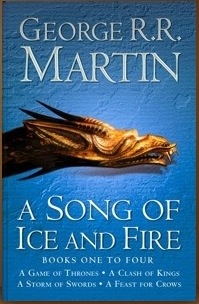
Even the dragon is getting tired of waiting for the next volume.
George R. R. Martin is publishing a new Game of Thrones book this month, but it’s not The Winds of Winter, which fans have been waiting for. Instead, it’s a collection of related novellas from various science fiction/fantasy anthologies. If I were reading Game of Thrones, I’d be pissed. As far as I’d be concerned, George R. R. Martin has one mission in life: finish A Song of Fire and Ice. Forget the novellas.
And book publicists shouldn’t announce novellas by proclaiming there’s a new Game of Thrones book coming out. It’s irresponsible, and it’s not clever, and it just makes a cranky guy like me not want to read anything related to Game of Thrones. To be fair, I’m not going to read A Song of Ice and Fire anyway, but book publicists should still be more considerate.
I don’t read a story if it goes over three books anymore. The Godfather was one book. The Lord of the Rings was three books. No stories should take longer to tell than The Godfather or The Lord of The Rings. That’s my standard.
*****
What do you think? What literary topic would you like to rant about? If working conditions make employees cry, do you blame the employees or the employer? If an author is writing a really long series, should that author waste time with related novellas? Is a literary rant any good if James Patterson isn’t the topic?

(image via wikimedia)
I don’t talk about the word “f***ing” very often. I’m a polite guy, and f***ing” is not a topic that comes up in polite conversations. Every once in a while though, “f***ing comes up in literary conversations. A few years ago, author Elizabeth Gilbert started a literary debate by declaring that writing was “f***ing great.” A couple weeks ago, Chrissie Hynde told people not to buy her “f***ing book.”
Perhaps some context is necessary. Chrissie Hynde, lead singer for The Pretenders, just wrote a memoir Reckless: My Life as a Pretender and said something controversial in her book that critics disagreed with. I’m not getting into what she wrote or whether or not I agree or disagree because that would be for a different blog post. At any rate, Hynde defended what she wrote in her memoir during an interview when she said:
“You know? I’d rather say, just don’t buy the f***ing book, then, if I’ve offended someone.”
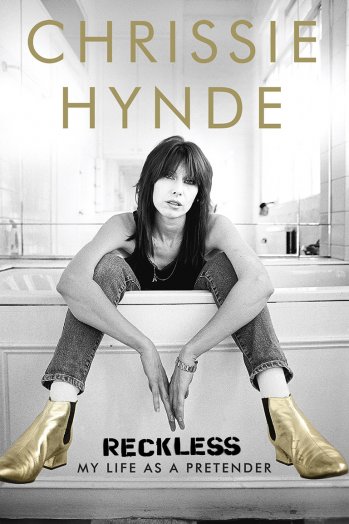
Even if you’re offended by what she said/wrote, it’s okay to look at the cover.
Maybe it’s the kind of thing only a famous person could say. If I said in an interview “…just don’t buy the f***ing book,” a bunch of readers would say “Fine” and nobody would buy it. Maybe Hynde is engaging in reverse psychology. Or maybe she doesn’t give a f***.
I’m not outraged by what she said, but if I were in her position, I’d be thrilled that somebody had actually read my book and was making comments about what I’d written. As an amateur writer, I know it’s tough it is to get people to read your words, especially when they have to pay a few bucks. Maybe Hynde doesn’t understand how many authors would love to write something that gets critics fired up.
Even so, I appreciate her approach to book promotion: act agitated and say something controversial. I just don’t think it would work for most authors. It might not even work for her.
One thing I’m curious about, though: What did Chrissie Hynde mean when she used the phrase “f***ing book”? Is she insulting her own book? Maybe not, because “f***ing” is not always an insult. It depends on how “f***ing” is used.
When somebody uses the word “f***ing,” it’s usually obvious what they mean. Everybody knows what “f***ing” means as a verb. If you don’t know, I’m not telling you, (or drawing you a picture or sending any photographs).
“F***ing” as an adverb usually means “very” or “really.” If somebody comments on my blog saying “You’re f***ing stupid,” I know that “f***ing” means “very.”
It’s when “f***ing” is used as an adjective that its meaning can be somewhat murky. As an adjective, “f***ing” can be very good or very bad. For example, I was once told that I was a “f***ing genius” at work, but before I could develop a superiority complex, somebody else called me a “f***ing idiot” on my blog. “F***ing” can go both ways.
When Chrissie Hynde said not to buy her “f***ing book,” she might have meant “stupid book,” not because she thinks her book is stupid but because she thinks the issue her critics are focusing on is stupid. Or maybe she didn’t mean anything by it. Maybe she called it her “f***ing book” because it sounded better that way.
Add “f***ing” to anything, and it just sounds better. Who cares what it means?
I don’t know if this was the worst book promotion ever. Maybe this was better than no book promotion at all because people like me are talking about it. Maybe no book promotion at all is the worst book promotion. So when I write a book and don’t promote it, I’m actually doing a worse book promotion than Chrissie Hynde.
*****
What do you think? Does “f***ing” have a real meaning? Or do people say it just because it sounds good? Would you buy a book from somebody who said “Just don’t buy the f***ing book”? Is it worse to have no book promotion than telling people not to buy your f***ing book?
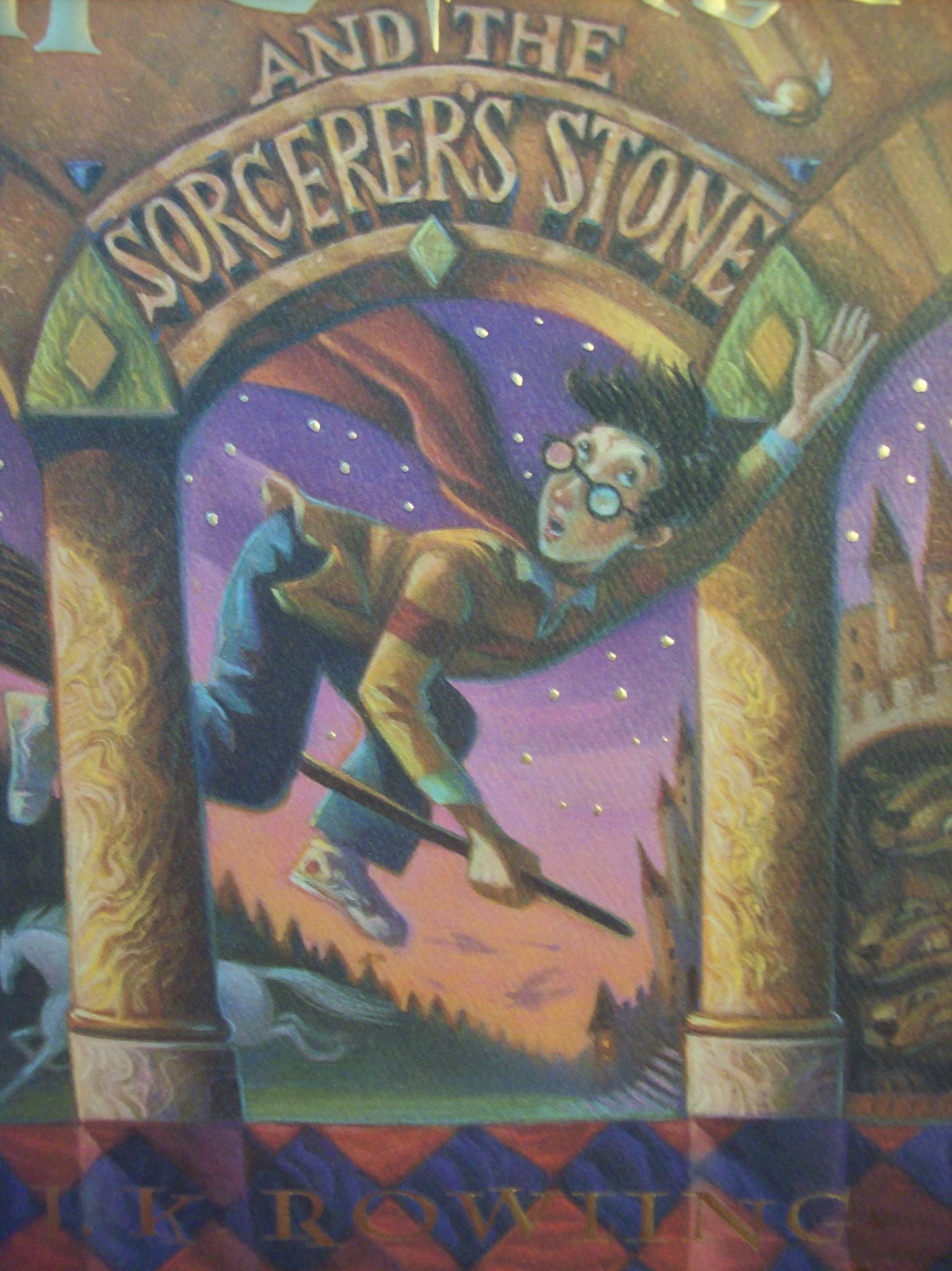
Even award-winning, record-breaking debut novels can have bad sentences.
Maybe Harry Potter and the Sorcerer’s Stone isn’t a classic novel yet, but it probably will be. It’s been over 15 years since it was published, and people are still reading it. Most books are forgotten months after they were published. I’m betting the Harry Potter books will continue to be read for several generations, so I’ll go ahead and call it a classic now. If I’m wrong, 50 years from now people can come back and mock me for it.
Whether it’s a classic or not, Harry Potter and the Sorcerer’s Stone has some bad sentences in it. It’s easy for for me to spot bad sentences because I’ve written a lot of them in my time. If my English teachers would have red-marked my paper for writing something similar, then it’s a bad sentence. If my writing group peers would have criticized me for writing something similar, then it’s a bad sentence.
The bad sentences in Harry Potter and the Sorcerer’s Stone aren’t the long, confusing run-ons that can plague much of classic literature. JK Rowling’s bad sentences are more subtle. Readers who are into the books for pure enjoyment might not spot the bad sentences, but for somebody like me, who hasn’t truly enjoyed a book in years, bad sentences stick out.
Bad Sentence #1
He bent his great, shaggy head over Harry and gave him what must have been a very scratchy, whiskery kiss. (p. 15)
If I had written this sentence, my English teacher would have hammered me for the phrase “what must have been.”
“What do you mean ‘what must have been’?” my English teacher might have said. “Either the kiss was scratchy and whiskery, or it wasn’t. And don’t use ‘very.’ ‘Very’ is lazy.”
I’ll admit, I haven’t finished reading Harry Potter and the Sorcerer’s Stone, but I don’t think readers ever found out whether or not the kiss was very scratchy and whiskery. Or maybe the kiss was “somewhat scratchy and whiskery.” I’ll never know for sure.
Bad Sentence #2
And the fleet of little boats moved off all at once, gliding across the lake, which was as smooth as glass. ( p. 112 )
My English teacher would have told me that “smooth as glass” was one of the laziest similes an author can write. It’s right up there with “as fast as a cheetah.” Maybe the baby’s bottom wasn’t good enough. If I had written “smooth as glass” in school, I would have gotten a giant red “CLICHÉ!!!!!!!” on my paper. Plus, the sentence started with the word “And,”but I do that too, so I won’t count it.
Which is smoother anyway, glass or a baby’s bottom? That’s one of those things you have to be really careful about if you’re determined to find out.
Bad Sentence #3
The entrance hall was so big you could have fit the whole of the Dursley’s house in it. (p. 113 )
2nd-person point-of-view? I was taught to NEVER use 2nd-person in fiction (except in dialogue). Even if it were acceptable in writing, this example of “you” came out of nowhere. It would have been an easy fix for an editor with something like: “The entrance hall was so big the whole of the Dursley’s house would have fit inside.”
Making the sentence even worse was the use of “big.” “Big” is a lazy adjective. Students all over the United States are taught not to use the word “big.” An author doesn’t need a thesaurus to find a more vivid adjective than “big.” I can’t believe publishers let a first-time author get away with the word “big.”
Bad Sentence #4
“It’s an invisibility cloak,” said Ron, a look of awe on his face. ( p. 201 )
“Of course the look of awe is on his face,” my English teacher would have said, had I written this sentence. “Where else would a look of awe be? On his hands? On his feet? On his stomach?”
Even though my English teacher would have been engaging in a bit of overkill, I would still get his point. This redundancy could have been easily fixed with the following:
“It’s an invisibility cloak,” said Ron in awe.
Or…
“It’s an invisibility cloak,” said Ron, his jaw dropping in awe
Maybe I’m being just a little nit-prickety. Then again, maybe not. Maybe published authors should be held to higher standards than public school students or struggling authors in writing groups. I don’t know. Either way, I know that Harry Potter and the Sorcerer’s Stone is a wildly successful book, but I also know that even wildly successful books can have bad sentences in them.
+++++
What do you think? Are these sentences bad, or were my teachers and writing group peers overreacting? Should an aspiring author use the word “big”? Which is smoother, glass or a baby’s bottom? Is Harry Potter and the Sorcerer’s Stone a classic? If not, (when) will it become one?
*****
Here are more Bad Sentences in Classic Literature!
Bad Sentences in Classic Literature: Jane Eyre
Bad Sentences in Classic Literature: Moby Dick
Bad Sentences in Classic Literature: The Great Gatsby
Bad Sentences in Classic Literature: The Scarlet Letter
Bad Sentences in Classic Literature: Great Expectations
Bad Sentences in Classic Literature: Pride and Prejudice
Bad Sentences in Classic Literature: Catch-22
Bad Sentences in Classic Literature: The Great Gatsby
*****
After more than ten years of blogging, I’ve finally written a novel.
A grammar-obsessed English teacher falls in ‘luuuvvv’ but discovers how chaotic and dangerous ‘luuuvvv’ can really be.

The Sunset Rises: A 1990s Romantic Comedy is now available on Amazon and from the trunk of my car at various local bookstores… until parking lot security kicks me out. Buy it now while supplies last!

It’s too long, and most people don’t know how to pronounce it.
The problem with long books is that they take a long time to read. Most people, if given a choice, would rather read a short novel than a long one. At least, that’s what I think. I’ve never seen a stat for it, but I bet it’s true. It’s not necessarily a matter of laziness. With so much other stuff to do, it’s kind of inconvenient to read a book that’s too long, even if you like reading long books.
A few days ago I found an old copy of an abridged Les Miserables that I had read in junior high. This reminded me that even before the internet and cable television, I had other things to do besides reading long classics. Now that I think about it though, I didn’t have all that much to do, so I was probably just being lazy.
Either way, when a friend of mine saw that I had an abridged version of Les Miserables, he told me I was cheating. I thought, abridged is cheating? Maybe for a book written in English. Les Miserables was originally in French, so maybe the abridgment was really just a brief translation. I appreciate the brief translation. I’d read a brief translation of War and Peace or Crime and Punishment or Great Expectations.
I’m not sure what was left out of the abridged Les Miserables. The short version matched fairly well with the Classics Illustrated comic book. Maybe I should watch one of the movies to see what the abridged novel left out. I don’t remember any songs in the abridged version. Maybe that was it.
It’s not just the classics that need to be shortened. Even modern authors can be long-winded. George R R Martin has taken six books so far to tell his tale A Song of Ice and Fire. It was originally supposed to be a trilogy, and now it’s going to take seven or eight books (if he finishes at all). Literary times have changed. When I was a kid, an author would start to write a novel and then turn it into a long-winded trilogy. Nowadays, authors set out to write a trilogy and end up with seven books instead.
I might sometimes complain about James Patterson, but at least his books (the ones he writes AND the ones he doesn’t write) are short.
I have a tough time reading long books now that I have a family to raise, a wife whom I enjoy spending time with, a full-time job, and cable television and the internet. 500-page books or a seven-book series is a lot of time to demand from readers. In fact, I consider it downright inconsiderate for an author to write a book that’s more than 500 pages. Mario Puzo kept The Godfather to under 500 pages. JRR Tolkien kept The Lord of the Rings to three books. If they could do it, so should other authors with less awesome stories to tell.
I’d love to read an abridged version of A Song of Ice and Fire. Maybe that’s why the HBO series Game of Thrones is so popular. It takes a lot less time to watch several seasons of the TV show than it does to read the books. At least for me, it does.
*****
What do you think? What novel would you like to be abridged? Is reading an abridged novel a form of cheating? What book series would you like to see abridged?
*****
These two books from Dysfunctional Literacy are too short (and entertaining) to be abridged!
Now only 99 cents each on the Amazon Kindle!

Nobody really gets hurt in fights over a book. (image via wikimedia)
I’m not the type of person who gets into fights, verbal or physical. The last fist fight I got into was 30 years ago. It wasn’t much of a fight. It started off as an insult contest, and just as it was about to escalate into a fist fight, I thought to myself, “Why am I getting into a fist fight over something this stupid?” By the time I figured out that I shouldn’t be getting into a fight, it had already started. It was over pretty quickly. The guy who wonders why he is getting into a fist fight always loses the fist fight.
Since arguments often escalate into fist fights, I tend to stay out of arguments too, especially at work. Even though fist fights are uncommon at work, people who get into stupid arguments still get fired. I might grumble at stuff that I don’t like at work, but my job is too important to me for me to argue, especially when people get fired for arguing. If anybody asks ask my opinion, I’ll give it, but I don’t argue.
This argument at work started when I saw a co-worker on break reading a James Patterson book. I won’t give the title because I don’t want to inadvertently promote a James Patterson book while I’m criticizing him. If it had been a boss reading a James Patterson book, I wouldn’t have said anything, but I was so outraged that this co-worker was reading a James Patterson book that I felt it was my duty to say something.
Looking back, I know I shouldn’t have said anything. I hate it when others comment on the books I read in public. That’s why the e-reader app on my phone is so great; nobody knows what I’m reading. People could think I’m watching porn, and I wouldn’t care. I’d rather strangers think I’m watching porn than talk to them about what book I’m reading.
“I can’t believe you’re falling for the James Patterson scam,” I said loudly to my co-worker.
“What are you talking about?” my co-worker said. He was annoyed that I had interrupted him. I normally wouldn’t do anything this rude, but James Patterson is too important to let slip by.
“James Patterson doesn’t write his own books,” I said.
“So?”
“Look at the cover,” I said. “He has a co-author in fine print.”
My co-worker glanced at the cover. “The co-author got more than fine print.”
“James Patterson has already published 12 books this year. Nobody can write that many books in one year. His co-authors are doing all the work, and James Patterson gets all the credit and publicity.”
“Do the co-authors get paid?” the co-worker asked.
“Probably,” I said.
“Then why do you care?”
“Because it’s a scam,” I said. “You’re falling prey to a literary scam.”
“Did I use your money to purchase my book?” the co-worker said.
“No.”
“Then, again, why do you care?”
“Because I don’t like to see bad behavior get rewarded,” I said with great conviction.
“Then I shall no longer discuss this with you,” my co-worker said. “You interrupted me, and I don’t want to reward your bad behavior.”
Okay, my co-worker scored a few points on that one, but I still knew that I was right. I hate it when I lose an argument even though I’m right. That’s another reason I don’t argue very often.
I was tempted to continue the argument, but he gave me a cold look. If I said anything, he might have been angry enough to fist fight me, not because he liked James Patterson, but because I wouldn’t let him read quietly in public. I’m too old to get into fist fights anymore, even if it’s about James Patterson, and we were at work anyway. I can’t get into fights every time I see somebody reading a James Patterson book. Even D’Artagnan would say that was foolish.
I blame James Patterson for this argument. I know it’s not because I’m getting old. I don’t care if kids run on my lawn, but now I yell at people for reading James Patterson books. The thing is, I despise lit-shaming. I believe reading is great and that everybody should read whatever they want, whether it’s sports magazines or comic books with 20-page fight scenes. I don’t care if an adult is reading YA lit or if a guy is reading a Harlequin romance. I might wonder about a middle-aged guy reading Lolita, but I wouldn’t say anything about it.
Yet if I see somebody reading a James Patterson book, I feel like I have to say something. I know it’s wrong. I know saying something to a person reading a James Patterson book is worse than reading a James Patterson book. From now on, I’ll resist the urge to say anything. It’s for my own good. Now that I’m too old to get into fist fights, I’m too old to get into stupid arguments. At least, I’m too old to get into fist fights over books.
*****
What do you think? Is it wrong to lit-shame somebody for reading James Patterson? What books/authors would cause you to start an argument? When was the last time you got into a fist fight?
*****
If you see anybody reading Nice Things, don’t start a conversation. Just let him or her read in peace and quiet.
Now available on the Amazon Kindle!

It’s tough to read an essay like this, but at least nobody can watch you eat. (image via wikimedia)
First of all, I don’t want to seem like I’m giving Chipotle free advertising. I don’t have anything against the fast food chain; I’m just not that kind of blog. Besides, Chipotle doesn’t give me free advertising, so why should I help them out?
Anyway, Chipotle is printing short essays from several prominent authors (like Jonathan Franzen and Joyce carol Oates) on the chain’s paper bags and cups. The Cultivating Thought paper bag essay isn’t a bad idea, but it would have been more useful 10 years ago before smart phones and tablets. Still, I guess it’s better late than never.
Literature in restaurants isn’t a new idea. Ernest Hemingway supposedly wrote his six-word story on a napkin in a public place, but it probably wasn’t at Chipotle. His tale, “For sale, baby shoes, never worn,” wasn’t the kind of story a restaurant would have wanted. Prose like that might have turned off eaters. Something a little more upbeat is probably better.
As far as authors go, Jonathan Franzen might not be the best choice for a paper bag essay. A few weeks ago, he ticked off a bunch of women in an interview by saying something about Edith Wharton. Maybe the women whom he ticked off will boycott Chipotle. Boycotts are pretty popular today. I’d boycott Chipotle if they chose James Patterson for their paper bag essay, but I go to Chipotle only once a month, so they wouldn’t miss my money too much. Whenever I talk about boycotting all-things James Patterson, people give me strange looks, so I’ve given up talking about it.
The paper bag essay/cup is sometimes compared to a cereal box. After all, almost everybody reads the cereal box. If you don’t, you’re missing out. But the cereal box lasts for several servings and can hold up over time. The paper bag gets crumpled and tossed aside. The paper cup is so small that it’s tough to read the essay. Don’t get me wrong. I’d rather have the tiny print essay than no essay at all, but it’s not as practical as a cereal box.
Essay bags don’t even have to use current authors. There are a bunch of current writers I’ve never heard of who are on the essay bags. It’s great publicity for these current authors, but jaded customers might think the essay bag is a scam to get people to buy these authors’ current books.
To avoid this cynicism, restaurants could use authors who are in the public domain. Restaurants could promote poetry by putting Frost, Dickinson, and Whitman on napkins and cups. Excerpts of essays or novels from Tolstoy or Twain or Dickens could be on the paper bags. I’d read a classic essay bag simply because of the prestige of the author. Women who are angry that Franzen had a Chipotle paper bag essay could be placated with poetry by Dorothy Parker or prose by Edith Wharton.
We probably won’t see unknown authors on Chipotle bags (unless there’s a contest), but that won’t stop me from writing a pretend paper bag essay. If I had a chance to write a restaurant’s paper bag essay, here’s what I’d write:
If You’re Reading This, Close Your Mouth
It’s usually okay to mouth words when you read. If you’re in public, most other people around you are wearing earbuds or are lost in their own thoughts to notice. But if you’re reading this essay, you’re probably in a restaurant surrounded by folks who are eating. And if you are reading aloud while you’re eating in public, then you’re probably being pretty gross and you’re not even aware of it.
Most people don’t want to be gross. We groom ourselves, check our appearances when we get the chance, and try to make good impressions. But a lot of people who care about how they look chew with their mouths open, and that’s gross.
I would write a vivid description to provide a mental image of how chewing with your mouth open is gross, but since you’re eating while you’re reading this, I won’t do that. I try to think of my audience, which is more than people who chew with their mouths open do.
I guess people aren’t taught anymore how to chew with their mouths closed. Maybe it’s like cursive not being taught in schools. Maybe chewing with your mouth closed is thought of as obsolete, since people stare so much at their phones. Still, not everybody stares at their phones when they eat. I don’t stare at my phone when I eat, so I’m an expert. If you’re chewing with your mouth open, you’re being gross.
The good news is that this is an easy fix. If you’re not sure how to NOT gross people out while you eat, here’s what you do.
- After you place food in your mouth, shut your lips. If your cheeks puff out with food, put a smaller portion in next time.
- Once your lips are closed, move your teeth. Concentrate on keeping your lips shut tight while you chew.
- If this is difficult, practice chewing with an empty mouth while your mouth is closed.
- Once you can keep your mouth closed, concentrate on not talking while in the process of chewing.
- Wait until you are done swallowing before beginning a sentence.
- If somebody asks you a question while you’re chewing, put up a forefinger (NOT a middle finger), and wait until you’re done swallowing before you speak. Take your time. Don’t choke on your food just because you’re in a hurry to speak.
- Once you’re done eating, excuse yourself to the restroom and check your teeth. Have floss ready just in case something gross is stuck in your teeth. Anything stuck to your teeth is gross.
Eating and talking are both necessary functions in life. You have to do both in order to survive. I’m not saying you should give up reading or talking. Just try not to do both at the same time. And even when you’re not talking, chew your food with your mouth shut.
Maybe my pretend paper bag essay isn’t as deep as any of the Cultivating Thoughts paper bags, but that’s okay. If you’re chewing with your mouth open, the deep cultivated thoughts won’t do you much good anyway.
*****
What do you think? How likely are you to read a restaurant’s paper bag essay? If you could write a Cultivating Thoughts paper bag essay, what would you write about? Can you have deep thoughts if you’re chewing with your mouth open?

Everybody knows what Moby Dick looks like, so… here’s Ragged! (image via wikimedia)
It’s probably not fair to classic literature that word meanings change over time. Nobody laughed when Moby Dick by Herman Melville or Ragged Dick by Horatio Alger, Jr. came out. I mean, I wasn’t around back then, but I’m pretty sure people didn’t laugh.
It’s not that people were more sophisticated in the 1800s. It’s just that Dick was only a name back then. I’m also pretty sure if “dick” had meant back then what it means right now, people would have laughed. Nowadays, if you want your book to be taken seriously, you don’t put “Dick” in the title.
I’m not the kind of guy who compares Dicks very often, but I’ll do it for the sake of literature. Moby Dick was published in 1851 and was supposedly a commercial failure when it came out. Ragged Dick was published in 1868 and was a bestseller. Moby Dick is a whale, so he’s a lot bigger than Ragged, who was just a kid. Moby is injured at the end of his book (It’s not a SPOILER if the book has been around for over 150 years). Ragged Dick thrives at the end of his book and is a success story. Because of his good deeds in the book, Ragged Dick attracts a lot of attention. Because he’s so big in the book, Moby Dick attracts a lot of attention.
As far as literary reputation goes, Moby Dick wins. Everybody knows who/what Moby Dick is. Even people who don’t read know about Moby Dick. Nowadays, hardly anybody knows about Ragged Dick, and that’s too bad because Ragged is an American success story, and the world can always use more American success stories.
Most people today have never even heard of Ragged Dick. I have no real evidence of that except my own experiences. Maybe I’m the only person in the United States who has friends and acquaintances who have never heard of Ragged Dick. Whenever I mention Ragged Dick, my friends and acquaintances think I’m making it up. For a few days, I even walked around with a copy of Ragged Dick just to prove to everybody that I wasn’t making it up. I don’t know why people thought I was lying. I’m not the kind of person who makes up fake book titles with the name Dick in them.
Maybe it’s immature to laugh at “dick,” but it’s that immaturity which still makes Moby Dick relevant. The only reason everybody knows the title Moby Dick is because of the name Dick. If Moby Dick had been titled Moby Bruce or Moby James or Moby Bob, the average person wouldn’t know about it. Sure, the intellectuals and scholars would still read Moby Dick and talk about the deep themes and rich symbolism, but it would be the equivalent of Anna Karenina to the average non-book reader.
Anna who?
Moby what?
Ragged Dick’s advantage over Moby Dick is that Ragged Dick has six books in his series. If you’re going to write a series about a guy named Dick, six is the right number. Six is average. Any more than six, and the author is probably exaggerating. Moby Dick is only one book. Maybe Moby Dick can brag that it’s so great that it needs only one book.
Ragged Dick was even turned into a musical, but most people don’t know about that either. Unfortunately, the musical was called Shine, completely ignoring the most noteworthy part of the book. If screenwriters truly wanted this project to succeed, they would have kept Dick in the title. Even if nobody wanted to see Ragged Dick: the Musical, they would at least talk about the title. Whenever Moby Dick is turned into a musical, it’s always called Moby Dick.
More Americans should know about Ragged Dick. It’s a travesty that Ragged Dick has been forgotten by the masses. After all, the character Ragged Dick WAS one of the masses and pulled himself up (with lots of help). He should be an inspiration. Everybody should aspire to be a Ragged Dick. If not, we can at least laugh at the title.
*****
What do you think? Does Ragged Dick get the attention it deserves? Is Moby Dick overrated? What other old book titles get mocked today?
*****
Here are two other books that have almost nothing in common, except that I wrote them.
Now only 99 cents each on the Amazon Kindle!
.jpg)
If you really want to be a writer, don’t let anything discourage you. (image via wikimedia)
An Ultimate Writer’s Guide is not about giving advice. Writers can get advice all over the internet. An Ultimate Writer’s Guide is about discussing what’s in store for novice authors without discouraging authors or scaring them off.
It’s true, being a novice author can be tough. The money might be nonexistent. Since most writers don’t make much money from writing, almost all of them have to work full-time jobs, and that means writers don’t have much time for writing. Even with blogs and social media, there’s no guarantee that a writer will be able to build an audience. Despite these challenges, being a writer can be worth the time and effort.
The money issue isn’t everything, but it can’t be ignored. Even with easy self-publishing and ebooks that don’t cost anything to create, it’s still difficult to make a profit off of writing.
*****
4 Reasons Why Most Writers Don’t Make Much Money
Writing might not get you a lot of this. (image via Wikimedia)
Last year was a financial disaster if you look only at what I made from my writing. I think my ebooks pulled in about $10.00 last year. That’s okay because I hadn’t expected to make much, and evidently, I’m not alone. An article in/at The Guardian shows that most writers (depending on how you define “most”) earned less than $1,000 from their writing last year, and you can’t really do much with that over the course of a year. I don’t know what percentage earned $10.00 or less. Maybe I don’t want to know.
Last year, famous rich author Elizabeth Gilbert said writing was “f*cking great.” That was easy for her to say because she’s “f*cking rich” (I quoted myself there). I make next to nothing from writing, and I still think writing is “f*cking great.” I think I have more credibility on this issue than she does. But even though writing is great, I know that I probably won’t make much money (I hope I’m wrong) for four basic reasons.
*****
.png)
Even though most writers don’t make much money, writers write anyway, and why not? When you think about it, there has never been a better time to be a writer!
5 Reasons Why It’s Great To Be a Writer Today
He’s grinning because he hasn’t noticed any of his mistakes yet. (image via wikimedia)
It’s easy for most writers to be negative. It’s tough to make enough money to earn a living. We’re never satisfied with what we’ve written. No matter how many people read and respond to our work, it’s never enough. But even with these challenges, it’s better to be a writer today than it’s ever been.
- Writing is physically easier than it’s ever been.
Authors used to have to physically hold a pencil or a pen and physically write out each word on a sheet of paper. Even worse, back in the really old days, writers had to dip quills into ink and then got beaten by monks if they made a mistake.
I’m not sure that ever really happened because there’s no ancient video footage of monks beating writers who made mistakes. If there’s no video footage of an event, I’m skeptical that it ever happened. Then again, back in the 1970s I saw nuns rap student knuckles with rulers, so if nuns in the 1970s were doing that, I’m pretty sure in the really old days monks did much worse to young writers who made errors on their parchments. After all, nothing inspires perfection like the threat of violence.
*****

It may be a great time to be an author, but writing can still be frustrating and emotionally draining. Sometimes writers need some encouragement that doesn’t come from family and friends. Writers want words of wisdom from those who have been successful. But beware! Sometimes writing advice from famous authors can backfire!
+++
5 Famous Quotes About Writing That Might Be Evil
“The road to Hell is paved with adverbs.”- Stephen King
Then why did I learn about them in the first place? (image via Wikimedia)When a famous author writes a quote about writing, aspiring authors pay attention. After all, nobody knows more about writing than a famous author. Some quotes about writing have become so widely known that they’re almost accepted without second thought. But what if these famous quotes were meant to be misleading? What if the famous authors were just messing with us? What if famous authors were toying with our emotions and fragile egos? What if these famous authors were just… evil?
Below are five famous quotes about writing that MIGHT be evil:
QUOTE #1 “There is nothing to writing. All you do is sit down at a typewriter and bleed.”- Ernest Hemingway

++++
It’s easy for famous writers to come up with quotes about writing because they’re famous and they’ve made lots of money. But maybe writers who haven’t made money can contribute something to the discussion as well.
*****
What Makes You a Writer?
You might be a writer if you use this, but you also might want to update your technology. (image via Wikimedia)
I don’t talk about my writing much. Nobody I know asks me about my writing because I haven’t told anybody I know that I write. If I told people that I wrote a blog and ebooks, then they would want to talk about my writing (or feel like they were obligated to talk about my writing when they didn’t really want to, and I don’t want to put them in that position). I don’t mind writing about what I write, but I don’t like to talk about what I write. I’ve had bad experiences talking about my writing.
Twenty years ago, I (semi-pretentiously) said I was a writer or wanted to be a writer, and that led to a bunch of awkward conversations. I’d explain my projects/ideas, and they always sounded lame when I tried to describe them. For example, I once wrote a manuscript about a private detective who pretended to be a psychic. He used his notoriety to drum up business, but it also got him into trouble, like when his predictions turned out to be wrong. Even though I liked my idea, and parts of the book were pretty good, I hated talking about it at social gatherings where I barely knew the people I was talking to. Eyebrows would go up.
“Psychic detective?” they’d ask.
“Fake psychic,” I said.
“Then how does he solve crimes?”

*****
Even if a novice author doesn’t get rich or famous, writing can be awesome! Receiving feedback, exchanging ideas, and counting stats is a lot more productive than sitting around watching television or playing video games. It MIGHT even be more productive than reading (but I know a lot of people disagree with me about that).
Yes, writing can be frustrating (even if you don’t bleed). Yes, it can be time-consuming. But no matter what the challenges of being an amateur writer might be, it beats not writing at all.
****
What do you think? What makes writing so great? Why is writing worth the time and effort (even if you don’t make money from it)? What writing quotes help you the most?
*****
I wrote a story. I read it to my class. And then a bunch of weird stuff happened.
Only 99 cents on the Amazon Kindle!

My name is No Award, and I have come to claim my prizes! (image via wikimedia)
It’s a great time to be No Award.
Last weekend the Hugo’s gave out its honors for the best in science fiction, and No Award dominated the night, taking home the trophy in five categories. No Award obliterated the competition in Best Novella, Best Short Story, and Best Related Work. No Award also demonstrated great skill as an editor by winning Best Editor, Short Form and Best Editor, Long Form.
I’ve never heard of anybody named No Award, and I’ve never read anything by No Award, but No Award must be awesome.
No Award won so many honors because Hugo voters are in a big argument over stuff that non-Hugo voters don’t care about. Science fiction fans have always liked to argue about stuff that other people don’t care about. Before I was born, it was Jules Verne vs. H.G. Wells or Flash Gordon vs. Buck Rogers. When I was a kid, it was Star Wars vs. Star Trek or Marvel vs. DC. Today, science fiction fans are divided between social justice warriors and sad puppies.
According to the sad puppies (I really don’t want to explain the concept, even though it’s kind of funny), No Award was just being manipulated by social justice warriors, but social justice warriors complain that sad puppies are a bunch of whiners (and bigots and racists and sexists). I don’t know. I’ve tried to read up on it, but there is no unbiased account of the controversy. (The closest is probably this. ).
It’s too bad because it’s typical politics where both sides seem to have a point, but then everything gets personal. I can barely keep up with politics when it’s about politics. As a reader who sometimes likes science fiction, I just want to yell out: “Captain Kirk would kick Picard’s ass! Argue about that!!”
No Award might be controversial, but every award should have the possibility of No Award. As a writer, I empathize with being nominated and then finding out that No Award won. If I didn’t win an award, I’d be more upset if there was no winner at all than if somebody else had won. Maybe others would take consolation in that nobody won at all, but I’d be ticked.
As a spectator, however, the drama of No Award is great. What if No Award could win the Oscars? I can hear the gasps in the audience, and can see the stunned expressions on the faces of outraged actors and actresses. If there was a possibility of No Award, I might watch the Oscars again. But only if they used it. If the Oscars had a No Award choice and didn’t use it, that would take the fun out of it.
The Pulitzer Prize has the possibility of No Award, and Pulitzer isn’t afraid to use it. A few years ago, No Award won the Pulitzer in the fiction category. It’s always controversial when No Award wins a Pulitzer category, but it makes the Pulitzer’s more interesting, and maybe it makes all potential nominees work a little harder. I wouldn’t know because I’ve never been nominated.
The whole thing makes me wish my name was No Award. A few years ago, I chose Jimmy Norman as my pen name, but I wish I’d changed it to No Award. In hindsight, No Award would have been much better. I would have ruled the Hugo’s if I had changed my name to No Award.
Sometimes average people proclaim themselves to be their idols. In the past, people have shouted: “I am Spartacus!” Others have proclaimed: “I am Malcolm X!” A couple years ago, Robert Galbraith declared: “I am J.K. Rowling!” But I have finally discovered an idol that I can aspire to be. From now on, I can shout: “I am No Award!”
*****
What do you think? Are awards better off with the possibility of No Award? What pen name do you wish you had chosen? What other fun activities have been ruined by political bickering?
*****
New from Dysfunctional Literacy!
It’s not science fiction. It’s not political. It’s just Nice Things.
Now available on the Amazon Kindle!


 Dysfunctional Literacy