Death of the Mass Market Pocket Book Paperback!
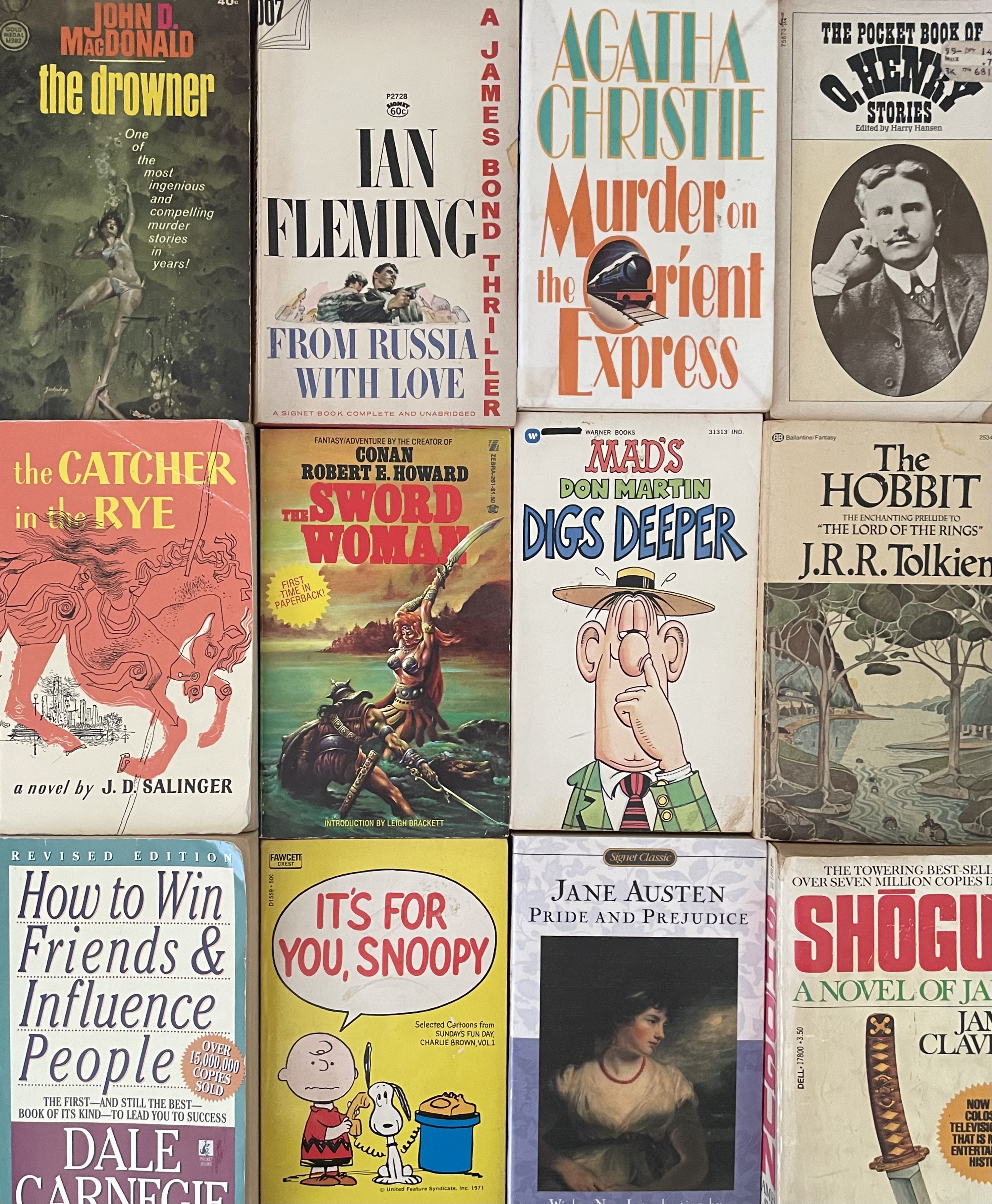
Maybe pocket book paperback books aren’t dead yet, but the sales are dying. At least, according to the experts who keep track of this stuff, they’re dying. The last time I went into a B&M Bookseller, all I saw were the larger, more expensive trade paperbacks in the fiction section. Gone were the shelf upon shelf of tiny mass market paperbacks that used to dominate the fiction sections of bookstores. Aaaarrgh! I used to live off of those mass market paperbacks, and I have the poor vision to prove it!
Mass market paperback sales have been plummeting in the last few decades, and I can understand why. First of all, if you want the numbers, the link in the above paragraph is to a website (not mine) that gives you data. I’m not a data blogger. I like numbers, but I write long paragraphs, and long paragraphs with lots of numbers put readers (and me) to sleep, and that’s bad for my blog. At any rate, I remember when mass market pocket paperbacks were popular
When I say EVERYBODY (not literally everbody) read pocketbooks back in the 1970s, I mean people who would read books. Even back then, a lot of people didn’t read books, but way more people read books in the 1970s than they do today. As weird as this might sound, malls usually had two bookstores. I lived near a suburban mall that had one bookstore and one book kiosk loaded with magazines and mass market paperbacks. The kiosk was just as fun as the regular bookstore because it had a lot of the pocket book paperbacks all in one place whereas the regular bookstore had them scattered among the hardcovers of various genres. And whoever worked the kiosk didn’t have to be pushy because people willingly bought mass market paperbacks.
You could also find the mass market paperbacks at grocery store check out lines and convenience store stands. When I was a kid, I’d go to the local Kwik Shop every Wednesday for the new comic books on the comic book rack and then check out the new paperbacks on the book stand near the magazines. Yeah, most of the mass market paperbacks were romance and westerns, but occasionally there’d be a science fiction or fantasy novel worth buying.
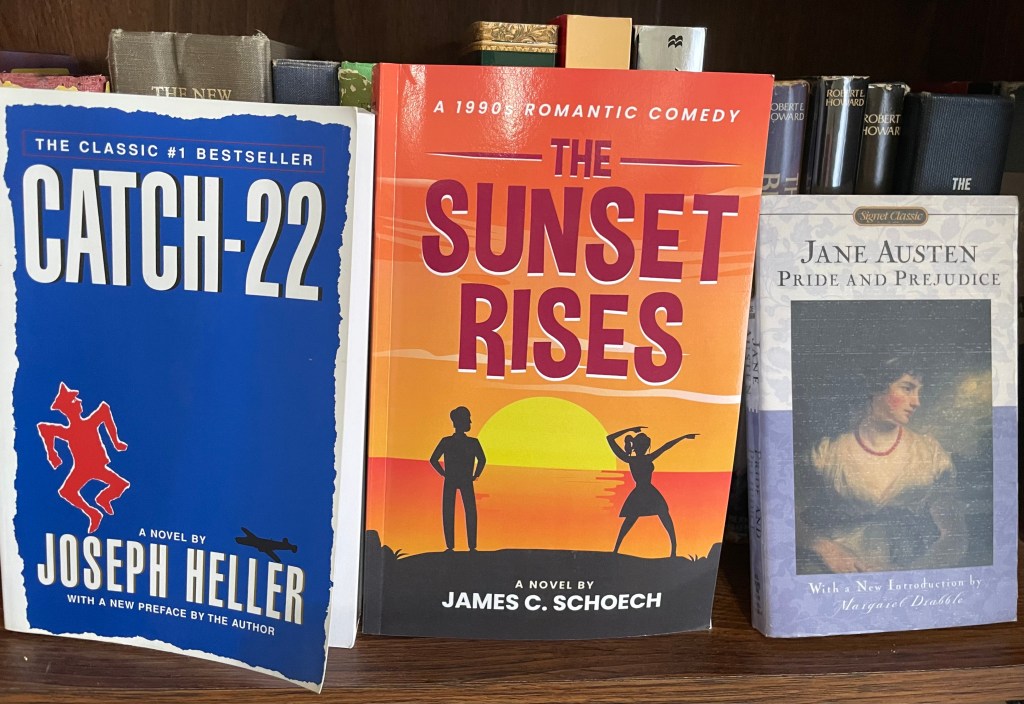
The point is that mass market paperbacks were everywhere (not literally) back in the 1970s because everybody (figuratively speaking) was reading those books. Louis L’Amour westerns. Alistair MacLean spy thrillers. Harlequin romances. Doc Savage pulp reprints. Harold Robbins books. These were everywhere (again, not literally).
Mass market paperbacks are great because they’re cheaper and easier to carry around. Trade paperbacks cost almost twice as much but are much easier on the eyes when you’re reading. If I have the choice between reading a trade or mass market copy of the same book, I choose the trade. When I have the choice of buying that book? Twenty years ago, I would have bought the mass market book. Today, I’d buy the trade. I have to watch out for my eyes.
I grew up with mass market paperbacks, and trade paperbacks were the exception. There was usually something special about a trade paperback. Maybe it had a set of fancy illustrations, such as Brothers Hildebrandt paintings. But what if people weren’t raised on mass market pocket book paperbacks? If kids/teenagers/young adults have been raised on reading trade paperbacks, I can see why they wouldn’t like mass market paperbacks.
When publishers started pushing young adult fiction maybe twenty years ago, I noticed that the companies (maybe Scholastic) were publishing them as trade paperbacks. I figured the school libraries would rather have hardcovers than paperbacks (if they had the budgets), and that the trade paperbacks were more durable than the mass market paperbacks. Plus, the trades look nicer on the shelves. In the book stores, almost all of the YA fiction was hardcover or trade paperback. And those trades weren’t cheap.
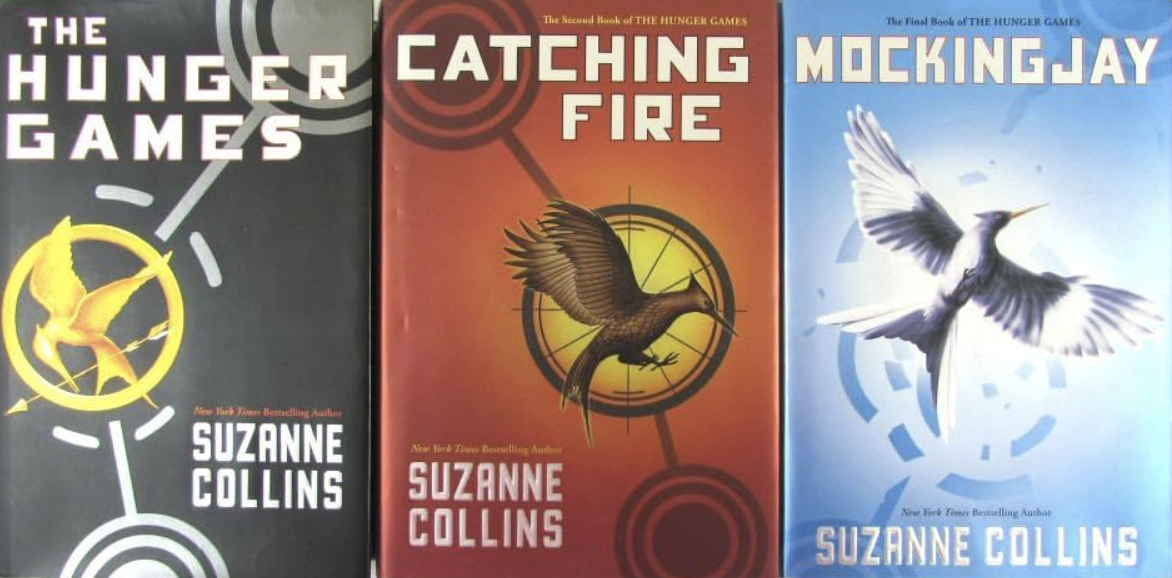
Anyway, over the last twenty years, youngsters have been reading YA lit in trade form rather than mass market. Since the adults reading today were the youngsters reading YA trades 15-20 years ago, it makes sense that today’s readers would choose trades over mass market. You don’t go from reading trades to mass market; it’s like a step down. You don’t read mass market unless you were trained (forced) to do it.
How deliberate was this on the part of the book publishers? If the book publishers knew that book sales were trending down and that fewer young people were reading in each successive generation, then it would make sense to get those readers accustomed to reading/buying the more expensive (and easier to look at) option, especially if the readers were from higher income families than those of non-readers.
Back when I was a kid, a lot of readers were from middle (or lower) class families; reading books was a cheap hobby, especially if you traded them or handed them down to other family members or friends. One paperback might get read by ten people within a family/friend circle (especially if the book had stuff that was inappropriate for kids). Nowadays, I’m pretty sure that doesn’t happen as much (the books being passed around, I mean. I’m pretty sure there’s still a lot of stuff that’s inappropriate for kids).
*****
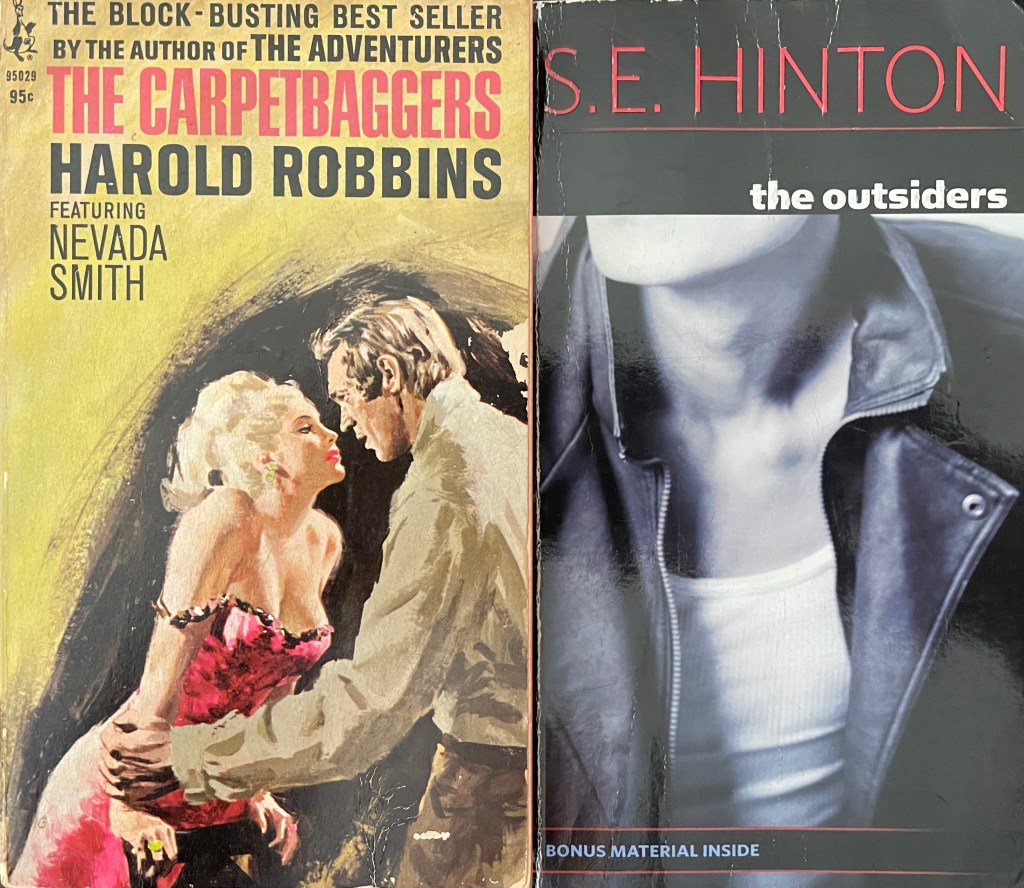
Back when I was teaching and my students were reading The Outsiders by S.E. Hinton (mass market paperback copies), I’d always grin when the protagonist Pony Boy mentioned that his oldest brother Darry was reading The Carpetbaggers by Harold Robbins . Haha. I think for about twenty years every house had a copy of The Carpetbaggers.
I’m sure Darry’s copy was a mass market paperback. If The Carpetbaggers had been a trade paperback, Darry (or whoever had originally bought the copy) might not have been able to afford it. And if mass market pocketbooks hadn’t existed, Darry might not ever have even been reading books for entertainment in the first place. And I don’t think people today share books on their phones/devices like they did with mass market paperback books when I was growing up, so if The Outsiders were rewritten today, I don’t think a book like The Carpetbaggers would be lying around the house, and it wouldn’t be on Darry’s phone/device. Instead, he’d be watching the latest rumbles on social media.
Does the death of the mass market paperback mean the death of mass reading? The way things are going, it wouldn’t surprise me (and it wouldn’t surprise me if that were the intended effect), but we’ll have to wait and see. With educators complaining that their students can’t read books/novels anymore, maybe there’s a connection between plummeting pocket book (affordable) paperback sales and plummeting reading skills among kids. Maybe. But somebody smerter than I am can figure all that stuff out.
In the meantime, if I want to damage my eyesight by staring at tiny print, I can still go to used book stores and find as many pocket books as I want. For now.


 Dysfunctional Literacy
I think that mass markets were kind of looked down upon originally as garbage books by inferior writers. Like they didn’t deserve the hardcover treatment. Don’t quote me, I could be wrong, but that’s what I have in my head. Trade paperbacks are definitely a nicer product, and I’d rather have that format than the mass market even if the mass market were still available. But from the publishers’ perspective I’m sure it’s all about money. I’d guess it doesn’t cost them any more to make a taller, thinner book than a shorter, fatter book, and yet they can charge twice as much or more for the same words on the same paper.
You’re probably right. I think the straight-to-pocketbook paperback was kind of like the straight-to DVD movie for a while, but I thought a lot of those straight-to-pocketbook paperbacks were better than the actual bestsellers that were published as hardcovers first. At least, I kind of liked them.
I don’t think I’ve seen (m)any straight-to-DVD movies that were very good.