Literary Glance: Great Big Beautiful Life by Emily Henry
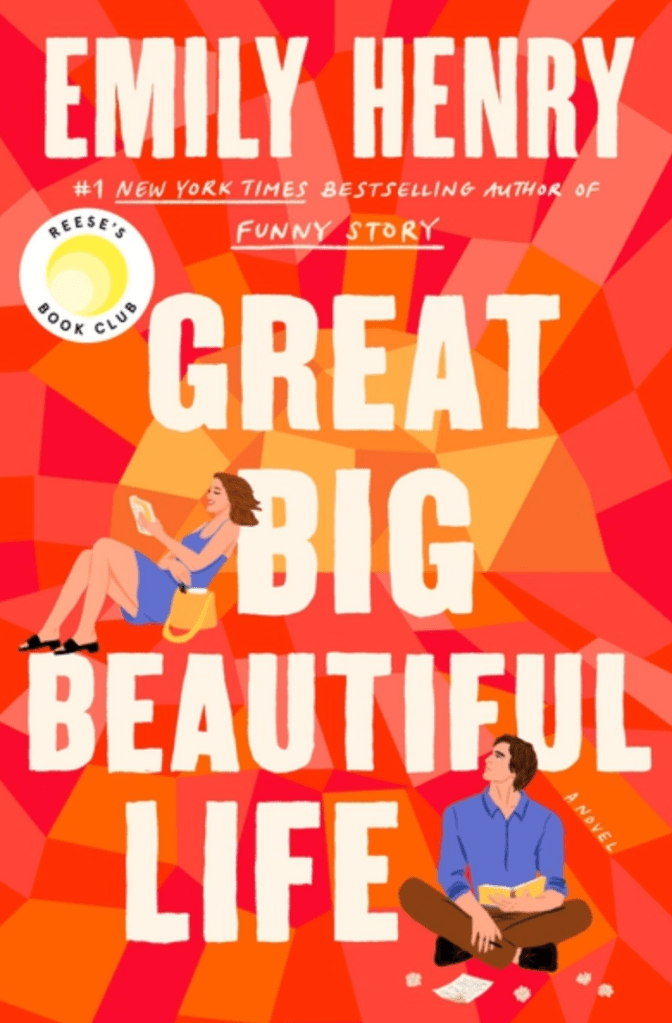
I know, I know! Great Big Beautiful Life by Emily Henry isn’t meant for me. I’m not the book’s target demographic. I’m a guy, a dude who reads books about barbarians who conquer ancient worlds and perform deeds of toxic mascul… you get the idea.
But I still read books. The thing is, I start reading lots of books and don’t finish very many. Sometimes I write what I call a Literary Glance, where I begin reading a book but don’t even have the intention of finishing it. That’s not an insult to the book. There are a lot of books out there, and I like to see what different writers in different genres are doing, and reading online samples is a great way to get a feel for what’s going on in the book world.
I hadn’t read a romantic comedy in a long time (like, maybe, never), so I picked one that showed up on several BESTSELLER LISTS, a book called Great Big Beautiful Life by Emily Henry. I know nothing about it, except that it seems to a selection of Reese Witherspoon’s Book Club (I’m not in her book club) and the author has written other bestsellers (because the cover says so). I like a cover that tells me something about a book without ruining it.
I started reading Great Big Beautiful Life on my phone’s Kindle, and I’ve gotten through the first chapter. The book is okay. It’s not my thing. The narrator is a female journalist Alice Scott who starts off the book meeting a reclusive former famous person named Margaret Ives. On her way out, she runs into a handsome (of course) Pulitzer-Prize winning (of course) writer and (what I assume will be) her future love interest, but that wasn’t the focus of the chapter, and I’m more interested in the writing than the story anyway.
As Alice waits to meet Margaret, Alice makes these observations about Margaret’s home (and I take some notes in parentheses):
*****
I take the opportunity to make a slow lap around the room, still buzzing and smiling big enough that my jaw has started to ache (misplaced modifier-makes it sound like the room is buzzing and smiling). I set my things (what things?) down on the low rattan coffee table and cross my arms to keep myself from touching anything as I wander. Art crowds (what kind of art?) every inch of the walls, and plants hang in clusters in front of the windows, still more in clay pots on the floor. A thatched fan (what kind of art?) twirls lazily overhead, and books-most of them about gardening and horticulture (that’s great, but what kind of art?)-sit in messy stacks and face down with cracked spines, covering every antique-wooden surface available.
It’s beautiful (what’s beautiful? the thatched fan? the room? the house? it’s definitely not the art!). I’m already mentally drafting how I’d describe it. The only problem is, I’m not convinced I’ll have a reason to describe it.
*****
In case you can’t tell, I wonder about the art. How can a journalist mention art crowding a wall without any details about what kind of art it is? I’m not even an art expert. The author could have made up a bunch of fake names for fake artists, and I wouldn’t have known (or cared). Instead, she mentions nothing, and I’m taken out of the story.
Maybe it’s just me. I’m a guy, and I don’t even ask for many details in my writing. When I write about shoes, I just call them shoes. I don’t name the brand or the type of shoe. It’s just a shoe. Maybe calling a shoe a shoe takes some readers out of my stories, and I don’t know it. How can I trust, a reader might think, a narrator who doesn’t identify the type or brand of a shoe?
Most people who mock romantic comedies (people also mock the genres I read) make fun of the formula, where an average-type female protagonist falls for an overly handsome, rich, high-status male. There might be some variation of the average-ness of the female protagonists and the wealth, success, status, and attractiveness of the male (or male substitute) love interest, but the formula is the same. Romantic comedies are like female fantasy novels.
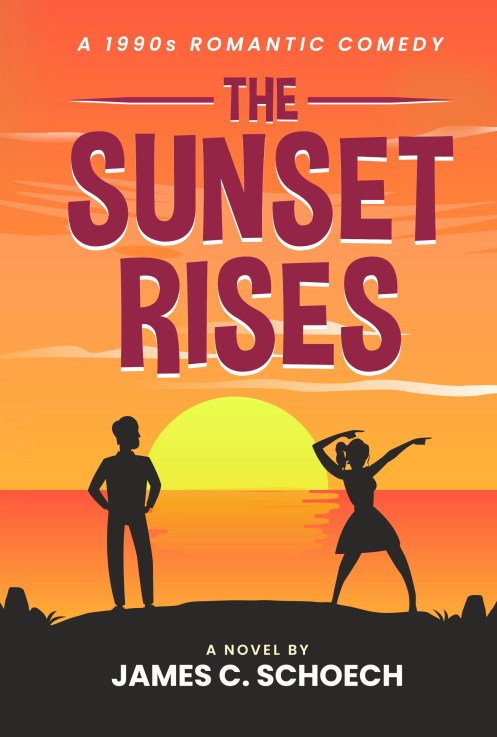
My own novel The Sunset Rises: A 1990s Romantic Comedy flips the formula and approaches the ‘romance’ from a male’s perspective. In The Sunset Rises: A 1990s Romantic Comedy, the protagonist male is an average guy (average in almost every way) who falls for a hot chick and doesn’t care about her wealth or status or success. He just likes the way she looks and talks. Unfortunately, he doesn’t pay attention to her red flags, and he ends up paying a steep price for succumbing to his infatuation. That’s what happens when male fantasy meets reality.
Anyway, back to Great Big Beautiful Life.
Maybe the narrator mentions more details about the art when/if she writes her article… if she gets the job. I might not find out. This is just a literary glance. I haven’t read the entire book.


 Dysfunctional Literacy